EV Charging and Common-Area Improvements in Turkey: Articles 42–43 Guide for Foreign Owners
Short answer: Turkish Condominium Law No. 634 distinguishes between useful common-area improvements and very expensive or luxury additions. Under Article 42, improvements that make common areas more orderly, easier to use or more beneficial can be approved by a majority of condominium owners both by number and by land share. Their costs are borne by those benefiting, in proportion to benefit. Article 43 applies where the addition is very expensive, luxury in view of the building, or not located in a place that all owners necessarily use; an owner who does not wish to benefit is not required to pay. Electric-vehicle charging is assessed according to the location and technical impact: EPDK’s current guidance, referring to the Ministry’s 23 July 2024 opinion, states that a charging unit in an independently appurtenant parking space may not require an owners’ decision if it does not alter the existing electrical installation or affect other units/common areas, while a charger in a common-use parking area that increases common benefit requires a majority by owner count and land share.
Article 42 and Article 43: two different cost and voting regimes
Condominium Law No. 634 does not treat every new facility in the same way. The legal classification of the proposed work controls both the voting threshold and who must bear the cost.
Article 42 governs useful innovations and additions. These are works that make common areas more orderly, make their use more comfortable or easier, or increase the benefit obtained from them. The statutory decision threshold is a majority of owners both by number and by land share.
Article 43 governs a different class: innovations and additions that are very expensive, luxury considering the specific building, or not situated in areas or passageways that all owners necessarily use. Owners who do not want to benefit from those additions are not required to contribute to the expense; the owners who decided to have them installed bear the cost.
Those two provisions must also be separated from Article 19. Article 19 restricts a single owner from carrying out construction, repair or installations in common areas without the required written consent, subject to statutory exceptions. A collective decision under Article 42 is therefore not the same legal situation as one owner acting alone on a common wall, garage or electrical infrastructure.
What counts as a “useful” common-area improvement under Article 42?
The statutory test is functional. The work must make common areas more orderly, make use more comfortable or easier, or increase the benefit obtained from the common area. The law does not create a closed list.
Depending on the building and project, examples can include upgrading access-control systems, improving common lighting, adding appropriate security infrastructure, reorganizing a common parking area, installing systems that improve common energy use, or adding technology that makes a genuinely shared facility easier or safer to use.
Classification cannot be made by attaching the word “useful” to an invoice. The actual function, location, cost and building characteristics matter. A system that is a reasonable functional improvement in a large modern residential complex can be a luxury addition in a small building if the expense and practical need are fundamentally different.
The owners’ assembly minutes should therefore describe the project precisely: location, technical specification, beneficiaries, total cost, funding model and legal majority. A vague resolution such as “management may make all necessary improvements” is poor evidence for a substantial new installation.
What majority is required for useful improvements?
Article 42 states that useful innovations and additions are made following a decision of the condominium owners by a majority both by number and by land share.
This is a dual-majority rule. A project is not approved merely because owners holding 60% of the land shares support it if they do not also constitute the required majority by number. Likewise, numerical support alone does not satisfy Article 42 if the supporting owners do not represent the required land-share majority.
Proxy voting must comply with Article 31. A foreign owner may vote through an authorized representative, but the statutory proxy concentration limits still apply. Our separate guide explains proxy voting in Turkish condominium meetings.
The management plan should also be checked. It can regulate procedure and use, but it cannot reduce a mandatory statutory majority where the law requires one.
Who pays for an Article 42 useful improvement?
Article 42 contains its own expense rule: the costs of the works are borne by the persons who benefit from the innovation, in proportion to their benefit.
This wording is important because it is not identical to the default land-share allocation for many ordinary common expenses under Article 20. Where Article 42 applies, the statutory allocation focuses on who benefits and the proportion of benefit.
The resolution should state a defensible cost-allocation method. For example, if a project serves only a defined parking section or a particular block, charging every owner equally without examining benefit can create a dispute. Conversely, where the project genuinely benefits the entire property, the assembly should record that basis.
A foreign owner receiving a special assessment should request the resolution, technical plan, quotations or contract, and the calculation showing why that unit is within the benefiting group and how its share was computed.
Article 43: very expensive or luxury additions
Article 43 protects owners who do not want to finance certain high-cost or luxury additions. It applies where the desired innovation is very expensive, is luxury according to the particular character of the building, or is not located in areas or passageways that all owners necessarily use.
In that situation, an owner who does not want to benefit is not required to contribute. The expense is paid by the owners who decided to proceed with the project.
The statute also addresses later use. An owner who initially did not contribute—or that owner’s universal or specific successor—can later acquire the right to use the luxury addition by contributing to its construction and preservation costs in the manner stated by Article 43, according to the owner’s land share.
This rule prevents a permanent exclusion merely because a prior owner declined to participate at the outset. It also matters in property sales: a buyer should check whether amenities advertised as part of the complex are subject to a separate Article 43 contribution before assuming access is included.
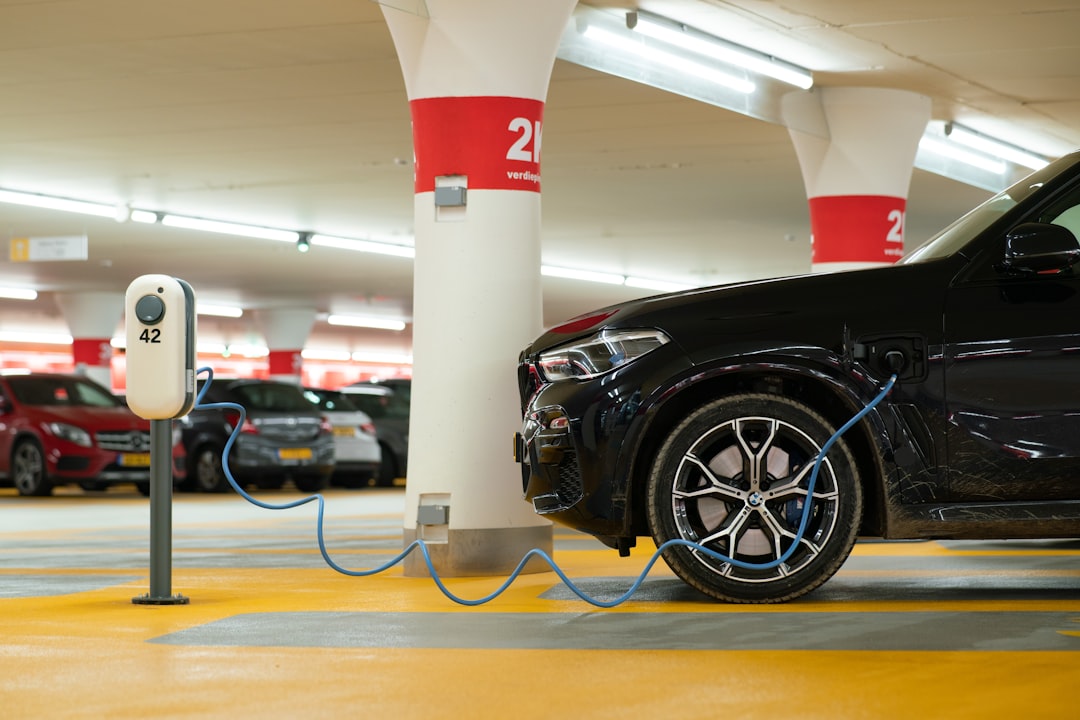
Electric-vehicle charging in apartment and site parking areas
EV charging is a high-value example because the legal answer changes with the legal status of the parking space and the effect on common infrastructure.
EPDK’s current public guidance expressly states that charging-unit installations in apartment and site parking facilities are assessed under Condominium Law No. 634 and related legislation. The guidance refers to the Ministry of Environment, Urbanisation and Climate Change’s opinion dated 23 July 2024.
According to that official guidance, where a parking area is not a common area but an appurtenance of an independent unit, a charging unit connected without altering the existing electrical installation does not require an owners’ assembly decision, provided it does not affect other independent units or common areas.
By contrast, where a charging unit will be installed in a common-use parking area and will increase common benefit, EPDK states that a decision by a majority of the owners both by number and by land share is required. That corresponds to the Article 42 useful-improvement structure.
This does not eliminate technical requirements. Electrical capacity, distribution-company procedures, metering, fire safety, cable routing and other applicable technical rules must still be satisfied. A condominium vote cannot authorize a technically unsafe connection.
It is also necessary to determine whether the proposed installation is a shared charger funded by the benefiting owners or a private charger drawing only from one unit’s meter. The technical design affects both legal classification and cost allocation.
Common parking is not the same as an appurtenant private parking space
Owners sometimes use the word “my parking space” even though the title and establishment documents treat the garage as a common area with an internal allocation of use. The official EPDK distinction refers specifically to a parking area that is not common area and is an appurtenance to the independent unit. Before relying on the no-assembly scenario, the title and condominium documents should therefore be checked.
One owner acting alone versus the owners collectively
Article 19 and Article 42 answer different questions. Article 19 provides, as a general rule, that one owner cannot undertake construction, repairs or installations in common areas without the written consent required by that article, except in the statutory emergency/strengthening situations. Article 42, however, governs useful innovations approved collectively by the owners.
Therefore, an owner should not take an Article 42 majority rule and use it as a personal license to mount equipment on a common wall without an owners’ resolution. Nor should management demand the Article 19 individual-alteration threshold where a properly proposed common-benefit project falls under Article 42 and the official EV guidance.
The facts determine the correct route: who is installing the equipment, where it is located, whose infrastructure is altered, who benefits, and which body has adopted the decision.
Accessibility improvements for owners with disabilities
Article 42 contains a specific accessibility mechanism where an alteration is necessary for the life of a person with a disability. The proposed project modification is discussed by the owners within the statutory period and decided by a majority by number and land share.
If the meeting cannot be held within the statutory period or the modification request is not accepted by the majority, Article 42 provides a route based on a commission report confirming that building safety is not endangered and an approved project amendment or sketch obtained from the relevant authorities.
This is a specific statutory regime and should not be reduced to the general statement that “every common-area alteration requires the same consent.” Accessibility requests must be assessed under the special text of Article 42.
Can a foreign owner challenge an unlawful improvement decision?
Yes. If an owners’ assembly resolution is adopted with the wrong majority, allocates costs contrary to the applicable article, exceeds the assembly’s authority or violates the management plan or mandatory law, Article 33 may provide the annulment route.
An owner who attended and voted against the resolution has one month from the decision date for the ordinary Article 33 annulment action. An owner who did not attend has one month from learning of the decision, and ordinarily no later than six months from the decision date. Decisions that are legally non-existent or absolutely void are treated separately by Article 33.
Our detailed guide explains how to challenge condominium decisions in Turkey.
Disputes arising under Condominium Law No. 634 are also within the mandatory mediation framework of Law No. 6325 Article 18/B before litigation within its scope.
Can a non-resident owner handle the project or dispute from abroad?
Yes. A foreign owner can authorize a representative to attend meetings, review technical proposals, vote within the authority granted, request minutes and handle mediation or litigation where the power of attorney is sufficient.
For substantial capital projects, the owner should insist on receiving the agenda, technical specification and cost before the meeting. A generic proxy to “vote as desired” can expose a non-resident owner to major assessments that were never reviewed.
If a formal Turkish power of attorney is required, see our guide on issuing a power of attorney from abroad.
Checklist before approving or disputing a common-area improvement
- Identify the legal status of the location. Is it common property, an appurtenance or part of an independent unit?
- Define the project. Obtain drawings, electrical design, quotations and technical capacity information.
- Classify the work. Is it an Article 42 useful improvement, an Article 43 luxury/very expensive addition, or one owner’s Article 19 alteration?
- Apply the correct majority. Article 42 uses a majority by both owner count and land share.
- Identify beneficiaries. Article 42 costs are borne according to benefit.
- Separate non-benefiting owners where Article 43 applies. They are not required to finance the luxury addition.
- For EV charging, check the official EPDK distinction. Common-use parking and appurtenant private parking are not treated identically.
- Check technical approvals. A condominium decision does not replace electrical, safety or distribution-system requirements.
- Record the decision precisely. Include the cost, contractor, funding, users and voting result.
- Preserve Article 33 deadlines. Challenge a defective resolution promptly.
Official legal and regulatory sources
- Condominium Law No. 634 — especially Articles 19, 31, 33, 42 and 43.
- Energy Market Regulatory Authority (EPDK) guidance — apartment/site EV charging and the Ministry’s 23 July 2024 opinion.
- Law No. 6325 on Mediation in Civil Disputes — Article 18/B.
Frequently Asked Questions
Can a Turkish apartment building install an EV charger in the common parking area?
Yes. EPDK’s current guidance states that a common-use parking charging unit that increases common benefit requires a decision by a majority of owners both by number and by land share.
Can I install a charger in my own appurtenant parking space without a meeting?
Under the official EPDK guidance, if the parking space is not common area but an appurtenance of the independent unit, the existing electrical installation is not altered, and other units/common areas are not affected, an owners’ assembly decision is not required.
Does Article 42 require unanimous approval?
No. It requires a majority both by number of owners and by land share for useful innovations and additions.
Who pays for a useful Article 42 improvement?
Article 42 states that the expense is paid by those who benefit from the innovation, in proportion to benefit.
Do I have to pay for a luxury facility that I do not want to use?
Where Article 43 applies because the addition is very expensive, luxury for the particular building, or outside places all owners necessarily use, an owner who does not want to benefit is not required to contribute.
Can I use a luxury facility later if I did not initially pay?
Article 43 permits the non-participating owner or successor to gain the right to use the addition later by contributing to the construction and preservation costs in the statutory manner.
Is an EV charger always an Article 43 luxury addition?
No. The legal classification depends on location, common benefit, building circumstances, technical design and cost. EPDK specifically recognizes common-use chargers under the owner-count and land-share majority framework.
Can one owner install equipment on a common wall because Article 42 only requires a majority?
No. Article 42 concerns a collective owners’ decision. An individual owner’s unilateral intervention in common areas is separately restricted by Article 19.
Can an unlawful improvement decision be cancelled?
Yes, where the legal conditions for an Article 33 challenge are met. The ordinary one-month and six-month deadlines must be reviewed immediately.
Can I vote from abroad?
Yes, through an authorized representative, subject to Article 31 proxy limits.
Conclusion
Common-area improvements in Turkey require correct legal classification before the first payment is collected. Article 42 permits useful improvements with a majority by owner count and land share and allocates their cost according to benefit. Article 43 protects owners who do not wish to finance very expensive or luxury additions. Article 19 separately regulates unilateral interventions by one owner.
EV charging shows why that classification matters. A shared charger in common-use parking and a charger located in a true appurtenant private parking space can follow different approval paths. Foreign owners should therefore review the title status, technical design, assembly majority, cost allocation and management plan before consenting to—or refusing—a capital project.
Contact regarding a legal matter
In your first message, you may briefly state the subject, your country or city, and any relevant notification or recent procedural date. Please do not send identity numbers, medical data, or personal documents. Messaging alone does not constitute legal advice or create a lawyer–client relationship.