Your Turkish Property Insurance Risk Increased: TCC Articles 1444–1445 and the Ten-Day Notice Rule
Short answer
Under Turkish Commercial Code Article 1444, an insured risk must not be aggravated through specified acts without the insurer’s permission. Changes made by the policyholder or with consent must be notified immediately; when made without the policyholder’s knowledge, notice is due within ten days after learning of the change. Article 1445 governs the insurer’s one-month option to terminate or demand a premium difference, the statutory exceptions, and differentiated consequences after a loss.
Have a general question about this article? Ask anonymously
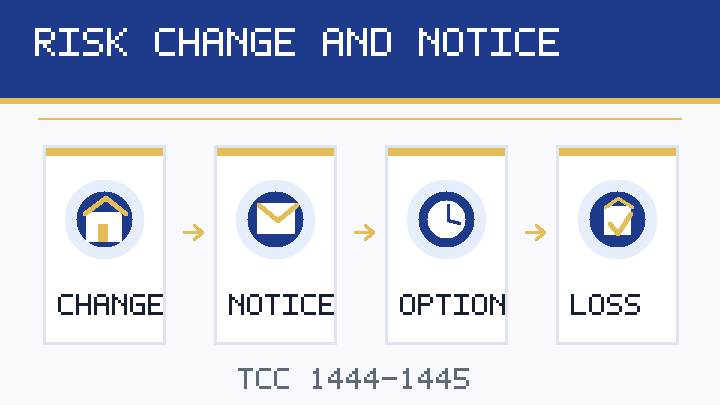
Quick summary
| Main provisions | Law No. 6102, Articles 1444 and 1445 |
|---|---|
| Authorised risk change | Immediate notice under Article 1444(2) |
| Unknowing change | Ten days from learning of the change |
| Insurer response | One month under Article 1445(1) |
| Premium difference | Ten-day acceptance mechanism |
| After a loss | Fault, causation and statutory exceptions must be examined |
First classify the change: initial risk declaration or later aggravation
Article 1444 addresses changes during the insurance contract, not inaccuracies in the original proposal. This division is essential for an overseas owner who buys a policy for a Turkish apartment and later changes how it is used. The original declaration is examined under Articles 1435–1440, whereas subsequent acts, developments and notice are examined under Articles 1444–1445. Calling both issues ‘misrepresentation’ conceals the distinct legal tests and time periods.
The first record must establish the insured property or interest, insurance term, risk description and precise activity or condition that changed. A contract that describes residential use cannot be evaluated merely by the owner’s statement that the property was always safe. Gather the proposal, schedule, relevant exclusions, special conditions, renewed agreements and any risk-aggravation definitions expressly accepted at formation.
Do not assume every alteration automatically triggers an increased-risk consequence. The statute concerns acts increasing the likelihood that the insured risk will occur, acts aggravating the existing condition, and events specifically agreed as risk increases. The change must be identified and related to the insured risk rather than labelled significant on intuition. For a warehouse, the kinds of goods and actual storage conditions matter. For a rented home, the contract’s description of occupation and risk matters.
Article 1444(1): prohibited conduct without the insurer’s permission
Article 1444(1) prevents the policyholder from acts that increase the insured risk or existing state, in a way affecting the compensation amount, without the insurer’s permission. This means the legal inquiry includes the identity of the actor and the character of the change. The insured risk may be altered by the owner, an authorised manager or another person with the owner’s permission.
A written consent from the insurer should identify the change and the insured property. Approval of a renovation by the building manager, municipality or condominium assembly is not itself consent by the insurer. Those approvals concern different legal regimes. The strongest insurance record contains the insurer’s own approval or an authorised endorsement, with the effective date and any revised insured sum or premium.
Insurer permission must not be inferred solely from collection of a regular premium. An unchanged direct debit is consistent with many positions and does not, by itself, prove that the underwriter evaluated and agreed to an increased risk. Preserve written insurer instructions, any revised quotation and the policy endorsement to determine what was accepted.
Article 1416 identifies the insurer or the agent that concluded or mediated the agreement as recipients of policyholder notifications. Do not assume that sending a message to any broker, bank employee or property manager satisfies that requirement. Retain the original message, attachments, transmission and receipt evidence. Article 1412 also requires attention to knowledge and conduct of a representative or other relevant persons; an overseas owner’s personal discovery date should not be analysed in isolation from the legal relationship.
Immediate notice where the policyholder or an authorised person creates the change
Article 1444(2) requires immediate notification when the policyholder or a person acting with the policyholder’s permission increases the probability of the risk, aggravates the existing position, or when an expressly agreed risk-aggravation event occurs. The word immediate is not an invitation to substitute a fixed number of days of one’s choosing. Establish the exact date of the act, the point at which the policyholder could notify and the date notice actually reached the insurer.
An overseas owner using a local property manager must distinguish the manager’s knowledge and authority from the owner’s actual instructions. A service contract authorising maintenance does not automatically authorise a new commercial use of the building. Keep the relevant management agreement, dated work order, photographs, contractor records and correspondence showing who approved the act.
The notice should describe the facts rather than offer a conclusion that cover definitely continues. Identify the policy, affected location, actual change, start date and documents. Request a written assessment of any change in premium or conditions. Record delivery and acknowledgment. Asking for advice about an anticipated change before carrying it out offers better evidence than informing the insurer only after a claim has arisen.
Ten days where the change occurred without the policyholder’s knowledge
The second situation in Article 1444(2) is expressly different. When the relevant change takes place without the policyholder’s knowledge, the policyholder must notify the insurer no later than ten days from the date the policyholder learns of it. The statute connects the period to knowledge, not automatically to the first day the change occurred.
Document the first reliable discovery: a manager’s dated report, municipal inspection, photographs, security notification, inventory audit or written admission from a tenant. A delayed report is not necessarily proof the owner learned of the change on the day it happened. Conversely, a vague statement that an owner abroad did not know is not a substitute for the available correspondence.
Preserve all early messages and avoid replacing the originals with a neat, retrospective timeline. A consistent sequence should identify who first saw the condition, who informed the owner, when that communication was received, and when the insurer was told. The ten-day period should be measured using the legally relevant rules for periods, supported by actual dates and service records.
Article 1445(1): one month for insurer action after learning of the increase
Once the insurer learns of an aggravation or contractually designated change, Article 1445(1) gives it one month from that date to terminate or demand a premium difference. A requested premium difference not accepted within ten days results in termination under the provision. The dates are separate: the insurer’s one-month choice and the recipient’s ten-day period for accepting the premium difference.
Record when the insurer learned the facts, not merely when an employee eventually drafted a letter. Seek the original risk-notification email, upload records, underwriter memorandum and outgoing response. The action taken must be classified as actual termination, a premium-difference request, or an inquiry seeking further information. An ambiguous proposal for a new policy cannot be treated automatically as a valid termination notice.
Article 1445(3) states that the insurer’s rights to terminate or demand a premium difference lapse if not exercised within the statutory period. This lapse must be analysed against when the insurer actually knew of the increase. A client who receives a demand months later should not assert lateness without first establishing that date.
Restoring the previous condition can prevent the insurer’s termination right
Article 1445(2) provides that termination cannot be exercised where the condition existing before the change has been restored. This provision should be assessed from objective evidence showing that the risk-increasing condition really ended, not simply from an owner saying the alteration has been reversed.
For property, the proof may be dated photographs, qualified inspections, cessation records, removal invoices, delivery notes or updated occupancy documents. For commercial stock, it may be a count of the hazardous goods removed and the renewed storage arrangements. The evidence should identify when the prior condition was restored and what changed afterwards.
This statutory protection does not cancel all other duties under the policy, nor does it determine whether a loss during the period of increased risk is covered. Article 1445(7) has a particular rule for a loss occurring during the insurer’s statutory notice or termination interval and related to the increased risk. Restoring the prior condition is important but must be placed accurately in the chronology.
Article 1445(4) lists exceptions that cannot be erased by broad policy language
Article 1445(4) excludes the first three paragraphs of the insurer’s increased-risk response for increases caused by a circumstance related to the insurer’s interest, an event for which the insurer is responsible, or fulfilment of a humanitarian duty. It additionally identifies health changes of the insured in life insurance. These are statutory distinctions; the insurer should not treat every increased probability of loss as an ordinary commercial alteration by the policyholder.
One must identify which exception is asserted and why the facts support it. Merely calling a change ‘necessary’ is not enough to establish a humanitarian duty. A loss caused by a property manager’s negligence is not automatically an event for which the insurer is legally responsible. The provision requires evidence of the source of the risk increase and the relevant causal relationship.
The exceptions concern the insurer’s particular termination and premium-difference rights under Article 1445(1)–(3). They do not amount to a universal guarantee that an unrelated or expressly excluded peril is insured. Avoid treating the existence of an exception as a complete policy-coverage decision.
After a loss, the statute differentiates negligence from intentional breach
Article 1445(5) governs the consequences after a loss where the policyholder negligently breached the increased-risk notification duty. If the breach was capable of affecting the occurrence of the loss or the amount payable, reduction is made according to the degree of negligence. This is not worded as a general permission to refuse the entire claim whenever a notification was late.
When intentional failure to disclose a change is established, the statute requires a causal analysis. If the change is connected with the insured event, the insurer may terminate and the insurance amount is not paid. Where the connection is absent, Article 1445(5) requires a payment calculated by the ratio of premium paid to premium that should have been paid. The actual sums and contract terms therefore matter.
The claim file must distinguish the failure to notify from the actual cause of damage. A warehouse electrical fire and a later risk-increasing storage alteration are not automatically causally linked simply because they concerned the same location. The insurer needs grounds supported by technical evidence; the claimant needs a coherent account addressing the specific facts. Do not substitute the insurer’s assertion of intention for proof of the legally relevant state of mind.
Article 1445(6) separately preserves the insurer’s entitlement to premium for the insurance period in which the change occurred when intentional breach is discovered before the risk occurs and the insurer terminates under paragraph 1. That premium entitlement is not itself a decision about compensation after an insured event. Article 1452(3) prevents detrimental contractual changes to Articles 1433–1449, including the risk-aggravation protections. Read special conditions against those mandatory limits.
The separate rule for a loss during the termination or notice period
Article 1445(7) addresses an insured risk occurring, in connection with the change, within the notice period afforded to the insurer or the period before termination becomes effective. It directs calculation of the insurance payment according to the ratio between premium paid and premium that should have been paid. This narrowly framed rule should not be presented as the mandatory outcome for every loss occurring at any time after a risk change.
Identify the start and end of each legally relevant period. Preserve the date the insurer learned of the aggravation, the request or notice, any premium acceptance, and the actual termination date. The loss date and its relationship with the change should appear separately. A timeline that combines all the events under one heading, ‘policy cancelled’, will not support an accurate calculation.
Ask for the tariff or calculation showing the premium that should have been charged for the altered risk. The statutory ratio cannot be audited without the two premium figures and the applicable coverage period. If the insurer presents a percentage, demand its components and legal basis instead of accepting an unsupported discount from the claimed loss.
Do not confuse ongoing risk notice with notice that a loss occurred
Article 1446 imposes a separate duty to notify the insurer without delay when the policyholder learns that the insured risk has occurred. This is different from Article 1444’s requirement to disclose a risk increase before or during the policy. The two events can happen close together, but their legal consequences and dates remain distinct.
Article 1447 separately addresses information, documents and access needed for investigating the loss. The insurer’s rights to inspect should be documented, and the policyholder should preserve the condition at issue without unnecessarily increasing the damage. Article 1448 addresses measures to prevent or reduce the loss and protect recovery rights against third persons. These responsibilities operate together but should not be merged into a single vague ‘duty to cooperate’.
Prepare distinct written notices when both a change in the risk and an insured event require reporting. Identify the statute and the factual purpose of each communication, and state what information remains pending. This helps the insurer review the correct issue and gives any later adjudicator a clear sequence.
Organising a risk-change dispute while living outside Türkiye
Overseas owners often receive risk information through local agents, building caretakers or tenants. Put those relationships in writing before a dispute occurs. A monthly property report, photographic inspection and an escalation address provide evidence of when a change was discovered. They do not automatically satisfy a statutory notice duty but make compliance and later proof more manageable.
Business owners should preserve the original underwriting declaration, the current permitted use of the premises, commercial permits and insurer endorsements. Where a local manager changed the risk without authority, obtain the instructions showing the manager’s actual powers. Where the owner approved the act, record the approval date. The classification affects whether Article 1444 requires immediate notice or a ten-day period from discovery.
Foreign clients can obtain Turkish legal review from abroad, including a written comparison of the policy and the statutory requirements. Our related guides address pre-contract disclosure under Article 1423 and the insurer’s actual knowledge under Article 1438. Those are separate problems with separate evidence.
Keep risk aggravation separate from underinsurance under Article 1462 and from whether a peril was covered at all. A changed use does not establish that the insured sum was below the insured value, and a successful objection to an aggravation-based rejection does not prove every other policy condition. Where multiple grounds are relied on, request a separate legal explanation and calculation for each.
Review Article 1420 limitation independently of the insurer’s response and notification periods. Ongoing complaints do not necessarily suspend or interrupt limitation. Confirm the applicable dispute procedure, including the Commission’s current insurer-application and representative-authority requirements, before selecting a filing route.
Prepare a defensible notice, objection and claim
Begin with the signed insurance agreement, all policy conditions, original risk answers and endorsements. Add a one-page chronology describing the condition before and after the change, the person responsible, the first date of knowledge and the notifications to the insurer. Then add the insurer’s response, premium calculation and technical evidence addressing causation.
Draft the requested relief precisely. A policyholder may seek confirmation that the insurer’s termination or premium-difference demand was not exercised in time, argue that the original condition was restored, invoke a statutory exception, or dispute a deduction from a particular covered loss. Each position depends on a different paragraph of Article 1445 and should cite the corresponding record.
Finally, if a formal dispute is necessary, verify the appropriate route. The Insurance Arbitration Commission’s official application conditions require prior steps and eligibility. International insurance disputes can also raise jurisdiction under Law No. 5718 Article 46. The place the policyholder lives is not itself a complete forum analysis. Use the official text of Law No. 6102 and the actual policy; do not invent an insurance result from a common label such as Airbnb, vacant property or renovations.
Frequently asked questions
What is the main rule of Article 1444?
The policyholder must not increase the insured risk through the covered conduct without the insurer’s permission, and notification duties apply to qualifying changes.
When is immediate notification required?
Under Article 1444(2), changes made by the policyholder or by another person with the policyholder’s permission require immediate notification.
When is the ten-day rule triggered?
When the qualifying change occurred without the policyholder’s knowledge, notice is due within ten days after the policyholder learns of it.
Does a rented holiday apartment always constitute increased risk?
No automatic conclusion follows solely from the rental description. Compare the actual change with the insured risk and agreed contract terms.
How long does the insurer have to act after learning of the increase?
Article 1445(1) gives one month to terminate or request a premium difference under its stated conditions.
What happens if the requested premium difference is not accepted?
Article 1445(1) treats the contract as terminated when the premium difference is not accepted within ten days.
Does restoration of the original condition matter?
Yes. Article 1445(2) prevents exercise of termination where the previous condition has been restored.
Are humanitarian changes treated identically?
No. Article 1445(4) contains specified exceptions, including increased risk from fulfilling a humanitarian duty.
Does negligent late notification always eliminate cover?
No. Article 1445(5) requires the relevant ability to affect the event or payment and a reduction according to negligence.
What happens where an intentional breach is not connected to the loss?
Article 1445(5) provides a proportional insurance payment based on the premium paid compared with the premium that ought to have been paid.
Is notice of the loss the same as notice of risk increase?
No. Article 1446 governs notification of a loss, while Article 1444 governs qualifying risk aggravation during the policy.
What must a foreign owner keep?
Keep the policy, dated photographs, manager instructions, first discovery message, notice to the insurer, response and premium calculations.
Official sources and related guides
Primary law: Law No. 6102; guidance: Insurance Arbitration Commission. Internal reading: Insurer information duty, actual insurer knowledge, reasonable assessment expenses, and legal matters without travel.
Contact in Türkiye
Mersin office location · +90 552 224 43 66 · English enquiries. A first contact does not establish representation or suspend a limitation period.
Istanbul Office – Polaris Plaza, Maslak / Sarıyer
Bakırcı & Keskin Hukuk Bürosu
Maslak Ahi Evran Caddesi, Polaris Plaza No:21, Kat:9, 34475 Sarıyer/İstanbul
Our physical offices in Istanbul and Mersin coordinate matters throughout Turkey, subject to jurisdiction and the local steps required for each case. Please specify your preferred office when arranging an in-person appointment.
Open the Istanbul office on Google Maps · Contact and appointments
Contact regarding a legal matter
In your first message, you may briefly state the subject, your country or city, and any relevant notification or recent procedural date. Please do not send identity numbers, medical data, or personal documents. Messaging alone does not constitute legal advice or create a lawyer–client relationship.
Discover more from Bakırcı & Keskin Hukuk Bürosu
Subscribe to get the latest posts sent to your email.