Borrowed Equipment in Turkey: Return, Damage and Free Use Loans Under TCO 379–385
Permission to use an item without paying a hire price is not permission to keep it permanently or pass it to anybody else. Article 379 of the Turkish Code of Obligations defines a loan for use as an arrangement for free use followed by return of the same thing. Articles 380–385 regulate use, expenses, joint borrowers and the circumstances in which the arrangement ends. These provisions are relevant to equipment and other property entrusted for temporary use. The return date depends on the agreement and statutory route, not simply on whether the parties are relatives, friends or business contacts.
Have a general question about this article? Ask anonymously
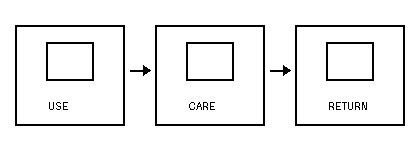
Article 379 distinguishes a free-use loan from hiring or gifting
The defining features are free use and the promise to return the same thing after use. The Turkish term is kullanım ödüncü, traditionally also called ariyet. A hire or lease involves a different exchange; a gift concerns a different intended disposition. The absence of a formal invoice does not by itself resolve which arrangement the parties made.
Identify the item, the permission given and the expected return. A machine’s serial number, accessories, handover date and documented condition help distinguish the actual thing from another similar item. A general statement that equipment was left at the premises can obscure whether it was supplied for use, storage, repair or sale.
The governing framework is Law No. 6098, Articles 379–385. Ownership and authority to lend should be examined separately where they are disputed. A contractual permission from one person does not automatically establish that the person was entitled to dispose of someone else’s rights in the property.
A money loan returns an equivalent; a use loan returns the identified item
Article 386 concerns transfer of money or consumable things with an obligation to return an equivalent of the same nature and quantity. That is not the same structure as lending an identified item for temporary use. The distinction affects what the lender can demand back.
Our private money-loan guide explains the separate repayment provisions. Article 392’s six-week fallback should not be applied automatically to return of borrowed equipment. Likewise, a borrower of equipment should not assume that offering its own valuation in money always replaces the duty to return the original item.
Where an item has been consumed, lost or replaced, first determine whether that was consistent with the actual agreement. The name loan in an English message does not identify the Turkish contractual category by itself. Article 19’s real-common-intention rule requires the operative arrangement to be examined rather than the label alone.
Article 380 limits use to the agreed manner or the item’s purpose
The borrower must use the subject only in the manner agreed. Where the agreement contains no provision, use must correspond to the item’s nature or designated purpose. Permission to possess equipment therefore does not establish unrestricted permission to use it for every activity.
Retain the instructions and communications explaining the intended use. Identify operating limits, location and the task for which the thing was supplied where those matters formed part of the agreement. A later objection should distinguish an actual agreed restriction from a preference the lender never communicated or otherwise established.
The return dispute can involve use as well as possession. A lender alleging misuse should identify the conduct, the contractual or statutory limit and the evidence connecting them. The borrower should preserve the corresponding operating and handover records. A description that the equipment was treated badly does not establish what obligation was breached or the damage caused.
Passing the item to another user raises a separate statutory problem
Article 380 states that the borrower cannot allow another person to use the borrowed subject. The fact that the borrower was trusted does not automatically extend the same permission to a friend, employee, affiliate or substitute operator. The identity of the borrower and the authorised use should remain clear.
A dispute about another user’s involvement needs the actual circumstances. Identify who received the item, who controlled it and what use occurred. Physical movement for return, authorised maintenance and use by another person are not descriptions that should be treated as automatically identical. The legal assessment must be tied to the specific conduct relied on.
A borrower should not assume that handing the thing to a third person ends its own contractual position. Nor should the lender treat the new possessor as having automatically agreed to every original term. Any new permission or transfer arrangement must be established on its own evidence rather than inferred from the item’s changed location.
Misuse can extend responsibility to unexpected-event damage
Article 380 makes the borrower responsible for damage caused by unexpected events where the borrower breaches the stated use rules. The paragraph also contains an express defence: the borrower is released from that responsibility by proving that the damage would have occurred even if the rules had been followed.
Both parts must be preserved in the explanation. It is inaccurate to say that an unexpected event always excuses a borrower who misused the property. It is equally inaccurate to omit the statutory defence and declare absolute liability for every later incident once any misuse occurred.
The evidence should address the event and the counterfactual question stated by the statute. Preserve the item’s condition, location, use history and reliable information about the incident. A repair invoice proves an expense was charged; it does not alone establish the reason for damage or whether the same damage would have occurred under permitted use.
Article 381 allocates ordinary maintenance and preservation expenses
The borrower must bear ordinary maintenance and preservation expenses. Free use therefore does not mean that every routine cost must be reimbursed by the lender. The expense should be classified according to its actual nature rather than the payer’s preferred account heading.
Article 381 separately allows recovery of extraordinary expenses that the borrower was obliged to incur for the lender’s benefit. Necessity, the extraordinary character and benefit to the lender are important parts of that rule. A borrower cannot treat every improvement or optional purchase as automatically reimbursable under it.
Keep the diagnosis, invoice and communications concerning the expense. Identify whether the work maintained the thing, prevented an urgent deterioration or added a feature the borrower personally wanted. Payment evidence and the legal reason for reimbursement are different documents. The proposed account should show why the statutory category applies, not only that money was spent.
Joint borrowers face the Article 382 solidarity rule
Article 382 provides that people borrowing a thing together are jointly and severally responsible for it. Establish that they were joint borrowers rather than assuming that everyone who attended the handover accepted the same obligation. A witness, transporter or authorised representative can have a different role.
The agreement and communications should identify who received the shared permission and undertook return. A company and its employee are not automatically two personal borrowers simply because the employee collected the item. The capacity in which each person acted matters to the claim.
The broader distinction between external liability and internal contribution is explained in our joint-debtor guide. A claim by the lender and a later allocation of the burden between borrowers are separate issues. They should not be combined into an unsupported demand that every participant pay the full value independently.
Purpose-based use without a fixed duration ends under Article 383
Where no definite period has been set for use, Article 383 provides that the arrangement ends when the borrower has used the thing as agreed or sufficient time for that use has passed. The purpose of the permission is therefore central. It is not necessarily an unlimited permission lasting until the borrower chooses to finish.
Identify the intended use and the relevant chronology. Keep evidence of the work or event for which the item was supplied and when it could have been completed. The legal question is not answered merely by the borrower saying that it has not yet found a convenient time to return the thing.
A fixed contractual period must be distinguished from this no-fixed-period rule. Read any later extension and the communications supporting it. An informal request to keep the equipment longer does not automatically establish the lender’s acceptance, while an agreed extension should not be ignored when calculating the return position.
Earlier return is available for the circumstances specified in Article 383
The second paragraph permits earlier recovery where the borrower uses the thing contrary to the contract, damages it or gives it to another person for use. It also covers an urgent need of the lender arising from a situation not previously known. These are identified grounds, not a general assertion that every change of preference terminates the arrangement immediately.
For a use-related ground, connect the conduct to the agreed limits and the thing actually lent. For urgent need, identify the new circumstance and the urgency. The request should explain the route relied on so that the return position is understandable from the facts rather than from a bare demand invoking ownership.
An earlier-return right does not remove the need to arrange lawful delivery and preserve the item’s condition. Record the place and method proposed for return and any response. A genuine dispute over the return arrangements should not be concealed behind a statement that the borrower never offered to cooperate.
Article 384 concerns a loan with neither duration nor purpose specified
Where the item was supplied without determining how long it would be used or the purpose for which it would be used, Article 384 allows the lender to request it back whenever desired. Both omissions matter to the statutory description. A case with an agreed purpose should not automatically be treated as though the purpose was never specified.
Read the complete exchange surrounding delivery. The purpose can be evidenced by more than a heading in a formal document. At the same time, the borrower cannot create an indefinite purpose after a return demand merely to resist the lender’s position. The agreement actually reached must be established.
Article 384 does not specify a universal additional six-week or thirty-day period for return of every item. Do not import the money-loan rule into it. The demand, practical return arrangements and any subsequent procedural steps must be evaluated under the actual relationship rather than an invented standard notice period.
The borrower’s death ends the use-loan contract under Article 385
Article 385 states that the loan-for-use contract ends automatically when the borrower dies. The provision concerns the borrower’s death. It should not be restated as a rule that any death connected with the transaction automatically has the same consequence.
Locate the item and identify the people holding it or administering the relevant estate. Preserve the lending agreement and the evidence identifying the thing. The end of permission does not turn a missing item into cash or complete the practical recovery process without further steps.
Inheritance, possession and the appropriate person against whom a return claim is pursued require their own examination. The statutory ending of the use arrangement should remain distinct from an unsupported claim that every relative personally owes the item’s full value. The claimant needs the correct legal relationship and the correct respondent.
Prepare a return and condition record rather than an unexplained demand
The initial handover record should identify the item, accessories and visible condition. Dated photographs can help, but they should correspond to the actual thing and be retained with their source information. An internet image of the same model does not prove the condition of the particular equipment that was lent.
At return, record what was delivered, to whom and when. Note disputed damage without manufacturing an admission by either party. A receipt stating only that an envelope or package arrived is not a complete inventory of the contents. Keep the item list and the return correspondence together.
Where repair will alter important evidence, review the appropriate preservation procedure first. Our evidence-preservation guide addresses that separate question. Preservation supports later assessment; it does not itself determine that the borrower caused every defect or owes the full replacement cost.
Use the correct legal route instead of taking unilateral possession
A contractual return right is not permission to enter premises, bypass access controls or seize disputed property by force. Identify the holder, the legal basis for return and the appropriate demand or proceeding. The fact that an item belongs to the claimant does not make every recovery method lawful.
For property involving a separate registration, insurance or regulatory regime, those requirements also need review. Articles 379–385 do not replace every rule applicable to the particular asset. A private permission to use an item should not be treated as proof that all independent public-law requirements have been satisfied.
Clients abroad should provide the complete agreement, handover record, purpose or period, misuse or expense evidence and the return communications. Include any served proceedings with the service record. The contract-dispute guide explains the broader assessment; a private return demand does not itself suspend a procedural deadline.
Frequently asked questions
Does free use mean the borrower can keep the item?
No. Article 379 defines a loan for use by free use followed by return of the same thing. The agreement and statutory ending rules determine when return can be required.
Can borrowed equipment be used for a different purpose?
Article 380 limits use to the agreed manner or, without a contractual provision, the item’s nature or designated purpose. Possession does not establish unrestricted permission.
Can the borrower let another person use it?
Article 380 prohibits allowing another person to use the borrowed subject. Any asserted different permission must be established from the actual arrangement rather than assumed.
Does an unexpected event always excuse damage after misuse?
No. Article 380 extends responsibility to unexpected-event damage following breach of its use rules, but allows the borrower to prove the damage would have occurred even with compliance.
Who bears ordinary maintenance expenses?
The borrower bears ordinary maintenance and preservation expenses under Article 381. Necessary extraordinary expenses incurred for the lender’s benefit have a separate reimbursement rule.
Are joint borrowers responsible only for separate shares to the lender?
Article 382 makes people borrowing a thing together jointly and severally responsible. Establish who actually borrowed it; internal contribution is a separate issue.
When does purpose-based use without a fixed period end?
Article 383 refers to completion of the agreed use or the passing of sufficient time for that use. The borrower cannot assume permission lasts indefinitely merely because it has not finished.
What if neither a use period nor a purpose was determined?
Article 384 permits the lender to request return whenever desired. Confirm both aspects of the agreement before applying that rule.
Does the money-loan six-week rule apply to borrowed equipment automatically?
No. Articles 379–385 govern the loan for use. Article 392 concerns repayment under the different money or consumable-loan structure.
What happens when the borrower dies?
Article 385 ends the use-loan contract automatically. Locating the item, identifying the correct respondent and obtaining return remain separate practical and legal steps.
Official legal sources
Turkish Code of Obligations No. 6098, Articles 19 and 379–385, with Article 386 for the separate equivalent-return loan. The official Ministry text, pages 75–76 contains the loan-for-use provisions. English explanations do not replace the Turkish statute.
Ask about borrowed property or equipment
Identify the item, the agreed purpose or duration and whether return or damage is disputed. Do not include confidential documents or identity numbers in the initial enquiry.
Istanbul and Mersin offices
Bakırcı & Keskin Law Office is Mersin-based and coordinates Turkish matters from Mersin and Istanbul. Arrange a confidential channel for agreements, handover records and photographs relating to the dispute.
Istanbul — Polaris Plaza
Maslak Ahi Evran Caddesi, Polaris Plaza No:21, Floor 9, 34475 Sarıyer/İstanbul. Istanbul office directions.
Mersin — Profit İş Merkezi
İhsaniye Mahallesi, 4903. Sokak, Profit İş Merkezi No:23, Floor 3, Office 14, 33070 Akdeniz/Mersin. Mersin office directions.
Call +90 552 224 43 66. An enquiry does not establish representation or suspend a deadline.
Contact regarding a legal matter
In your first message, you may briefly state the subject, your country or city, and any relevant notification or recent procedural date. Please do not send identity numbers, medical data, or personal documents. Messaging alone does not constitute legal advice or create a lawyer–client relationship.
Discover more from Bakırcı & Keskin Hukuk Bürosu
Subscribe to get the latest posts sent to your email.