
Turkish law · Guidance for clients abroad
English-Speaking Lawyer Halil Bakırcı | Istanbul & Mersin
Professional profile of Av. Halil Bakırcı, registered with the Mersin Bar Association under No. 3472. Explore his work under Turkish law, preparation for a first consultation and the firm’s Istanbul and Mersin offices and nationwide case coordination.
Related legal services: English-speaking lawyer in Turkey · legal representation for foreigners · Turkish citizenship legal services.
Lawyer Halil: Short answer
Av. Halil Bakırcı is registered with Mersin Bar Association under number 3472 and is a co-founder of Bakırcı & Keskin Hukuk Bürosu, which welcomes clients at its Istanbul and Mersin offices. He advises and represents clients on matters governed by Turkish law. International clients can hold online or in-person consultations directly in English or Turkish. This profile explains professional identity and working method; it does not claim admission in another jurisdiction or guarantee any result, duration or cost.
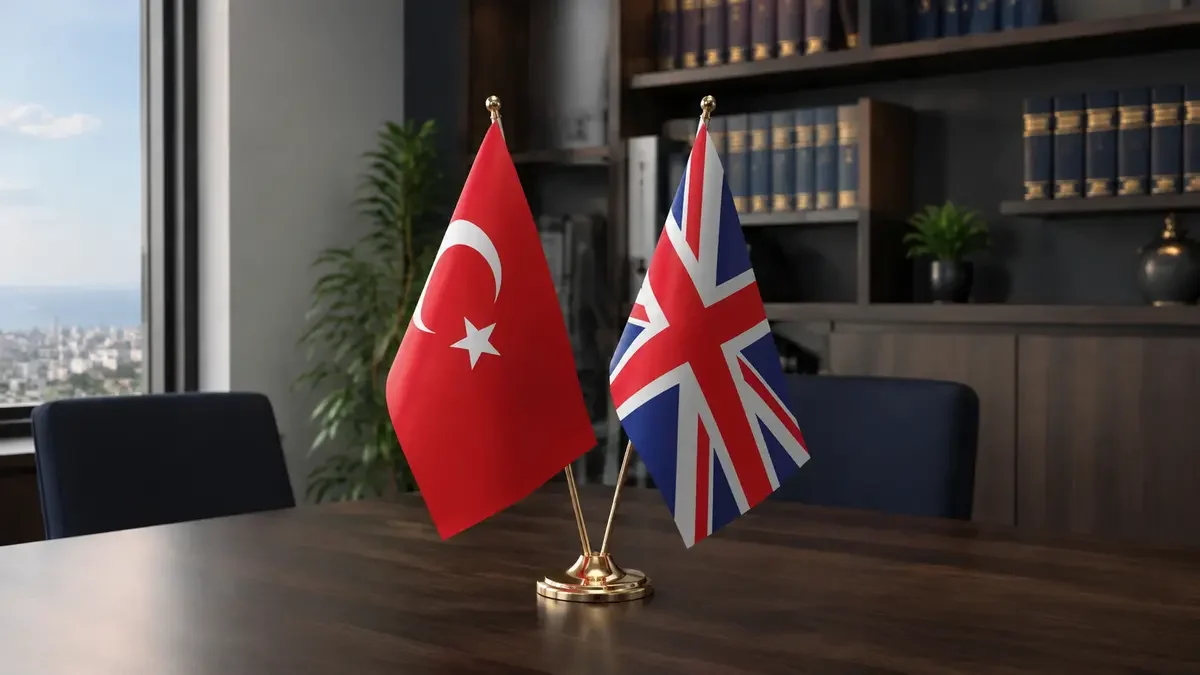
Istanbul Legal Matters and English Guides
For matters connected to Istanbul, the firm reviews documents and coordinates the necessary Turkish-law steps through its Istanbul and Mersin offices. See the Istanbul legal guide for foreign clients for case preparation, or the office address and map (Turkish) to arrange a visit.
Lawyer Halil: Registration and professional identity
The Turkish professional title is ‘Avukat’. Av. Halil Bakırcı’s name and registration number 3472 can be checked in the public Mersin Bar Association register. A registry search is a practical identity check before sharing confidential documents or making payment from abroad.
Registration confirms professional status. It is not proof that a particular case will succeed and does not create a specialist title under English, German or another foreign legal system. The work described here concerns Turkish law.
Lawyer Halil: Areas of work and the first legal questions
The Turkish profile and office work cover matters including criminal, family, inheritance, employment, commercial, enforcement, tenancy and property law. Listing a field does not mean that every enquiry can be accepted; conflicts, deadlines, jurisdiction, documents and the requested result are checked first.
The legal basis, procedural route and evidence are assessed separately. A plausible claim may fail on limitation, service, jurisdiction or proof, while an open file does not itself establish the merits.
Lawyer Halil: From first enquiry to a controlled file
The process begins with identity and parties, then urgency, chronology, document mapping and legal route. The mandate states whether the work is advice, correspondence, litigation, defence, enforcement, registry work or another defined service.
Reportable events include material submissions, hearings, expert reports, judgments, settlement proposals and payments. This structure allows a client abroad to distinguish a routine update from a decision requiring instruction.
Direct English consultations and Turkey-wide coordination
Av. Halil Bakırcı and the office can conduct consultations, video meetings and routine case communication directly in English or Turkish. Formal documents for Turkish proceedings are prepared in the language and form required by the relevant authority.
The firm welcomes clients at its offices in Maslak, Sarıyer, Istanbul and Akdeniz, Mersin. Subject to jurisdiction, necessary hearings, local acts and practical assessment, work may be managed before competent bodies elsewhere in Turkey. No promise of fully remote completion is made.
Practical example
A client in the United States asks for help with a Turkish inheritance, an occupied apartment and a possible sale. Av. Halil Bakırcı’s first review separates heirship, property use and sale into distinct stages. The initial power and mandate cover the inheritance and evidence work; any later sale price, disposal authority and receipt of funds are documented as separate decisions.
Documents for the first review
A complete and chronological first package makes deadline, jurisdiction and evidence review more reliable. The following items are usually the most useful starting point:
- Identity and complete party list for conflict checking
- Latest formal document and known deadline
- Short chronology and requested result
- Existing power of attorney and prior legal correspondence
- Evidence arranged by date and issue
Three essential checks
1. Public bar registration
Verify name and number 3472 in the public bar register.
2. Mandate and scope
Confirm the mandate rather than relying on a profile or broad power alone.
3. Official payment channels
Use known official contacts to verify unexpected payment or account changes.
Frequently asked questions
How can I verify Av. Halil Bakırcı’s registration?
Search the public Mersin Bar Association register for his name and registration number 3472.
Can I consult Av. Halil Bakırcı directly in English?
Yes. Online or in-person consultations and routine case meetings can be conducted directly in English or Turkish.
Does this profile provide advice on English law?
No. The professional work described here concerns Turkish law. Separate advice may be required for another jurisdiction.
Must I visit an office for the first meeting?
Usually not. An initial review can often begin with scans and an online consultation.
Can a broad power of attorney replace written instructions?
No. External authority and the actual mandate are different, and material decisions should be documented.
Does bar registration guarantee success?
No. It verifies professional identity and status, not the outcome, duration or economic value of a file.
Can I send a new court document after the first consultation?
Yes. Send the complete document with its service record and file reference through the agreed channel. A new document may change the deadline or the scope of the work; do not assume that the earlier timetable remains valid.
Does an initial document review mean that all litigation is accepted?
No. An initial review, a written opinion and continuing representation are separate tasks. The accepted work and any required mandate should be made clear before you rely on the office to carry out a procedural step.
Responsible lawyers and public registration
Professional identity can be checked in the public Mersin Bar Association register. Registration confirms status; it does not promise the result, duration or economic value of a particular matter.
Transparent instructions, reporting and fees
Living abroad, being described as an expatriate or earning income in euros does not by itself increase the fee. Any proposal is assessed under Turkish professional rules and according to the scope, urgency, documents, procedural work and responsibility required by the particular matter.
A power of attorney defines legal authority; it is not a blanket instruction to carry out every possible act. Material steps, settlement authority, receipt of money and disposal powers are tied to the agreed scope and the client’s written instructions.
The office can hold initial and ongoing meetings online in English or Turkish. Significant developments are reported through agreed channels so that the client can follow the work without travelling to an office for every step. No result, duration or final total can be guaranteed before the file and competent procedure are reviewed.
How to prepare a Turkish legal file for review by Halil Bakırcı
A productive first review starts with a defined question. Explain the practical outcome you need: understanding a notice, responding to proceedings, recovering a payment, dealing with an inherited asset or completing a transaction. The question determines which records matter. Sending every document in a folder without identifying the issue makes it harder to distinguish an urgent procedural step from background information. A concise chronology and a complete copy of the most recent official document provide a clearer starting point.
Identify the person, the file and the authority
The names used in correspondence should match the relevant official records. Mention different spellings, former surnames and transliterations at the outset. For a company, give the registered business name and the capacity in which the person giving instructions acts. A shareholder, director and employee do not have interchangeable authority. For an existing proceeding, include the court or authority, file number, parties and the latest decision or notice. A description such as “the case in Mersin” does not uniquely identify a file.
In an inheritance enquiry, distinguish the deceased, the person requesting advice and the relatives believed to be heirs. In a property enquiry, distinguish the registered owner, buyer, seller and proposed representative. These distinctions prevent documents belonging to different people or transactions from being treated as one set. They also help establish whether an initial request concerns the person giving instructions or somebody whose authority and consent must first be confirmed.
Build a chronology with evidence beside each event
List events in date order and place the supporting record next to each event. A payment entry should identify the transfer date and recipient; a contractual promise should identify the document or message containing it; a court event should identify the notice or hearing record. Mark an event as undocumented when no record is available. Do not fill the gap by converting a recollection into a quotation or presenting another person’s explanation as a verified fact.
Preserve the original files and the full context of messages. A cropped screenshot can omit who sent the message, what question it answered or whether a later message changed the arrangement. Keep the complete statement or conversation and provide a short index explaining its relevance. The index is a navigation aid, not a replacement for the underlying record. If documents are in several languages, identify which files are originals and which are translations or informal summaries.
Separate a deadline from a preferred completion date
A desired completion date is different from a procedural deadline. Explain when a document was issued, when it was received and how it was notified. Include the envelope, electronic notification information or other delivery record when available. A date printed on a judgment may differ from the date relevant to a response or appeal. Do not calculate the final day from an incomplete screenshot or assume that an informal discussion with the other party suspends a period.
Urgency should be supported by the actual record. Identify a hearing, response date, proposed signing date or threatened disposal of an asset and explain its connection with the instruction. This permits the urgent issue to be distinguished from the wider merits of the matter. A request for an appointment is not itself an application to a Turkish court or public authority, and sending a message to a law office does not file a response in an existing case.
Define the professional task before representation begins
State whether the requested work is an initial consultation, document review, preparation of a specific application or continuing representation. Ask what the fee covers and what deliverable will follow. A written opinion is different from filing a claim; preparing a power of attorney is different from using it in a transaction. Where further proceedings or a separate claim become necessary, their scope and costs should be discussed rather than assumed to be included in a previous instruction.
A work plan should make responsibility visible. Identify which documents you will supply, which records require an application by an authorised representative and which steps depend on an authority’s decision. The lawyer’s office address does not determine the competent court for every matter. A file connected with another Turkish city must be assessed under its own jurisdiction and procedural rules, even when communication and coordination take place through the Istanbul or Mersin office.
Maintain a record that remains understandable from abroad
Keep instructions, applications, official replies and payments in separate, dated groups. Record the purpose of each payment and retain its supporting document. Ask for clarification when a request concerns an expense rather than the agreed professional fee. Avoid forwarding new documents through several unrelated channels without identifying which version is current. A single, clearly indexed record helps prevent an outdated translation or draft from being mistaken for the document used in a formal application.
For an English-language consultation, prepare the main question in plain English and attach the original Turkish document where available. Legal terms should be explained by reference to the Turkish procedure they describe. A translation of a familiar English expression does not establish that Turkish law provides the same remedy. The review should connect the proposed step to the actual authority, record and legal basis, while identifying any point that requires further evidence or a separate instruction.
These preparation principles do not require a client to decide the correct legal classification before seeking advice. Their purpose is to make the factual record complete and accessible. The legal assessment follows that record. It should distinguish a confirmed right from a contested allegation, an available application from a guaranteed result, and work already completed from steps that remain dependent on evidence, instructions or a decision by the competent authority.
Istanbul and Mersin offices and nationwide coordination
Bakırcı & Keskin Hukuk Bürosu welcomes in-person consultations at its Istanbul and Mersin offices. Turkish-law work across Türkiye may be coordinated through these offices, subject to the jurisdiction and practical requirements of each matter. Please arrange an appointment at our Istanbul or Mersin office before visiting.
Istanbul office — Polaris Plaza
Maslak Ahi Evran Caddesi, Polaris Plaza No:21, Kat:9, 34475 Sarıyer/İstanbul
Mersin Office – Profit İş Merkezi
İhsaniye, 4903. Sk. Profit İş Merkezi No:23, Kat:3, Daire:14, 33070 Akdeniz/Mersin
Legal and language note
The firm advises on Turkish law from its Istanbul and Mersin offices. Consultations, online meetings and routine case communication can be conducted directly in English or Turkish. If another language is needed, interpretation may be arranged where appropriate. This page provides general information and contains no guarantee of outcome, duration or cost.