Paying One of Several Creditors in Turkey: Discharge and TCO Article 169
Payment to one of several people demanding money does not always discharge the debt to all of them. Article 169 of the Turkish Code of Obligations produces that result for properly established solidary creditors: the debtor has granted each creditor the right to demand the whole obligation, or the law establishes that position. The debtor’s freedom to select a recipient also has a limit once notified that a creditor has applied to court or enforcement. An indivisible obligation under Article 85, a collection authority and a transfer of a receivable are different arrangements. The first question is therefore not which bank account is most convenient, but what legal entitlement the recipient has.
Have a general question about this article? Ask anonymously
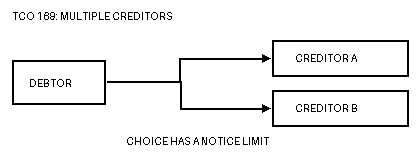
More than one interested person does not establish creditor solidarity
Article 169 of Law No. 6098 identifies two sources of solidary creditor status. The debtor can recognise a right in each creditor to claim the entire debt, or the status can arise in the situations established by law. The fact that several people contributed funds, signed correspondence or benefit economically from a transaction does not itself reproduce either source.
Read the contract for the identity of the creditors and the scope of each entitlement. Several separate invoices owed to different suppliers are not necessarily one obligation owed to solidary creditors. Likewise, two signatures can concern joint participation in a transaction without giving each signatory an independent right to collect the whole amount personally.
The Turkish term is müteselsil alacaklılık. It should be distinguished from müteselsil borçluluk, which concerns multiple debtors. Our joint-debtor guide addresses Articles 162–168. Moving a rule from the debtor side to the creditor side without checking Article 169 can produce the wrong payment instructions.
What payment to one solidary creditor achieves
Once the Article 169 relationship is established and payment is properly made, performance to one creditor releases the debtor against all the creditors for the obligation performed. There is one debt to satisfy, not an independent full debt payable again to every person entitled to demand it. The payment record should show precisely which obligation was discharged.
That result concerns actual performance. An uncompleted transfer instruction does not prove receipt, and payment towards a different obligation does not discharge the debt in dispute. Where only part is paid, the record must distinguish that reduction from complete discharge. A statement that one creditor received money should not be used to erase an unexplained remaining balance.
The receipt should name the receiving creditor and refer to the shared obligation. Include the amount, currency and date actually received. The documentary protections in our receipt and returned-note guide remain relevant. A receipt helps establish payment, but it cannot manufacture solidary status where the recipient never held it.
The debtor’s selection right changes when proceedings are notified
Article 169 permits payment to any of the solidary creditors until the debtor is notified that one has applied to enforcement or to a court. The wording identifies a procedural event and its notification to the debtor. This is a significant qualification to the otherwise available choice of recipient.
Preserve the notice, the proceeding it identifies and the date the information reached the debtor. A private request for payment is not, simply because it is forcefully worded, proof that proceedings have been commenced. Conversely, an actual notified proceeding cannot be ignored because the debtor would prefer to settle privately with a different creditor.
The statute should not be reduced to a rule that the first person to telephone always obtains priority. Nor does it justify treating notification as irrelevant until a final judgment. The particular court or enforcement application and the communication relied on must be examined. A demand referring vaguely to possible future litigation needs to be distinguished from notice of an application already made.
Where several proceedings or conflicting notices exist, inspect the actual files before choosing a payment route. A general guide cannot identify the correct recipient without those records. The necessary review concerns the statutory restriction, the subject of each proceeding and any orders or procedural requirements affecting payment, not an arbitrary preference between claimants.
Internal shares are different from the right to collect the whole debt
Article 169 provides that the creditors’ rights over the performance are equal unless otherwise agreed or indicated by the nature of their legal relationship. Equality is therefore a default for their internal allocation, not an unchangeable rule applicable regardless of the agreement. Obtain the document or relationship supporting any different division.
The creditor who receives more than its share must pay the excess to the other creditors who have not received theirs. The authority to demand and receive the whole obligation externally does not give that creditor an unrestricted right to keep every amount collected. Receipt and ultimate entitlement must be accounted for separately.
This distinction can determine who has the next claim after the debtor pays. Proper discharge of the debtor does not necessarily resolve the creditors’ internal dispute. The unpaid participant may need to pursue the recipient’s sharing obligation rather than demand the same amount from a debtor already discharged through valid performance. The legal analysis must establish the discharge before selecting that route.
A useful internal account records the common amount received, the basis of each share, prior distributions and the balance held for the others. Keep disputed expenses separate instead of silently deducting them from another creditor’s share. Article 169’s allocation rule does not by itself validate every management fee or personal expenditure asserted by the collecting creditor.
Article 85 requires a different approach for indivisible performance
Under Article 85, where an indivisible obligation has several creditors, each can demand that performance be made to all of them, and the debtor must perform to all together. This differs from Article 169’s arrangement under which a qualifying creditor can receive performance with discharge against the others.
The indivisibility question concerns the obligation actually owed. An agreement to deliver an identified thing or perform a unified act must be read for its content and the creditors’ entitlement. The fact that parties describe themselves informally as joint creditors does not resolve whether Article 85, Article 169 or another legal structure governs.
Do not infer that handing an indivisible item to whichever claimant is easiest to contact always satisfies the required joint performance. Establish any authority to receive on behalf of all and the legal effect of the handover. Performance to a common authorised recipient and payment to an independently entitled solidary creditor are different explanations of why the debtor says the obligation ended.
| Arrangement | What must be established | Central payment issue |
|---|---|---|
| Solidary creditors: Article 169 | Each has the right to demand the whole debt under the debtor’s undertaking or law | Payment to one can discharge all, subject to the proceedings-notification restriction |
| Indivisible obligation: Article 85 | The obligation is indivisible and has several creditors | Each can demand performance to all; the debtor must perform to all together |
| Collection representative | Authority to receive for the entitled person or persons | Payment depends on the representative’s actual authority |
| Assigned receivable | A valid transfer and the applicable notice and protection rules | The person entitled to the transferred claim has changed |
A collection representative is not necessarily an additional creditor
An agent, accountant or lawyer can communicate about collection without owning the claim. The authority to negotiate, receive a notice, accept a payment and release an obligation are not descriptions that should automatically be treated as identical. Inspect the authority instrument and the act being proposed.
Article 169 does not dispense with representation requirements merely because several creditors are involved. A recipient relying on authority should identify the creditor or creditors represented and the scope of that authority. The payment direction should be consistent with the underlying entitlement rather than rest on a business-card title.
The unauthorised-representation guide explains the separate consequences of an absent authority. A debtor should not equate a representative’s assurance with evidence that every claimant granted a full release. The original instruction and any subsequent approval require their own review.
Assignment, beneficiary rights and family relationships need classification
A creditor can claim that the receivable was assigned to it. That is a transfer issue governed by Articles 183–194, not necessarily the creation of several solidary creditors. Our assignment guide addresses the formal and debtor-protection questions. Conflicting demands from an assignor and assignee should not be resolved simply by assuming Article 169 permits payment to either.
A third-party beneficiary presents another structure. Article 129 distinguishes the contracting party’s demand for performance to the beneficiary from a qualifying direct entitlement of the beneficiary. The third-party rights guide explains that distinction. Two people being interested in enforcement does not necessarily mean that either can collect the benefit for themselves.
Co-ownership, an inheritance relationship or participation in the same business also requires the applicable legal basis to be identified. Article 169 is not a universal shortcut allowing one relative or participant to collect everything. The relevant ownership, estate or company documents must establish who holds the claim and who can receive performance before the debtor relies on a single payment.
A genuine uncertainty about the creditor can raise Article 111
Article 111 addresses an obstacle where, without the debtor’s fault, uncertainty about ownership of the claim or the creditor’s identity, or another personal reason originating from the creditor, prevents performance to the creditor or its representative. It permits the debtor to use deposit or withdrawal rights as in creditor default. The conditions should be assessed rather than treating every disagreement as an automatic excuse not to pay.
A legally effective deposit is different from putting money aside in the debtor’s own account. Article 107 addresses the deposit mechanism and generally provides for the place to be determined by the judge at the place of performance, with a stated commercial-goods exception. The specific route depends on the obligation and statutory requirements.
Our creditor-default and consignation guide examines those steps. The present point is that a debtor facing a genuine creditor-identity obstacle should examine the lawful protective mechanism, not invent an entitlement to choose any claimant and require the others to resolve the consequences afterwards.
Reconcile payments before answering a second demand
Collect the original agreement, the source of each creditor’s entitlement, all payment requests, notices of proceedings and the actual receipts. Link each transfer to the relevant debt and recipient. A payment made for an unrelated invoice should not be used as proof of discharge of the shared obligation.
The response to a later demand should distinguish lack of entitlement, prior discharge and a disagreement about the remaining amount. Those are different grounds. A statement that someone else was already paid is useful only when the recipient’s right to receive and the payment’s discharging effect are established.
Keep principal, interest and costs visible. A receipt for one component does not necessarily establish settlement of everything claimed in a proceeding. Any compromise or release must be read on its own terms, and a receipt should not be described as a global settlement when it records only a payment. Preserve the original documents and the complete correspondence.
Practical review for an overseas debtor or unpaid co-creditor
An overseas debtor should begin with the precise recipient-choice question: whether Article 169 applies, whether the proceedings-notification limit has been reached and whether the proposed recipient can give the required acknowledgement. This is more useful than asking whether a transfer to a Turkish account is generally safe without identifying the claimants.
An unpaid co-creditor should establish its entitlement and internal share, the amount received by the other creditor and the distributions already made. A claim against the collecting creditor needs a supported account rather than an assumption that every incoming transfer belongs equally to everyone. Any contrary allocation or special relationship must be examined.
Where proceedings have been served, provide the complete document and service record. Commercial discussions between creditors do not themselves suspend the debtor’s procedural duties. The enforcement guide explains the need to protect the procedural position separately from the substantive payment analysis.
Frequently asked questions
Does payment to one creditor always release me against every claimant?
No. Article 169 requires solidary creditor status and proper performance, with its notification restriction considered. Several interested people do not automatically have that status.
How does solidary creditor status arise?
Article 169 refers to the debtor granting each creditor the right to demand the whole debt or to situations established by law. Identify the actual source of that entitlement.
When is the debtor’s freedom to choose a creditor restricted?
Article 169 permits choice until notification that one creditor has applied to court or enforcement. The actual application and notification must be distinguished from a general threat to sue.
Does the first private demand always determine payment priority?
No such universal rule appears in Article 169. Its stated restriction concerns notification of court or enforcement action, and the actual procedural record must be reviewed.
Can the receiving creditor keep the entire amount?
External collection rights and internal shares differ. Article 169 requires a creditor receiving more than its share to pay the excess to the others who have not received their shares.
Are internal shares always equal?
Equality is the default unless a different agreement or the nature of the creditors’ relationship indicates otherwise. The allocation’s legal basis must be established.
Is an indivisible obligation governed in the same way?
Article 85 provides a different rule: each creditor can demand performance to all, and the debtor must perform to all together. Do not substitute Article 169 without classifying the relationship.
Does a collection agent automatically own the debt?
No. Authority to collect and ownership of a claim are separate. Check whom the agent represents and the scope of the authority for the proposed payment or release.
What if I genuinely cannot determine the creditor without fault?
Article 111 provides a protective framework where its creditor-identity or other specified obstacle conditions are met. Deposit or withdrawal requires the applicable legal steps, not merely retaining funds privately.
What documents are needed before paying one of several claimants?
Provide the agreement, entitlement and authority records, demands, proceedings notices, payment history and proposed receipt. Identify any assignment or internal allocation affecting the claim.
Official legal sources
Turkish Code of Obligations No. 6098, Articles 85, 103–107, 111 and 169. The official Ministry text, pages 32–33 contains Article 169. This English explanation does not replace the Turkish statutory text.
Ask about competing payment requests
State who is demanding payment, whether a court or enforcement application has been notified and whether any amount has already been paid. Do not send confidential financial records in the initial message.
Istanbul and Mersin offices
Bakırcı & Keskin Law Office is based in Mersin and coordinates Turkish matters from Mersin and Istanbul. Agree a confidential channel before sharing claimant correspondence and payment records.
Istanbul — Polaris Plaza
Maslak Ahi Evran Caddesi, Polaris Plaza No:21, Floor 9, 34475 Sarıyer/İstanbul. Istanbul office directions.
Mersin — Profit İş Merkezi
İhsaniye Mahallesi, 4903. Sokak, Profit İş Merkezi No:23, Floor 3, Office 14, 33070 Akdeniz/Mersin. Mersin office directions.
Call +90 552 224 43 66. An enquiry does not establish representation or suspend a legal deadline.
Contact regarding a legal matter
In your first message, you may briefly state the subject, your country or city, and any relevant notification or recent procedural date. Please do not send identity numbers, medical data, or personal documents. Messaging alone does not constitute legal advice or create a lawyer–client relationship.
Discover more from Bakırcı & Keskin Hukuk Bürosu
Subscribe to get the latest posts sent to your email.