Property Left for Safekeeping in Turkey: Return, Use and TCO Articles 561–570
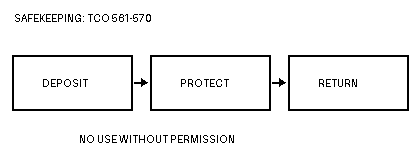
A person who accepts movable property for safekeeping undertakes to protect it, not to use it as their own. Article 561 of the Turkish Code of Obligations defines the custody arrangement, Article 563 prohibits use without the depositor’s permission, and Article 564 gives the depositor a right to request return even where a storage period was agreed. Different rules govern the custodian’s attempt to end the arrangement early, return to one of several depositors and property held by a neutral stakeholder during a dispute. The appropriate demand therefore depends on why the property was delivered and who is now entitled to receive it.
Have a general question about this article? Ask anonymously
What creates a safekeeping obligation?
Article 561 of Law No. 6098 describes a contract under which the custodian undertakes to protect a movable thing delivered by the depositor in a safe place. The central purpose is preservation. The custodian’s possession must be connected to that undertaking; finding an item on premises does not necessarily establish every element of the same contractual relationship.
The legal roles are the depositor, who leaves the thing for protection, and the custodian, who accepts the obligation. Ownership can be relevant but should not automatically be substituted for the contractual identity of the depositor. The legislation itself addresses third-party ownership claims separately, so the agreement and any asserted property right should both be documented.
Retain the handover record, item description and communications explaining the purpose of delivery. A numbered inventory, serial numbers, photographs and packaging information make a return demand more precise. The evidence should distinguish the actual property from an internet image or a generic description of the same model. Its condition on delivery is also important where damage is later alleged.
Safekeeping is different from permission to use or repair
A loan for use permits free use followed by return of the same item under Articles 379–385. A custody contract instead centres on protection. Our borrowed-equipment guide explains that different arrangement. The fact that both relationships involve temporary possession does not make their use and return rules identical.
A thing delivered for repair, transport or sale can also be subject to preservation duties, but the overall contract must be classified correctly. Articles 561–570 should not be applied mechanically to replace the provisions governing the main undertaking. A repairer’s agreement to store an item after completion needs examination alongside the repair contract and the communications about collection.
Commercial warehousing, hotel guest property and parking operations have further specific provisions in the Code. The general custody framework is a starting point, not an assurance that every type of commercial storage has the same fees, retention rights or liability limits. Identify the actual activity before relying on a generic storage disclaimer.
Payment for custody depends on the agreement or circumstances
Article 561 allows the custodian to demand remuneration where it was expressly provided for or the circumstances require it. The rule does not make every custody arrangement necessarily free. Equally, a custodian should not treat an undisclosed daily rate invented after a dispute as though it had always been part of the bargain.
Separate remuneration for the service from reimbursement of necessary expenses. They have different legal explanations. A fee schedule should identify the period and basis charged, while an expense account should identify the actual expenditure and why performance of the custody contract required it. Combining both into one unexplained storage charge makes the legal basis difficult to assess.
Where the agreement was made informally, retain the complete correspondence and evidence of the circumstances relied on. Prior payments, quotations and the nature of the service can be relevant. A later invoice records a demand; it is not automatically conclusive evidence that the depositor accepted every amount and condition appearing on it.
The depositor bears necessary expenses and certain custody-related loss
Article 562 requires the depositor to pay all expenses made necessary by performance of the contract. This language calls for a connection between the expenditure and the agreed protection. An optional improvement, unrelated business overhead or personal expense should not be presented as necessarily recoverable without that connection.
The same article requires the depositor to compensate loss the custodian suffers from the safekeeping unless the depositor proves that it did not arise from the depositor’s own fault. This is a distinct claim from a fee for space. The custodian must identify the loss relied on and its connection with the custody, while the depositor’s statutory absence-of-fault position must be considered.
Information about the item’s condition and handling requirements belongs in the file. Preserve warnings, instructions and communications concerning any deterioration or danger. The account should explain what the parties knew and what measures were required, rather than assuming that the presence of an item on the premises establishes responsibility for every later loss there.
Unauthorised use has consequences beyond ordinary damage
Article 563 prohibits the custodian from using the thing without the depositor’s permission. The power to protect, move for legitimate custody purposes or arrange agreed handling must not be confused with permission to use for the custodian’s own benefit. Identify the act actually performed and the permission relied on.
A custodian who breaches that prohibition must pay appropriate remuneration for the use. The provision also extends responsibility to damage from an unexpected event unless the custodian proves that the damage would have occurred even without using the thing. Both the additional responsibility and the express defence are part of the statutory rule.
A demand should distinguish the value of unauthorised use from the cost of physical damage. They are not necessarily the same item and should not be duplicated without explanation. Preserve records of the period and nature of use, the condition before and afterwards, and the incident said to have caused the loss. A general allegation that the custodian benefited does not quantify the claim.
The depositor can request return before the agreed period ends
Article 564 requires return on the depositor’s request, which can be made at any time even if the custody contract fixed a period. Return includes the thing and all its increases or accruals. A fixed period therefore does not by itself entitle the custodian to reject the depositor’s request until the final day.
The article also protects the custodian’s reliance on the agreed period: the depositor must pay expenses the custodian incurred taking that period into account. The return right and the resulting expense account must be considered together. It would be incomplete to describe early collection as necessarily having no financial consequence.
The demand should identify the property and proposed handover arrangements. Keep any dispute about expenses distinct from the factual inventory. The legal availability of a retention right or other security must be examined under its own applicable rules; a fee disagreement does not automatically establish an unlimited entitlement to use or dispose of the stored thing.
The custodian’s early-return right is narrower
Article 565 generally prevents the custodian from returning the thing before the agreed period expires. It permits earlier return where unforeseen circumstances make continuation dangerous for the stored thing or harmful to the custodian. The statute therefore treats the depositor’s request and the custodian’s wish to end custody differently.
Identify the unforeseen circumstance and the danger or harm that makes continuation problematic. A general change of preference is not the statutory explanation. Keep the notices and records showing what happened and the protective arrangements proposed. The provision should not be paraphrased as permission to abandon the property without arranging a lawful return.
Where no period was set, Article 565 permits the custodian to return the thing at any time. That still requires a real return to the appropriate person or a legally supported alternative when return cannot be completed. A message stating that the item is no longer wanted does not itself prove that the custody obligation has been performed.
Return to one of several depositors does not normally release the custodian
Where several people jointly deposited the thing, Article 565 states that return to only one does not release the custodian unless the agreement provides otherwise or all consent. The rule addresses the identity of the recipient, not merely the physical movement of the item out of storage.
Obtain the agreement and any authority or consent for collection. One depositor’s insistence that the others will not object is not the same as evidence of their consent. A collection representative must also have authority for the act being performed. The handover record should show the basis on which the custodian treated the recipient as entitled to receive.
This is not a universal application of solidary creditor law. Our multiple-creditor guide explains why different legal structures have different discharge rules. The specific custody provision must be considered before assuming that delivery to any interested participant is sufficient.
Return place and joint custodians have express statutory rules
Article 566 provides for return at the place where the thing was to be protected, with the expense and risk of return falling on the depositor. Identify that place from the agreement and the actual custody arrangement. The provision should not be treated as blanket immunity for the custodian’s earlier breach or damage during unauthorised use.
Collection from abroad requires practical coordination with the legally relevant return place. Confirm the authorised recipient, transport arrangements and inventory. A courier’s delivery entry and an acknowledgement of the exact contents serve different evidential functions. Keep the dispatch documentation with the original item list.
Under Article 567, those who accept a thing for custody together are jointly and severally responsible. Establish who undertook that role. A building owner, employee and contractual custodian should not automatically be described as three joint custodians merely because they were present at the premises. The undertaking and legal capacity of each participant matter.
Third-party ownership allegations do not automatically prevent return
Article 568 requires return to the depositor despite a third person’s assertion of a right in rem, unless the thing has been attached or a property-recovery action has been brought against the custodian. The statute distinguishes an allegation from the specified procedural events. The custodian should not decide every competing ownership question solely on the strength of a private demand.
If attachment is imposed or the specified action is brought, the custodian must notify the depositor immediately. Preserve the official document and the notification record. A vague statement that lawyers are involved does not identify whether the statutory exception has arisen or whether the depositor was informed as required.
The provision does not authorise disregard of a valid court order or other applicable legal restriction. Read the actual procedural record. The return decision should be supported by the legal status of the property and the documents received, not by an unsupported promise to whichever claimant applies the most pressure.
A neutral stakeholder holding disputed property is a different arrangement
Article 569 concerns several people leaving property of disputed or uncertain legal status with a trusted person to protect their rights. That stakeholder cannot return it to any of them without the consent of all depositors or a judge’s decision. The arrangement differs from ordinary custody where one depositor asks for their own item back.
The terms should identify the disputed property, the parties whose consent matters and the release mechanism. The word escrow in an English document is not enough to establish all the legal features of a particular arrangement. Review the actual undertaking and any applicable special rules rather than assuming that every informal intermediary is a legally equivalent escrow provider.
A stakeholder should preserve the property and the instructions while the release issue is unresolved. A unilateral request from one participant does not become unanimous consent because it includes a proposed account of the dispute. The document authorising release must correspond to Article 569’s route and the particular property held.
Money and other fungible property require the Article 570 distinction
Article 570 applies where it is expressly or implicitly agreed that money need not be returned as the same physical cash but can be returned by an equivalent. In that case the benefit and risk belong to the custodian. Leaving money open and unsealed is treated by the provision as an implied agreement of that kind.
The article separately prohibits the custodian from disposing of other fungible things or negotiable instruments without the depositor’s express authority. Do not extend the money rule automatically to every item capable of replacement by an equivalent. The type of property and the scope of permission must be identified.
This distinction matters to the return demand: the same identified thing, a corresponding quantity or money of an equivalent amount are not interchangeable remedies without a legal basis. Keep the original delivery evidence and terms intact so that the claimed return corresponds to the arrangement actually made.
Preparing a return or damage claim from outside Turkey
Provide the custody agreement, item inventory, delivery and condition records, communications about use, fee or expense documents and the return requests. Add any attachment or court papers and proof of notice. The file should identify what remains held, what has been returned and what is alleged to have been lost or damaged.
Where inspection or repair will alter evidence, the evidence-preservation guide explains a separate procedural option. If a liability disclaimer is relied on, the liability-exclusion guide addresses general statutory controls. Neither replaces the specific custody duties discussed here.
A return request is not permission to break into premises or seize disputed property. Identify the appropriate legal demand and proceeding, with attention to any served deadline. The goal is lawful recovery supported by the custody record, not self-help that creates another dispute over access, possession or damage.
Frequently asked questions
Can a custodian use property merely because it was left with them?
No. Article 563 requires the depositor’s permission. Unauthorised use creates a claim for appropriate use remuneration and can extend responsibility to unexpected-event damage, subject to the statutory defence.
Is every safekeeping arrangement free?
No. Article 561 permits remuneration where expressly provided or required by the circumstances. Necessary expenses under Article 562 are a separate issue.
Can the depositor collect before the agreed storage period ends?
Article 564 permits return to be requested at any time, but requires payment of expenses the custodian incurred in reliance on the agreed period.
Can the custodian end a fixed-period arrangement whenever desired?
Article 565 generally prevents early return, except for unforeseen circumstances making continuation dangerous for the thing or harmful to the custodian. Without a fixed period, the rule differs.
Can one of several depositors collect the item alone?
Under Article 565, return to one does not release the custodian unless the agreement provides otherwise or all depositors consent. Check the actual authority for collection.
Where must the stored item be returned?
Article 566 identifies the place where it was to be protected, with return expense and risk on the depositor. This does not erase separate responsibility for an earlier custody breach.
Are people accepting custody together jointly liable?
Yes. Article 567 makes joint custodians jointly and severally responsible. Establish who actually accepted that contractual role rather than assuming everyone at the premises did so.
Does a private third-party ownership claim automatically block return?
Article 568 distinguishes the allegation from attachment or a property-recovery action against the custodian. The specified procedural events require immediate notification to the depositor and review of the actual documents.
How can a neutral stakeholder release disputed property?
Article 569 requires all depositors’ consent or a judge’s decision. A unilateral request is not enough merely because one participant claims to be entitled to the property.
Can the money-deposit rule be applied to all stored goods?
No. Article 570 separately controls money returned by equivalent and disposal of other fungible things or negotiable instruments. The latter require express authority from the depositor.
Official legal sources
Turkish Code of Obligations No. 6098, Articles 561–570. The official Ministry text, pages 112–114 contains the general custody provisions. The Turkish text governs; this is explanatory English guidance.
Ask about property left for safekeeping
Identify what was delivered, who accepted it and whether return, use or damage is disputed. Mention any court or enforcement document without sending sensitive records in the initial enquiry.
Istanbul and Mersin offices
Bakırcı & Keskin Law Office is Mersin-based and coordinates Turkish matters from Mersin and Istanbul. Agree a confidential channel for inventories, custody agreements and dispute records.
Istanbul — Polaris Plaza
Maslak Ahi Evran Caddesi, Polaris Plaza No:21, Floor 9, 34475 Sarıyer/İstanbul. Istanbul office directions.
Mersin — Profit İş Merkezi
İhsaniye Mahallesi, 4903. Sokak, Profit İş Merkezi No:23, Floor 3, Office 14, 33070 Akdeniz/Mersin. Mersin office directions.
Call +90 552 224 43 66. General information; an enquiry does not establish representation or suspend a deadline.
Contact regarding a legal matter
In your first message, you may briefly state the subject, your country or city, and any relevant notification or recent procedural date. Please do not send identity numbers, medical data, or personal documents. Messaging alone does not constitute legal advice or create a lawyer–client relationship.
Discover more from Bakırcı & Keskin Hukuk Bürosu
Subscribe to get the latest posts sent to your email.