Recovering Money and Records from an Agent in Turkey: Accounting Under TCO 508–509
An agent who receives money or property while carrying out a Turkish mandate must account for the work and hand over what was received in connection with it. Article 508 of the Turkish Code of Obligations makes accounting available on the principal’s request and requires interest on money handed over late. Article 509 addresses a different problem: claims and movable property acquired by an agent acting in the agent’s own name for the principal’s account. The right to an account, the balance payable and the ownership of an acquired asset must therefore be examined separately. An unexplained statement that the money was spent is not a complete account.
Have a general question about this article? Ask anonymously
Establish the mandate before demanding its account
Article 502 defines a mandate as an agreement under which the agent undertakes to conduct a business or transaction for the principal. The Code also applies mandate provisions, where appropriate, to work not governed by another regulated contract. The English word agent is used here for that relationship. It does not automatically include every employee, commercial distributor, company director or person who has possession of somebody else’s documents.
Start with the engagement, instructions and work actually undertaken. Identify the principal, the agent, the transaction and the relevant period. A power of attorney can prove authority for specified dealings, but it does not necessarily record all the internal arrangements about fees, expenditure, reporting and remittance. Read the authority document alongside the engagement and correspondence, rather than treating one signature page as the entire relationship.
Different statutory relationships require different analysis. A director’s corporate duties, an estate representative’s administration and a broker’s earned commission are not interchangeable with an ordinary mandate account. Our inherited-property rent accounting guide addresses the distinct estate setting. The present article concerns the account owed by an appointed agent, not a universal formula for dividing money among heirs.
Article 508 creates two connected obligations
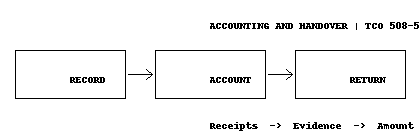
The first is to account for the work carried out when the principal requests it. The second is to deliver everything received in connection with the mandate. The statutory wording covers more than returning whatever cash the agent happens to identify as a remaining advance. The review must trace the receipts generated by or entrusted for the particular work.
An account explains what happened. It identifies money received, payments made, items acquired, liabilities undertaken and the resulting position. A handover performs the separate obligation to deliver the relevant money or property. Providing a spreadsheet without paying a balance does not necessarily discharge the delivery obligation; making one transfer without explaining the underlying receipts does not necessarily supply the requested account.
The legal source is Law No. 6098, Article 508. A focused request should identify both obligations where both are relevant. This keeps a dispute about missing explanations from being confused with a dispute about whether a known balance has actually been transferred.
Trace receipts by transaction rather than by account total
Separate money advanced by the principal from money collected from a third party. Record the payer, date, amount, currency, purpose and recipient account for each entry. A bank account can contain unrelated personal or business funds, so its overall balance does not by itself establish the amount belonging to this mandate.
For each incoming payment, retain the instruction or transaction record explaining why the agent received it. A refund, a purchase advance, sale proceeds and reimbursement of an expense have different accounting histories. The classification should come from evidence, not from a description assigned only after the principal asks for repayment.
Do not assume that the agent received every amount that a third party was supposed to pay. An unpaid third-party claim is not cash already collected. That distinction is central to choosing between a delivery demand against the agent and a claim concerning an outstanding receivable. Article 509 becomes relevant where the agent acquired that receivable in the agent’s own name for the principal.
Expenses must be connected with proper performance
Article 510 requires the principal to reimburse expenses and advances, with interest, incurred for proper performance of the mandate and to discharge the agent from obligations undertaken for that purpose. Those duties belong in the same review as the agent’s accounting obligations. An account must not assume either that every deduction is legitimate or that the principal owes nothing beyond the initial advance.
Identify the payee, item, date, supporting document and connection with the instructed work. Distinguish an actual payment from an unpaid invoice and a reimbursement claim from a proposed future expense. The same cost should not be deducted from collected funds and separately demanded again without explaining the reconciliation.
A discrepancy between the amount advanced and the amount returned is not automatically the loss recoverable. The reviewer must establish authorised or otherwise legally justified expenses, payments already made and any disputed entries. Keeping disputed costs in a separate column allows the uncontested balance to remain visible without accepting the agent’s entire account.
Remuneration is different from money held for a specific purpose
Under Article 502, remuneration is payable where the parties agreed it or custom requires it. Determine the agreed fee basis and earning conditions. A payment expressly made for official charges should not be silently relabelled as a fee merely because the agent later presents an overall service invoice.
Conversely, an earned and agreed fee is not necessarily refundable simply because the principal expected a different commercial outcome. The service promised, the work performed and the applicable fee arrangement must be established. A mandate account is not a guarantee that every transaction will achieve the principal’s desired result.
Where an agent asserts a right to retain property or offset a claim, identify the specific legal basis. The existence of a fee dispute does not by itself answer whether a particular document, item or sum can be withheld. The set-off guide explains why a deduction in a ledger is not a substitute for the statutory conditions and declaration required for set-off.
Documents and acquired items belong in the handover schedule
A mandate can generate original receipts, contracts, application records, third-party correspondence and purchased movable items. Identify which records evidence the work and which items were received for the principal. A vague request for every document the agent possesses is less useful than a transaction-specific list that explains the connection with the mandate.
Record whether the item to be delivered is an original, a copy, an electronic record or a physical asset. An email forwarding a photograph of a signed instrument is not necessarily delivery of the original instrument. Equally, a demand for originals should take account of where the original is lawfully held and whether a public authority or third party retains it.
Use a dated handover record listing what was actually transferred and what remains missing. Do not sign a statement acknowledging complete delivery when the inventory still identifies outstanding items. A partial handover can be recorded without turning it into a release of every accounting or compensation issue.
Late delivery of money has an express interest consequence
Article 508 requires the agent to pay interest on money whose delivery to the principal is delayed. The legal explanation must identify the money due and when delivery became late. The date the principal originally funded the mandate is not automatically the starting point for every later remittance claim.
Review the agreed remittance schedule, completion event, instructions, requests and actual transfers. Preserve proof of receipt of any relevant demand. Different sums can become deliverable at different times, so a single interest start date applied to an undifferentiated total can overstate or understate the claim.
The provision does not specify one fixed annual rate for every currency and transaction. Rate, contractual interest terms and other applicable interest legislation require separate assessment. An article about the duty to account should not manufacture a universal rate or treat an interest calculation as proof that the underlying principal amount is established.
Article 509 applies to acquisitions in the agent’s own name
The first paragraph concerns claims against third parties arising from transactions the agent conducted in the agent’s own name for the principal’s account. Those claims pass automatically to the principal when the principal has fulfilled all obligations owed to the agent. Each part of that description matters: the transaction, the own-name capacity, the principal’s account and performance of the principal’s obligations.
This is different from an authorised representative making a contract directly in the principal’s name. In that situation the rights created by the represented transaction require examination under the representation rules. The international representation guide addresses the separate authority question in cross-border dealings.
It is also different from an ordinary contractual assignment. Article 509 provides an automatic statutory transfer when its conditions are met. The receivables-assignment guide explains voluntary transfers. A review should identify the legal source relied on instead of demanding an assignment document as the only possible source of the principal’s entitlement.
The principal’s own outstanding obligations cannot be ignored
Article 509 expressly links the automatic transfer to fulfilment of all obligations towards the agent. The file must therefore show the fee and expense position, not merely the third-party contract. An assertion that the agent has behaved badly does not itself establish that every condition of the statutory transfer has occurred.
Reconcile the principal’s obligations separately from sums the agent must deliver. Identify admitted amounts, disputed charges and any legally effective discharge. The aim is not to accept an unsubstantiated invoice as a veto over transfer, but to establish the actual state of the mutual obligations from the governing agreement and records.
Communications with the third-party debtor should identify the claim and the asserted entitlement accurately. Do not send competing payment instructions based solely on an incomplete account. A transfer dispute, a payment dispute and the agent’s disclosure obligation can require different steps even when they arise from the same transaction.
The agent’s bankruptcy creates an additional distinction
Article 509 allows the principal to assert against the agent’s bankruptcy estate that the qualifying receivable has passed to the principal. It also permits the principal to seek separation and delivery of movable property acquired by the agent in the agent’s own name for the principal’s account. These provisions concern identified acquisitions, not a general promise of priority for every amount a principal claims.
The article expressly preserves the benefit of the agent’s retention right for the bankruptcy estate. That qualification must remain visible. A statement that the principal can always remove an item from the estate without considering the retention position would omit part of the statutory rule.
Prepare the acquisition documents, mandate instructions and evidence identifying the property or receivable. Money already spent, an identifiable movable asset and an unpaid third-party claim are not identical objects of recovery. The legal route must correspond to what exists and the conditions that establish the principal’s right.
Instructions and delegation can explain a disputed account
Article 505 requires compliance with the principal’s express instructions, with a limited exception where permission cannot be obtained and the principal would clearly have agreed if informed. Departure outside that exception is not treated as proper performance merely because the work was completed unless the resulting loss is compensated. The account should therefore retain instructions and changes, not only invoices.
Articles 506–507 distinguish authorised delegation from unauthorised substitution. Where an agent delegates without authority, responsibility for the substitute’s conduct is treated as responsibility for the agent’s own conduct. Authorised delegation instead requires due care in selection and instruction. The principal can directly exercise the agent’s rights against the substitute in both situations specified by Article 507.
An agent saying that another person handled the funds has not thereby resolved the account. Identify the substitute, authority, instructions and transfer records. A lawful request should trace the money and relevant rights without assuming that every person copied into correspondence became a joint agent or personally owes the entire balance.
Prepare an enforceable request, not just an accusation
A useful request identifies the engagement, the period covered, known receipts, missing explanations, items to be delivered and the disputed balance. It should distinguish a request for information from a demand for payment. State the basis of any proposed calculation and preserve evidence of the request and response.
Lawful evidence collection matters. Keep complete messages and source documents; do not enter somebody else’s banking or email account without authority. The electronic-evidence guide explains the distinction between a selected screenshot and a traceable record. A criminal allegation also requires its own facts and cannot replace the civil account automatically.
For an overseas principal, provide the original engagement, authority documents, bank records and a dated reconciliation. Include any served court or enforcement paper. Requesting an account does not itself suspend a deadline, recover the balance or establish the competent court. Those procedural questions must be assessed against the actual relationship and relief sought.
Frequently asked questions
Can a principal demand an account before accepting the agent’s final balance?
Article 508 requires the agent to account on the principal’s request. The account and the obligation to deliver money or items are connected but separate duties.
Does sending a spreadsheet discharge the repayment obligation?
Not by itself. Explaining receipts and expenses is different from delivering the money or property due under the mandate.
Can every expense be deducted from the principal’s funds?
Article 510 concerns expenses and advances incurred for proper performance. Each deduction needs its contractual and evidential basis; it is not established merely by appearing in the agent’s account.
Is an advance for charges automatically an earned service fee?
No. The payment’s purpose and the agreed remuneration must be distinguished. Article 502 recognises remuneration based on agreement or custom, not an automatic reclassification of every advance.
Does late handover of money carry interest?
Yes. Article 508 expressly requires interest on money delivered late. The amount due, start date and applicable rate must still be established.
When does an own-name receivable pass to the principal?
Article 509 provides automatic transfer of qualifying third-party claims when the principal fulfils all obligations towards the agent. The transaction must have been conducted in the agent’s own name for the principal’s account.
Does bankruptcy erase a qualifying statutory transfer?
Article 509 allows the principal to assert the transfer against the agent’s bankruptcy estate. The principal must establish the conditions and identify the receivable concerned.
Can acquired movable property be separated from the bankruptcy estate?
Article 509 permits the specified separation and delivery claim for own-name acquisitions made for the principal. The estate also benefits from the agent’s retention right, which must be considered.
Does delegation automatically excuse the original agent?
No. Articles 506–507 distinguish permitted delegation from unauthorised substitution and regulate the agent’s responsibility and the principal’s direct rights against the substitute.
What should an overseas principal provide?
Provide the engagement, instructions, receipts, expense evidence, authority documents, requests for accounts and any served proceedings. Separate the disputed entries from the verified balance.
Official sources
Turkish Code of Obligations No. 6098, Articles 502 and 505–510; official Ministry text, pages 102–103. English explanations are not an official translation; the Turkish statutory text governs.
Ask about an agent’s account
State the work entrusted, the money or records outstanding and any urgent response date. Do not include identity numbers or confidential attachments in the initial enquiry.
Istanbul and Mersin offices
Bakırcı & Keskin Law Office is Mersin-based and coordinates Turkish matters from its Istanbul and Mersin offices. A confidential channel should be agreed before sending engagement files, financial records or original documents.
Istanbul — Polaris Plaza
Maslak Ahi Evran Caddesi, Polaris Plaza No:21, Floor 9, 34475 Sarıyer/İstanbul. Istanbul office directions.
Mersin — Profit İş Merkezi
İhsaniye Mahallesi, 4903. Sokak, Profit İş Merkezi No:23, Floor 3, Office 14, 33070 Akdeniz/Mersin. Mersin office directions.
Call +90 552 224 43 66. General legal information; an enquiry does not establish representation or suspend a deadline.
Contact regarding a legal matter
In your first message, you may briefly state the subject, your country or city, and any relevant notification or recent procedural date. Please do not send identity numbers, medical data, or personal documents. Messaging alone does not constitute legal advice or create a lawyer–client relationship.
Discover more from Bakırcı & Keskin Hukuk Bürosu
Subscribe to get the latest posts sent to your email.