Having Unperformed Work Completed at the Debtor’s Cost in Turkey: TCO Article 113
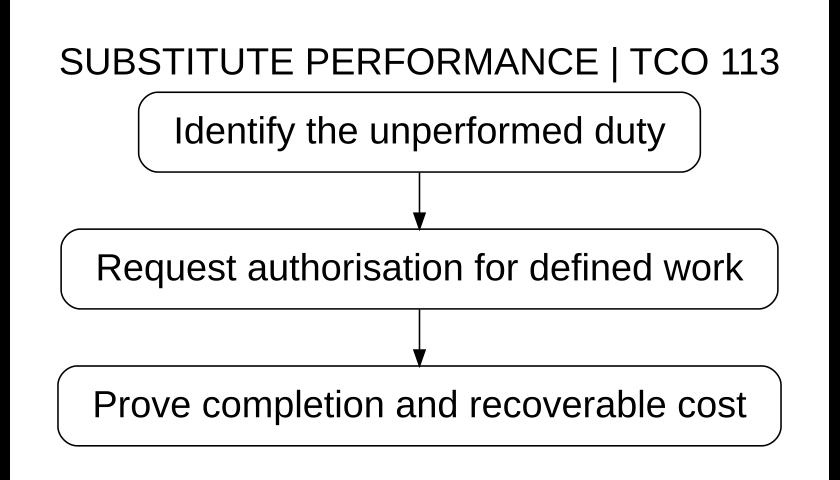
A creditor whose Turkish counterparty has not carried out a promised act can ask for authorisation to have that act performed by the creditor or another person at the debtor’s expense. This is the mechanism in Article 113 of the Turkish Code of Obligations. It is not an unrestricted licence to appoint any replacement, redesign the project and send the entire invoice to the original debtor. The application must identify the enforceable duty, the missing performance and the work for which authorisation is sought. Article 113 also provides remedies where a debtor breaches an obligation not to do something, including removal of the resulting non-compliant condition.
Have a general question about this article? Ask anonymously
The starting point is an unperformed obligation to act
Article 113 concerns a yapma borcu, an obligation to carry out an act. The creditor must first establish what the debtor promised to do. An unpaid money debt, a duty to deliver an existing item and an undertaking to produce a result are not interchangeable merely because each can be described as non-performance.
Read the executed agreement, accepted specifications and effective amendments. Identify the promised result and its boundaries: location, quantities, technical standard and completion conditions. A general complaint that the counterparty did not provide a satisfactory service leaves the court without a sufficiently defined act to authorise somebody else to perform.
The primary source is Law No. 6098, Articles 112–114. Article 112 supplies the general compensation rule for non-performance, Article 113 addresses performance of an act and breach of a negative obligation, and Article 114 concerns the scope of responsibility. Their different functions should remain visible in the claim.
Establish the due performance and the creditor’s cooperation
The file must explain why the act should already have been performed. A binding completion date, a target dependent on approved specifications and work awaiting access can present different factual positions. Preserve the timeline rather than treating the date on the first quotation as decisive after subsequent amendments.
Article 97 generally requires a party demanding performance in a reciprocal contract to have performed or offered its own performance unless entitled to perform later. A client required to provide access, an approved design or an advance should document the relevant cooperation. An unfulfilled client obligation cannot simply be omitted from the replacement request.
The reciprocal-performance guide explains those separate issues. A debtor’s valid withholding position, a creditor’s refusal to accept proper performance and straightforward non-performance must be distinguished before a remedy is selected.
Article 113 provides a request for authorisation, not a blank cheque
The first paragraph permits the creditor to request authorisation for performance by the creditor or someone else at the debtor’s expense. The requested work should reproduce the obligation owed, not silently expand it. Identify who would perform it, what access is required and how the proposed scope corresponds with the original undertaking.
A replacement quotation is useful when it itemises the missing performance. It is less useful when it combines completion of the original work with unrelated improvements. Separate those elements before seeking authorisation. The original debtor should not be presented with an unexplained total for a different, more extensive project.
The court’s actual decision must then be read for its scope. Approval of a defined step is not proof that every later change, additional contractor or increased cost is authorised. Retain the decision and compare the implementation record with it. The existence of a permission and the amount ultimately recoverable are distinct questions.
Check whether another person can actually perform the same act
Article 83 states that personal performance is not required unless the creditor has an interest in the debtor performing personally. This makes the character of the original obligation important. A task that another appropriately qualified provider can complete is different from an undertaking dependent on an identified person’s unique qualities.
The review must consider more than whether a replacement is commercially available. Determine whether the replacement can lawfully supply the promised result, whether necessary permissions exist and whether the creditor controls the required materials or access. Article 113 does not itself supply a professional licence, a software licence or permission to enter third-party premises.
Where personal performance is essential, damages or another supported remedy may require assessment instead. Do not describe an entirely different service as equivalent merely to fit a replacement invoice into Article 113. The legal remedy follows the obligation actually undertaken.
Replacement does not automatically cancel the original contract
Obtaining the promised act through another performer differs from withdrawing from the agreement and seeking restitution. A request should make clear whether the creditor continues to seek the contractual result, alleges a right to end the relationship or advances properly formulated alternative relief.
Articles 123–125 govern distinct remedies following default in reciprocal contracts. Their additional-period and election requirements should not be confused with the wording of Article 113. The default notice and remedies guide explains that separate framework.
A demand for full return of an advance and the whole price of obtaining the original result can overlap. Before adding both, identify the treatment of the original contract price, the value retained and the remaining duties. The legal and financial position must be consistent rather than a collection of every possible demand.
Defective work during construction has a specific rule in Article 473
Article 473(2) applies where, during production, it becomes clear that the work will be defective or contrary to the contract because of the contractor’s fault. It allows the client to give a suitable period to remedy the problem and warn that otherwise repair or continuation will be entrusted to a third person at the contractor’s risk and expense.
That provision has its own conditions and warning mechanism. A contractor dispute should be examined under the specific works-contract rules rather than treating Article 113 as an excuse to omit them. The nature of the defect, responsibility, timing and notice must be established from the actual project.
The unfinished-renovation guide addresses the broader works-contract setting. A detailed replacement-performance application serves a narrower purpose: defining the act another person is to perform and the basis for charging its cost.
A voluntary change of contractor can have a different financial consequence
Article 484 concerns the client choosing to end a works contract before completion while paying for the performed part and compensating the contractor’s loss. A client dissatisfied with the commercial relationship should not assume that describing a new provider as a replacement proves breach by the first contractor.
The client-led cancellation guide explains that separate route. Keep the original communications intact so the legal assessment can distinguish a supported breach remedy from a decision to stop work for independent reasons.
The distinction also protects a legitimate claim. Evidence of a contractor’s serious failure should not be obscured by an imprecise message saying only that the client changed their mind. Identify the reason for the requested remedy accurately before handing the project to someone else.
Article 113 also covers an obligation not to do something
The second paragraph makes a debtor who breaches a negative obligation responsible for the damage caused by that conduct. First identify the valid undertaking not to act and the specific conduct alleged to breach it. A preference expressed during negotiations is not necessarily an enforceable contractual restriction.
The third paragraph permits the creditor to request removal of the non-compliant condition or authorisation to remove it at the debtor’s expense. This can require a different remedy from an award of money. The application must identify the condition that remains, its connection with the obligation and the measure capable of removing it.
A negative covenant also requires review of its validity and scope. Article 113 does not make every restraint in a contract lawful or enforceable. Restrictions affecting work, competition, property or personal rights can engage additional provisions. The legal basis of the restriction must be established before its removal remedy is invoked.
No unrestricted right to enter, dismantle or seize follows from the statute
Authority to remove a non-compliant condition must not be confused with permission to use force, enter restricted premises or dispose of property belonging to someone else. Identify who controls the location and which rights the proposed measure would affect. Third-party interests are not extinguished by a dispute between two contracting parties.
Technical work can also require independent safety and administrative arrangements. A court authorisation must be implemented according to its terms and applicable rules. It should not be described as a substitute for qualified personnel or necessary public approvals.
Where immediate danger exists, appropriate protective action and documentation must be coordinated. Do not preserve a hazard merely for litigation, but do not assume that every expense incurred during an asserted emergency will automatically be recoverable under Article 113. The urgency and the legal basis of the response require evidence.
Record the condition before replacement destroys the original evidence
The second performer may remove, repair or complete the very features that demonstrate the first debtor’s non-performance. Preserve the relevant state through dated records, a reasoned inspection and, where appropriate, the lawful evidence-preservation procedure. The purpose is to retain facts that would otherwise disappear.
The evidence-preservation guide concerns that separate procedure. An inspection order records evidence; it is not automatically permission to carry out replacement work at another party’s cost. State separately which order has been requested and which one has actually been obtained.
An inspection should distinguish unfinished elements, defective elements, later damage and improvements requested by the client. The replacement provider’s final invoice alone may not reveal what existed before intervention. Retain its preliminary findings and the original supporting photographs or measurements.
Cost recovery requires a documented and non-overlapping account
Article 113 expressly preserves compensation claims alongside its performance mechanism. That reservation does not establish every claimed amount without proof. Separate the cost of the authorised act from consequential loss, the original contract balance and unrelated expenditure.
A useful account records the authorised task, provider, price basis, invoice, actual work and payment. Compare quotations on like-for-like specifications. Differences in quantity, materials, timing or included services should be explained rather than hidden behind a single statement that the replacement was more expensive.
Record advances, returned materials, rebates and any payment by the first debtor or an insurer. A cost already reimbursed should not be demanded again under a different label. If the creditor also claims lost use or delay loss, identify its causal link and make clear why it does not duplicate a charge in the replacement account.
A contract clause about substitute work still needs interpretation
The contract may provide a defined intervention procedure, cost allocation or notice process. Read its actual wording and the legal rules governing that contract type. A clause allowing inspection does not necessarily authorise replacement, and a right to replace does not necessarily resolve the maximum recoverable expenditure.
Where the clause is part of pre-written standard conditions, Articles 20–25 address incorporation, interpretation and substantive control. The standard-terms guide explains why a clause appearing in a template is not sufficient proof that every part of it binds the counterparty.
The parties can also reach a later agreement for a defined handover. Record its scope, payments and reserved claims. A practical settlement may resolve the proposed work without resolving all earlier damage. The document should say what is settled rather than leave that effect to an ambiguous receipt.
Prepare a request that can be implemented and audited
| Part of the request | Evidence and practical purpose |
|---|---|
| Original obligation | The accepted contract, specification and valid changes identify the promised act. |
| Non-performance | A chronology and condition record establish what remains undone. |
| Creditor’s position | Access, approvals and payment records address reciprocal duties. |
| Proposed intervention | A defined scope, competent performer and lawful access arrangements show what permission is sought. |
| Cost basis | Comparable quotations and an itemised schedule distinguish necessary work from improvements. |
| Final reconciliation | Completion, invoices, payments and credits establish the remaining supported demand. |
For a party abroad, keep the original-language documents beside translations and identify the authority of the person arranging local access. Receiving materials, instructing a replacement and settling all claims are different acts. Any served proceedings require their own procedural response; preparing this dossier does not suspend a court deadline.
Frequently asked questions
Can unfinished work be performed by someone else at the debtor’s cost?
Article 113 permits a request for authorisation where an obligation to act has not been performed. Establish the duty, failure and defined replacement work rather than assuming an unrestricted reimbursement right.
Is hiring a replacement enough to prove the original debtor owes its invoice?
No. The legal route, authorised scope, actual work and recoverable cost require evidence. An invoice cannot itself establish every condition.
Can the creditor improve the project and charge every upgrade to the debtor?
Article 113 concerns the promised performance. Separate completion of that obligation from additional improvements and identify any independent agreement supporting them.
What if personal performance by the original debtor was essential?
Article 83 makes the creditor’s interest in personal performance relevant. Determine whether a substitute can supply the same legally required act; other remedies may need assessment.
Does substitute performance automatically terminate the contract?
No. Obtaining the promised act and ending the contractual relationship are distinct remedies. The requested relief and financial account must be consistent.
Is Article 473 irrelevant when defective building work is ongoing?
No. Article 473(2) has a specific warning and suitable-period mechanism for its stated works-contract circumstances. The special rule must be reviewed.
Can Article 113 address breach of a promise not to act?
Yes. It provides for resulting damage and for removal of the non-compliant condition or authorisation to remove it at the debtor’s expense, subject to the valid underlying duty.
Does an evidence-preservation order authorise all replacement work?
No automatic permission follows. Recording evidence and authorising performance have different objects. Read the actual order and its scope.
Are damages excluded once substitute performance is sought?
Article 113 preserves compensation claims. Each loss still needs a legal and evidential basis, without double recovery of the same item.
What should an overseas client provide for review?
Provide the contract, chronology, condition evidence, notices, proposed replacement scope, cost schedule, payment record and any court decisions or served papers.
Official legal sources
Turkish Code of Obligations No. 6098, Articles 20–25, 83, 97, 112–114, 123–125 and 473–484; official Ministry text, page 22, containing Article 113. This is an English explanation, not an official translation or permission to undertake work without the necessary legal authority.
Ask about substitute performance
Describe the promised act, what remains undone and whether a notice or court decision exists. Arrange a confidential channel before sending contracts, access details or financial records.
Istanbul and Mersin offices
Bakırcı & Keskin Law Office is Mersin-based and works throughout Türkiye with an Istanbul and Mersin focus.
Istanbul — Polaris Plaza
Maslak Ahi Evran Caddesi, Polaris Plaza No:21, Floor 9, 34475 Sarıyer/İstanbul.
Mersin — Profit İş Merkezi
İhsaniye Mahallesi, 4903. Sokak, Profit İş Merkezi No:23, Floor 3, Office 14, 33070 Akdeniz/Mersin.
Call +90 552 224 43 66. An enquiry does not establish representation or suspend a legal deadline.
Contact regarding a legal matter
In your first message, you may briefly state the subject, your country or city, and any relevant notification or recent procedural date. Please do not send identity numbers, medical data, or personal documents. Messaging alone does not constitute legal advice or create a lawyer–client relationship.
Discover more from Bakırcı & Keskin Hukuk Bürosu
Subscribe to get the latest posts sent to your email.