Paying Another Person’s Debt in Turkey: Subrogation and TCO Article 127
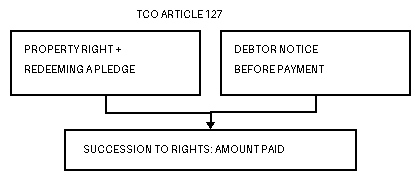
Paying somebody else’s Turkish debt does not automatically make the payer the new creditor. Article 127 of the Turkish Code of Obligations identifies two general routes to subrogation: redeeming property pledged for another person’s debt while holding ownership or another right in rem over that property; and payment after the debtor has notified the creditor that the paying third person will succeed to the creditor’s rights. Other statutory subrogation cases remain reserved. The distinction matters before a relative, shareholder, affiliate or property owner sends money expecting to recover the debt and use the original security.
Have a general question about this article? Ask anonymously
Separate payment, reimbursement and succession to a claim
Three questions arise when someone pays a debt owed by another person. First, did the payment perform the obligation owed to the creditor? Second, does the payer have a legal right to reimbursement from the debtor? Third, has the payer succeeded to the creditor’s existing rights? A bank transfer can help prove the first event without conclusively answering the other two.
Subrogation means succession to the creditor’s rights by operation of the relevant legal rule. It is different from an independent reimbursement promise between payer and debtor. The distinction affects the legal basis of the claim, the documents required and the treatment of existing security. A demand should state which right the payer actually relies on rather than merely refer to money paid.
The general provisions are Law No. 6098, Articles 83 and 127. This guide concerns a third-party payer who needs to establish the applicable route. A surety paying under a suretyship and a joint debtor seeking contribution have separate statutory rules, addressed below and in their dedicated guides.
Article 83 does not itself grant every payer a recovery right
Article 83 provides that the debtor need not perform personally unless the creditor has an interest in personal performance. The article explains why performance is not invariably required to come directly from the debtor. It should not be transformed into a rule that every third person who supplies money automatically receives the original claim.
Identify whose obligation is being performed and whether the payment actually reaches the person entitled to receive it. A transfer to an intermediary requires examination of that person’s authority and the payment’s purpose. The account holder, contracting creditor and person issuing a receipt need not be the same legal person. The records should explain their roles rather than leave the payer to reconstruct them after a dispute.
The intended payment should also identify the particular debt. Where several invoices, instalments or facilities exist, the transfer cannot safely be described only as support for the debtor. Our payment-allocation guide explains the separate rules for deciding which obligation has been paid. Establishing allocation is necessary before stating which claim the payer says it acquired.
The pledged-property route requires an ownership or other real right
Article 127’s first route applies where the payer redeems property pledged for another person’s debt and holds ownership or another right in rem over that property. The payment protects a legally identified property interest. The rule does not apply merely because the payer dislikes the possibility of an enforcement sale or has a commercial relationship with the owner.
Obtain the documents establishing the pledge and the payer’s right over the same property. Identify the secured debt, the creditor and the amount needed for the relevant redemption. A general statement that the family owns assets in Turkey does not identify the statutory relationship between this payer, this property and this debt.
Distinguish a right in rem from an ordinary contractual interest. The statutory wording identifies ownership or another real right; it should not be paraphrased as any financial interest in the property. The legal nature of the asserted right needs to be established from the relevant agreement, registration and other evidence before applying this route.
The provision also refers to property pledged for another person’s debt. A payer who is already personally liable for the debt can raise a different legal issue. The review should identify whether the person is a third-party property provider, a principal debtor, a surety or a participant with more than one role. Those positions should not be merged merely because all appear in the lender’s file.
Redemption evidence must connect the payment to the secured obligation
A redemption file should show the secured obligation before payment, the sum received and the event by which the property was released from the relevant burden. Obtain the creditor’s statement and the documents required for the security concerned. Article 127 supplies a succession rule; it does not replace every registration or documentary step applicable to the particular asset.
Separate a legal release from a proposal to release. A bank’s draft discharge letter and a completed registry entry are different records. Likewise, a payment instruction is not the same as confirmed performance. The chronology should identify what actually occurred so that the claimed subrogation is not based on a transaction that remained incomplete.
The payer should not assume that protecting one pledged asset gives ownership of every claim and every item of collateral held by the creditor against the debtor. The statutory succession operates in the amount performed and in relation to the identified obligation. Other claims, security interests and third-party rights require their own scope analysis.
The notice route depends on a communication from the debtor before payment
Article 127’s second route applies where the debtor notifies the creditor, before performance, that the third person making performance will succeed to the creditor’s rights. Three details are express: the notification comes from the debtor, it is directed to the creditor and it precedes performance. An explanation that omits any of these elements risks changing the statutory test.
The payer’s own bank reference saying recoverable loan does not automatically establish the debtor’s notification to the creditor. Nor does a private reimbursement arrangement between payer and debtor prove that the creditor received the information required by Article 127. The parties should preserve the actual communication rather than infer it from their shared expectation.
Identify the intended payer and the debt covered by the notice. An undifferentiated message referring to future help can leave the relevant performance uncertain. Retain the notice’s full wording, its sender and addressee, and evidence of communication before the transfer. Where a representative acts for the debtor, the relevant authority should be reviewed as part of the same file.
Article 127 does not prescribe a universal notarisation form for this notification in its text. That does not make proof unimportant. Select a channel that establishes the content and timing and check any separate rule applicable to the transaction. The absence of a universal form requirement is not a reason to rely solely on a disputed recollection of a telephone conversation.
A later letter does not automatically repair missing prior notice
The timing in the second route is before performance. A statement produced after the creditor has already received the money should not be labelled the required prior notification without evidence that the relevant message was actually communicated earlier. Keep the original record and distinguish a later confirmation of an earlier fact from an attempt to create a new fact retrospectively.
Where payment has already occurred without the asserted notice, examine the other possible legal bases rather than declaring subrogation automatically established. The payer’s independent agreement with the debtor, another statutory subrogation provision or a valid transfer arrangement each requires its own conditions. None should be invented merely to give the completed transfer the result the payer hoped for.
Assignment is a separate mechanism. Articles 183–194, including the written-form rule for contractual assignment, should be considered where the parties actually intend a transfer of a claim. Our assignment guide addresses it. A later document called assignment still requires examination of whether the claim it purports to transfer continues to exist.
Succession is limited to the amount performed
Article 127 states that the third party succeeds to the creditor’s rights to the extent of performance. The opening loan amount, the maximum registered security and the sum actually paid are different figures. The payer’s claim should not use the largest of them without a legal basis.
Prepare a reconciliation identifying the obligation, the amount due before payment, the amount received and any remaining creditor balance. Keep disputed interest, expenses and other components visible. A single gross transfer can contain sums attributed to more than one obligation; the subrogation analysis must follow the established allocation rather than an unexplained total.
Partial payment also requires particular care with remaining creditor and security rights. Article 127 should not be described as automatically giving the payer exclusive control of the entire claim or priority over the unpaid creditor. Identify the applicable security and any special rules governing the respective positions. The general phrase succession to rights is not a substitute for that analysis.
The payer acquires a legal position, not a stronger invented debt
A subrogation claim must be connected to the underlying obligation. Obtain the contract, amendments, payment history and any settlement affecting it. The payer should not assume that a transfer of money validates a defective original claim or eliminates facts showing that part of the debt had already been discharged.
The recovery demand should identify the original creditor, the performance made, the statutory route and the amount now sought. This gives the debtor a clear explanation of the claim and allows the supporting documents to be matched to it. A demand that says only reimbursement requested leaves the source of the asserted creditor rights unclear.
Do not assume a new universal limitation period starts simply because the person receiving the claim changes. The limitation analysis must identify the actual claim, its legal basis and the events affecting time. A general Article 127 guide cannot responsibly provide one deadline for every underlying debt and every independent reimbursement relationship.
Surety payment and joint-debtor contribution have separate provisions
Article 127 expressly reserves other statutory subrogation cases. Article 596 regulates succession following payment by a surety, with its own qualifications. The surety recourse guide explains the role of security, debtor notification and the particular recovery framework. A surety should not be assessed solely as an ordinary volunteer payer.
Articles 167–168 address internal contribution and subrogation among joint and several debtors. The joint-debtor guide explains why internal shares differ from the creditor’s original right to demand the whole debt. A debtor paying its own shared obligation occupies a different position from a third party using Article 127’s notice route.
The correct sequence is to classify the payer first, then identify the applicable statute. A person can appear as a shareholder, property owner and surety in different documents. The role under which the particular payment was made must be established; a business title alone does not select the right recovery rule.
Family and company relationships do not replace the missing legal basis
A payment by a relative or an affiliated company can be a loan, an agreed expense payment, a contribution or another transaction. The relationship between the participants does not establish one universal result. The payer’s intention and the legally effective arrangement need evidence rather than an assumption that related people always expect repayment.
Keep the payer’s independent agreement with the debtor separate from the documents used to establish statutory subrogation. The former can explain why the money was supplied; the latter must establish the route by which creditor rights passed. Clear separation prevents a valid reimbursement promise from being mistakenly described as proof that an original mortgage or other security automatically belongs to the payer.
Use exact legal identities for companies. A parent and subsidiary are not one person merely because they share a brand or director. The payment, notice and receipt should identify the entity whose debt is discharged and the entity supplying the funds. This is particularly important when documents are translated and informal group names replace registered names.
Collect payment evidence without losing the original claim documents
Obtain the creditor’s acknowledgement of the amount and obligation performed. The receipt and returned-instrument guide explains the general documentation rules. In a subrogation closing, coordinate the treatment of original instruments with the rights claimed by the payer instead of assuming that every paper should simply be destroyed.
The complete file should contain the underlying debt, the property-right or prior-notice evidence, the transfer record, the creditor’s receipt and the relevant security documents. Add any correspondence identifying the remaining balance. A collection spreadsheet is useful only when its entries can be traced to those sources.
For an overseas payer, governing law and jurisdiction require separate assessment. A Turkish bank transfer does not alone determine every legal question. Include any served proceedings and delivery records promptly: a reimbursement request or subrogation notice does not itself file a court response or stop an enforcement deadline.
Frequently asked questions
Do I automatically become the creditor when I pay someone else’s debt?
No. Article 127 requires one of its stated routes, while other statutory subrogation cases remain reserved. Payment, reimbursement and succession to creditor rights are separate questions.
What property interest does the pledged-property route require?
The payer must own or hold another right in rem over the property pledged for another person’s debt and redeem it from that pledge. An unspecified financial interest is not the statutory test.
Who must give the notification under Article 127’s second route?
The debtor must notify the creditor before performance that the paying third party will succeed to the creditor’s rights. The payer’s own transfer reference does not automatically establish that notification.
Does a private reimbursement agreement prove the creditor was notified?
No. An agreement between payer and debtor and a notification received by the creditor are different records. Establish the actual communication and its timing.
Can a letter sent after payment automatically satisfy the prior-notice rule?
No. The statutory route requires notification before performance. A later letter must not be treated as proof of an earlier communication without supporting evidence.
How much of the creditor’s rights passes to the payer?
Article 127 limits succession to the extent of performance. Reconcile the actual payment and identified debt rather than using the original facility amount or security ceiling automatically.
Is Article 127 the only subrogation provision?
No. It expressly reserves other statutory cases. Surety payment under Article 596 and joint-debtor recourse under Article 168 require their own analysis.
Is subrogation identical to assignment of a receivable?
No. Assignment has its own requirements under Articles 183–194. Identify the legal route actually used and whether the claim purportedly transferred exists.
Does payment by a parent company establish the subsidiary’s reimbursement debt automatically?
The entities, payment purpose and legal arrangement must be established. Common ownership does not replace the statutory subrogation conditions or prove every independent reimbursement claim.
What records should a third-party payer retain?
Keep the debt agreement, property-right or prior-notice evidence, transfer confirmation, receipt, security documents and any independent reimbursement agreement. Include served proceedings and their service dates.
Official legal sources
Turkish Code of Obligations No. 6098, Articles 83, 127, 167–168, 183–194 and 596. The official Ministry text, pages 24–25 contains Article 127. The English discussion is explanatory; the Turkish statutory text governs.
Ask about paying another person’s debt
State your role, whether payment has already occurred and whether the debtor notified the creditor beforehand. Do not include confidential bank records or identity numbers in the first enquiry.
Istanbul and Mersin offices
Bakırcı & Keskin Law Office is based in Mersin and coordinates Turkish matters from Mersin and Istanbul. Agree a confidential channel before sharing loan, pledge or transfer records.
Istanbul — Polaris Plaza
Maslak Ahi Evran Caddesi, Polaris Plaza No:21, Floor 9, 34475 Sarıyer/İstanbul. Istanbul office directions.
Mersin — Profit İş Merkezi
İhsaniye Mahallesi, 4903. Sokak, Profit İş Merkezi No:23, Floor 3, Office 14, 33070 Akdeniz/Mersin. Mersin office directions.
Call +90 552 224 43 66. An enquiry does not establish representation or suspend a deadline.
Contact regarding a legal matter
In your first message, you may briefly state the subject, your country or city, and any relevant notification or recent procedural date. Please do not send identity numbers, medical data, or personal documents. Messaging alone does not constitute legal advice or create a lawyer–client relationship.
Discover more from Bakırcı & Keskin Hukuk Bürosu
Subscribe to get the latest posts sent to your email.