Warehouse Storage in Turkey: Inspection, Mixed Goods and Release Under TCO 571–575
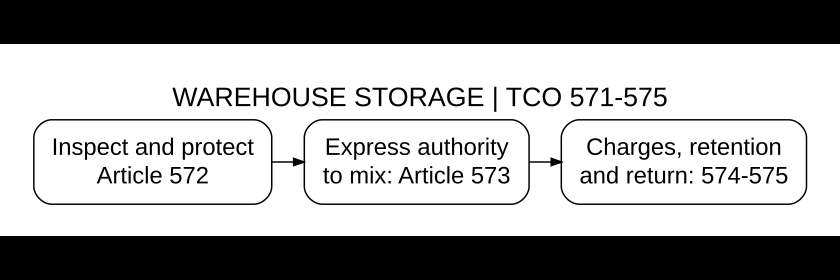
A Turkish warehousekeeper must protect stored commercial goods and permit the depositor to inspect them and take samples during customary business hours. Article 572 of the Turkish Code of Obligations separately requires access for necessary protective measures at any time. Article 573 prohibits mixing fungible goods without express authority, while Articles 574–575 regulate charges, retention and return. These rules make a warehouse dispute more than a disagreement over a daily storage rate. The legal review must identify the goods, the custody undertaking, the documents controlling release and any justified claim for retaining the stock.
Have a general question about this article? Ask anonymously
Commercial custody is different from renting an empty space
Identify what the operator undertook to do. An agreement to accept and protect goods is different from simply allowing another business to occupy premises and manage its own stock. A logistics contract can also combine transport, handling, storage and customs-related services. The obligations should be classified from the actual undertaking rather than the name of the building.
Record the contracting depositor and warehousekeeper separately from the goods’ owner, carrier and customs representative. Those roles can overlap, but they do not automatically belong to the same legal person. A delivery made by a carrier does not by itself establish that the carrier is entitled to direct every subsequent release of the stock.
This guide concerns the commercial-storage provisions in Law No. 6098, Articles 571–575. Our general safekeeping guide addresses the ordinary custody rules. Public-law requirements governing a bonded facility, particular products or licensed operations require a separate review; a private storage agreement does not replace those requirements.
The intake record establishes what the warehouse received
A useful intake record identifies the goods by batch, serial number, packaging, quantity and relevant condition. Keep the depositor’s inventory with the warehouse acknowledgement and the carrier’s delivery record. These documents answer related but different questions: what was sent, what arrived and what the keeper accepted for protection.
For sealed packages, distinguish the number of packages acknowledged from the contents actually checked. A signature for ten pallets should not be presented as proof that every unit inside each carton was counted unless the record supports that conclusion. Record reservations about packaging, seals, visible damage or discrepancies when they are observed.
The baseline also needs the date and agreed storage location. Later stock movements should be traceable to that baseline rather than reconstructed from a final balance alone. An apparently precise shortage claim is not reliable when it combines different batches, units or periods without showing how they relate to the delivered goods.
Article 571 does not turn every receipt into a document of title
Article 571 allows a warehousekeeper who publicly announces acceptance of commercial goods for storage to request permission from the competent authority to issue instruments representing the stored goods. The provision concerns an authorisation process. It is not a statement that any acknowledgement printed by a storage business automatically has that legal character.
Identify the document actually issued, its terms and the authority supporting the claimed legal effect. An inventory slip, invoice, collection instruction and instrument representing the goods are not interchangeable. The right to collect cannot safely be assessed from the word receipt without examining the document and the transaction.
This distinction matters where a bank, purchaser or another third party holds documentation concerning the stock. A keeper should establish the legal basis of the release instruction rather than assume that a copy emailed by one interested party resolves every competing claim. Conversely, the depositor should retain the documents required for the particular release mechanism agreed and lawfully applicable.
Article 572 requires care and notification of relevant changes
The warehousekeeper must protect the goods with the care of a commission agent. Article 572 also requires notification to the depositor, insofar as possible, where a change in the goods makes additional measures necessary. The duties concern both protection and communication. Silence after a significant change can obstruct the depositor’s ability to decide what protection is needed.
Document the condition observed, the time of discovery, the measures taken and the notification sent. The record should identify the affected batch rather than report only that there is a general problem in the warehouse. Preserve any instructions received in response and explain which action was carried out.
The contractual handling instructions remain important. Temperature, humidity, segregation and permitted movement can differ by product and undertaking. Do not invent a universal storage standard that the statute does not state. Identify the product’s relevant requirements and the actual obligation undertaken, then assess the keeper’s conduct against the applicable legal and contractual standard.
Inspection and sampling are not confined to the final collection date
Article 572 requires the keeper to allow the depositor to inspect the goods’ condition and take samples during customary business hours. The depositor does not have to wait until all goods are withdrawn to ask whether they are deteriorating or whether the inventory is accurate.
A request should identify the stock and the proposed inspection or sampling. Where someone attends on the depositor’s behalf, their authority and the scope of the task should be clear. Record the sample method, batch reference and handling so that the resulting analysis can later be connected with the stored goods.
The provision does not make an unrecorded sample conclusive proof of every condition throughout the whole storage period. Preserve the inspection findings and any disagreement about representativeness. A quantity check, a laboratory test and a visual examination address different issues and should not be merged into a single unsupported statement that the entire stock was defective.
Necessary protective measures have a different timing rule
The same article requires permission at any time for the depositor to take necessary protective measures. This must be distinguished from the customary-business-hours rule for inspection and sampling. A keeper should not apply an ordinary appointment schedule mechanically where the request concerns a necessary measure to protect endangered goods.
Identify the danger and the measure needed. The statutory protection is not an unrestricted invitation to conduct unrelated activities on the premises at any hour. The request should explain the connection between the proposed action and preservation of the relevant goods.
Keep evidence of access requests, responses and action taken. If a dispute later concerns increased damage, the chronology should show what was known, what protective step was proposed and whether it could be carried out. That evidence is more useful than a general allegation that access was difficult.
Mixing equivalent goods requires express authority
Article 573 prohibits the warehousekeeper from mixing fungible goods of the same kind and quality unless expressly authorised. Similarity of the goods is therefore not itself permission. A storage system designed for pooled stock must be supported by the relevant authority instead of treating every delivery as implied agreement to commingling.
Read the agreement and any batch-specific instruction. Establish which goods were covered by the permission and the quantity delivered under that arrangement. An authority concerning one commodity or storage period should not automatically be extended to a different product or later consignment.
Where mixing was authorised, each depositor can demand a share proportionate to that depositor’s entitlement. The keeper may separate an individual share without all depositors being present together. The statute thus provides a workable withdrawal mechanism, but it still requires a reliable account of each participant’s entitlement.
A pooled-stock account must show proportional rights
Keep the records of incoming quantities, authorised withdrawals and the remaining pooled stock. Use consistent units and product classifications. A volumetric measurement, gross package weight and net commodity weight should not be treated as the same quantity without an explained conversion.
The right to a proportional share does not justify giving one depositor more than its entitlement because that depositor was first to demand collection. Nor does the ability to separate a share without everyone’s attendance eliminate the need to identify the person entitled to receive it. Release authority and stock allocation remain separate checks.
If the dispute concerns a shortfall, identify whether it arose before mixing, during storage or in the withdrawal records. The legal explanation should not assume that the whole discrepancy belongs to the last depositor merely because that person discovered it. Preserve the evidence necessary to establish the actual event and affected rights.
Article 574 separates storage remuneration from other expenditure
The warehousekeeper can request the agreed or customary storage fee and expenses not arising from the storage itself, including maintenance, carriage and customs expenses. The charge must be classified correctly. A tariff for storage space and an invoice for a separately incurred transport cost require different supporting records.
Article 574 makes those expenses payable immediately. Storage remuneration is payable every three months and, in any event, when all or part of the goods is taken back. The article’s payment timetable should not be paraphrased as a rule that all charges become payable only at final withdrawal.
For a disputed invoice, identify the period, rate, stock quantity, withdrawal date and any separate expense. A later demand using an unexplained rate does not establish the agreement or custom relied on. The standard contract terms guide addresses separate controls relevant to pre-written conditions and unilateral changes.
Retention is tied to the goods and the keeper’s legal position
Under Article 574, the keeper has a right of retention over the goods for its claims while possessing them or while entitled to dispose of them through an instrument representing them. Physical location is therefore not the only relevant fact. The document-based power described by the article must also be examined where it is relied on.
A retention claim should identify the debt, the goods and the continuing possession or qualifying document position. It should not be stated as an unlimited power to hold any property belonging to the depositor. A disagreement over the amount also requires a proper reconciliation rather than an assumption that the keeper’s invoice is conclusive.
Retention is not ownership and does not by itself establish a right to consume or privately sell the goods at any chosen price. Any proposed realisation requires its applicable legal basis and procedure. The depositor should likewise avoid treating a disputed invoice as permission to enter the warehouse and remove stock by force.
Article 575 imposes a stricter fixed-term protection duty
The keeper must return commercial goods as under the general custody rules. Article 575 then adds a specific qualification: even in circumstances where an ordinary custodian could return goods early because of unforeseen reasons, the warehousekeeper must protect them until the agreed period ends. A warehouse cannot simply import the ordinary custodian’s early-return exception without this limitation.
The depositor’s own right to request return is a different question. Article 564 permits a depositor to request return at any time despite a fixed period, while requiring payment of expenses incurred in reliance on that period. Read that rule together with the keeper’s fee and retention position rather than confusing a depositor-requested collection with the keeper’s unilateral attempt to end custody.
The collection record should identify the recipient, authority, quantity and condition. Where only part is withdrawn, update the remaining inventory and the charge calculation. A general acknowledgement that a vehicle left the premises does not necessarily establish which goods were delivered or whether the balance of the stock remains protected.
Damage, transport and regulatory release need separate treatment
A damaged consignment can involve events during carriage and events after acceptance into storage. Build the chronology from dispatch, carrier delivery, warehouse intake, subsequent inspections and collection. The contractual and statutory basis of a transport claim should not be applied automatically to later independent storage.
A private right to delivery also does not establish that customs or other regulatory restrictions have been satisfied. Identify any actual hold, official decision or product requirement from its own documents. Do not attribute every refusal to release to the warehouse’s retention right when an independent legal restriction is the operative reason.
Where inspection, disposal or repair will change the evidence, our evidence-preservation guide explains a separate procedural route. A blanket disclaimer should also be checked against the liability-exclusion framework. Neither replaces proof of the particular storage duty and alleged breach.
Prepare the overseas depositor’s claim around identifiable stock
Provide the storage agreement, intake records, documents issued for the goods, mixing authority, inspection findings, notices and invoices. Add a movement schedule showing what arrived, what was released and what remains. Separate the sum demanded for release from any damages claim for missing or deteriorated stock.
Confirm the identity of the party authorised to instruct collection, especially where the depositor, owner and overseas buyer differ. Preserve the original documents alongside translations. An account prepared abroad should retain the original quantities, units and currencies so that the receiving lawyer can compare it with the warehouse records.
Include served court or enforcement documents and their service dates. Asking for an inventory or disputing a storage invoice does not itself file the response required in an existing proceeding. The enforcement guide for international clients explains the need to handle the substantive account and the procedural deadline separately.
Frequently asked questions
Can a depositor inspect commercial goods before collection?
Yes. Article 572 requires permission to inspect and take samples during customary business hours. Necessary protective measures have a separate access rule.
Must necessary protection wait for ordinary inspection hours?
Article 572 requires permission at any time for necessary protective measures. Identify the threatened goods and the protective purpose of the requested action.
Can equivalent goods be mixed without asking?
No. Article 573 requires express authority even for fungible goods of the same kind and quality. Similarity alone is not permission.
Must every depositor attend a withdrawal from authorised mixed stock?
No. Article 573 permits the keeper to separate an individual proportional share without all depositors being present. The entitlement and recipient still need verification.
Does every warehouse slip represent title to the goods?
No automatic rule of that kind appears in Article 571. It addresses permission to issue instruments representing stored goods; the actual document and authority must be examined.
When are storage fees and other expenses payable?
Article 574 makes the specified other expenses payable immediately and storage fees payable every three months and in any event on withdrawal of all or part of the goods.
Can the keeper retain stock for its claims?
Article 574 provides retention while the keeper possesses the goods or has the specified document-based power of disposal. The debt and relevant goods must be identified.
Does retention allow the keeper to sell at any price?
No. Retention is distinct from ownership and from the legal procedure for realising security. Article 574 does not grant unrestricted private disposal.
Can the keeper use the ordinary custodian’s early-return exception?
Article 575 requires continued protection until the agreed period ends even in the unforeseen circumstances that would permit an ordinary custodian’s early return.
What records are needed for a warehouse release dispute?
Provide the agreement, intake and movement records, release documents, mixing authority, inspection evidence, charges and any official hold or served proceeding.
Official sources
Turkish Code of Obligations No. 6098, Articles 564 and 571–575; official Ministry text, pages 114–115. The Turkish text governs; this is explanatory English guidance.
Ask about stored goods in Turkey
Identify the warehouse, the goods and whether inspection, charges, damage or release is disputed. Mention any urgent deadline without sending sensitive records in the initial enquiry.
Istanbul and Mersin offices
Bakırcı & Keskin Law Office is Mersin-based and coordinates Turkish matters from Istanbul and Mersin. Arrange a confidential channel for warehouse contracts, inventories and release documents.
Istanbul — Polaris Plaza
Maslak Ahi Evran Caddesi, Polaris Plaza No:21, Floor 9, 34475 Sarıyer/İstanbul. Istanbul office directions.
Mersin — Profit İş Merkezi
İhsaniye Mahallesi, 4903. Sokak, Profit İş Merkezi No:23, Floor 3, Office 14, 33070 Akdeniz/Mersin. Mersin office directions.
Call +90 552 224 43 66. General information; an enquiry does not establish representation or suspend a deadline.
Contact regarding a legal matter
In your first message, you may briefly state the subject, your country or city, and any relevant notification or recent procedural date. Please do not send identity numbers, medical data, or personal documents. Messaging alone does not constitute legal advice or create a lawyer–client relationship.
Discover more from Bakırcı & Keskin Hukuk Bürosu
Subscribe to get the latest posts sent to your email.