Late Contract Performance in Turkey: Default Notice, Extra Time and Remedies
A missed contractual obligation does not always entitle the creditor to cancel immediately, and a reminder is not the same legal act as withdrawing from the contract. Article 117 of the Turkish Code of Obligations establishes when a debtor is in default. In reciprocal contracts, Articles 123–125 regulate additional time for performance, exceptions and the creditor’s alternative remedies. Article 126 addresses continuing-performance contracts that have already begun. A sound response to delay therefore identifies maturity, default, any required additional period and the remedy actually selected before demanding a refund or treating the relationship as ended.
Have a general question about this article? Ask anonymously
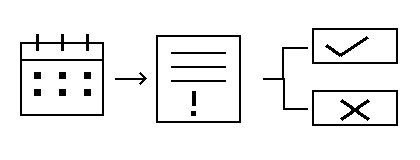
First establish which performance is due
Article 117 concerns a debt that is due. Identify the obligation, its maturity and the person who owes it. A supplier’s anticipated completion date, a binding contractual deadline and a date proposed later by the customer are not automatically equivalent. The agreement and any valid amendment establish the starting chronology.
In a reciprocal contract, also examine the claimant’s own performance position. Article 97 generally requires the party demanding performance to have performed or offered its obligation, unless entitled to perform later. A person required to pay an advance cannot simply ignore that stage when alleging that the corresponding later performance is overdue.
The reciprocal-performance and security guide explains those separate questions. A defence based on a valid right to withhold must be assessed rather than assumed away. The default analysis begins with an enforceable due obligation, not merely an angry exchange between the parties.
Article 117: notice is the general rule, with stated exceptions
Under Article 117 of Law No. 6098, the debtor of a due obligation falls into default through the creditor’s demand. The provision also recognises default when a performance day jointly determined by the parties expires, or when a day has been properly set through a notification exercising a right reserved in the contract.
A date printed unilaterally on a later invoice should therefore not automatically be described as the jointly agreed day required by the exception. Identify the agreement or reserved contractual right supporting it. Likewise, a notice setting a date must be assessed for whether it exercises that right properly, not merely for whether the document contains a calendar date.
Article 117 also contains separate rules for tort and unjust enrichment. It places default at the tortious act or the enrichment event, while requiring notice for a good-faith unjustly enriched recipient. Those non-contractual situations must not be collapsed into the contractual deadline analysis. The legal source of the obligation matters to the starting event.
A default demand should identify the obligation being called for
The demand needs to communicate the performance sought from the correct debtor. State the agreement, obligation and relevant due date accurately. A general request to discuss the relationship is different from a demand for a specified overdue performance. The record should show what the recipient was actually asked to do.
Keep the entire notice and its delivery evidence. A draft saved on the creditor’s computer does not establish communication to the debtor. A message sent to an unrelated group company does not necessarily reach the contracting entity. The recipient’s identity, relevant address and any authorised representative should be checked before relying on the notice.
Where the debt consists of several stages or invoices, distinguish the overdue items from future ones. A demand covering an unexplained aggregate can obscure which obligation is said to be in default. Supporting schedules should make the calculation or outstanding task understandable without changing the contractual obligation through the notice itself.
Merchant notices require the separate Commercial Code check
For notices between merchants putting the other party in default, terminating the contract or withdrawing from it, Article 18(3) of the Turkish Commercial Code identifies notarial notification, registered post, telegram and registered electronic mail using a secure electronic signature. The regulator reproduces this framework in its official registered-electronic-mail legislation page.
Establish whether the parties and notice fall within that provision. Ordinary email, registered electronic mail and a notarial notice are not the same communication method. The sender should retain the complete relevant delivery and content records rather than assume that a screenshot of an outgoing message supplies every required element.
This article does not decide every evidential dispute about a notice sent by another method. Nor does Article 18(3) make all commercial communications identical to default or termination notices. The practical task is to identify the legal act being communicated and use the applicable route without confusing routine correspondence with exercise of a time-sensitive remedy.
Additional time under Article 123 is a separate stage
When a party to a reciprocal contract is in default, Article 123 allows the other party to give a suitable period for performance or ask the judge to set one. This additional period must be distinguished from the original maturity and from the communication establishing default. The same file can therefore contain several legally relevant dates.
The statute does not prescribe a universal seven-, fifteen- or thirty-day period for every obligation. The period must be suitable for the performance concerned. Identify what remains to be done and the circumstances relevant to that task. A deadline copied from an unrelated contract type should not be presented as the general Article 123 rule.
The notice should make the additional opportunity and the required performance intelligible. Keep the period’s starting point and delivery record clear. If the parties later agree to extend or alter the obligation, preserve that amendment separately. A chronology that silently replaces an earlier deadline with a new one can misstate when the conditions for the chosen remedy arose.
Article 124 contains three exceptions to giving additional time
No additional period is required where the debtor’s situation or conduct shows that granting it would be ineffective. The evidence must support that conclusion. A creditor’s frustration alone is not a factual account of why the debtor would not use the opportunity to perform.
The second exception applies where performance has become useless to the creditor as a result of the debtor’s default. Identify the contractual purpose and why delayed performance no longer serves it. The third applies where the contract shows that performance will no longer be accepted if it does not occur at the specified time or within the stated period.
The third exception requires more than finding a date somewhere in the agreement. The contract must support the consequence that performance after that time is no longer acceptable. Each exception should be connected to its own facts. Treating every overdue contract as automatically exempt from an additional period would erase the distinction between Articles 123 and 124.
The first Article 125 route preserves performance and delay damages
Where the debtor fails to perform within the additional period, or a situation exists in which no period is required, Article 125 preserves the creditor’s right to demand performance and compensation for delay. The contract is not necessarily abandoned merely because the creditor now has other available choices.
A demand pursuing this route should remain consistent with seeking the promised performance. Identify the outstanding task or payment and the delay loss claimed. A creditor should not describe the contract as already ended in one communication while unconditionally demanding its full future performance in another without a coherent legal explanation.
The damages component requires its own basis and supporting record. Article 118 obliges a defaulting debtor to compensate loss caused by late performance unless the debtor proves absence of fault in falling into default. The existence of default and liability for every alleged item of loss are related but distinct questions.
The alternative remedies require immediate notification of the election
Article 125 also permits the creditor, by immediately notifying that it relinquishes performance and delay compensation, to seek compensation for loss caused by non-performance or to withdraw from the contract. The immediate-notification wording is part of the statutory scheme and should not be omitted from a guide to the creditor’s choices.
Non-performance compensation and withdrawal are different alternatives. The former concerns the loss from not receiving the promised performance; withdrawal brings the statutory release and restitution consequences described in the following paragraph. A claim should state which route supports each requested amount instead of combining mutually inconsistent consequences into one unexplained demand.
The text does not supply a single number of days that replaces the requirement to notify immediately. Evaluate the chronology and communicate the supported election through the applicable channel. Extended negotiations after expiry should not be assumed to preserve every alternative indefinitely without examining what the parties said and did.
Withdrawal changes both parties’ performance positions
On withdrawal under Article 125, the parties are released from their reciprocal performance obligations and can request return of performances already supplied. The creditor may also seek the loss caused by the contract becoming ineffective if the debtor cannot prove absence of fault in falling into default.
Prepare a two-sided performance account. Identify advances, delivered goods, completed services and other benefits actually exchanged. A refund demand should distinguish return of a payment from compensation for an additional loss. The withdrawal rule should not be presented as automatic recovery of every sum mentioned in the claimant’s commercial account.
The practical return process depends on the performance involved and any dispute over its amount or condition. A withdrawal notice does not itself transfer money or resolve ownership and security issues. The legal basis, the return obligation and any proceedings necessary to implement it should be assessed separately.
Continuing contracts already being performed fall under Article 126
Article 126 addresses continuing-performance contracts whose performance has begun. In the debtor’s default, the creditor can seek performance and delay damages or terminate and request compensation for loss caused by premature ending. The statute uses a termination framework for this ongoing relationship rather than simply treating every earlier performance as erased.
Identify the nature of the contract and the period already performed. An ongoing service arrangement and a single delivery obligation do not necessarily produce the same close-out account. The notice and claim should reflect the correct structure instead of using withdrawal and termination as interchangeable English expressions.
Special contract categories can impose further conditions, notice periods or protections. This general framework does not replace the particular rules governing a tenancy, employment relationship or another regulated contract. The relevant type and special provisions must be checked before acting on a generic termination letter.
Unexpected events after default require attention to Article 119
Article 119 makes a debtor in default responsible for damage caused by an unexpected event. It also provides two routes out of that responsibility: proof that the debtor was not at fault in falling into default, or that the event would have damaged the subject of performance even if timely performance had occurred.
The due-date and default chronology therefore matters when a later disruptive event is invoked. A file beginning only with the event can omit the earlier delay that changes the responsibility analysis. Equally, it would be wrong to state that every debtor who was late is liable for every later event without considering the statutory defences.
The impossibility guide and hardship guide address different legal consequences. Increased cost, impossibility and default should be identified from the facts rather than selected as convenient labels for refusing performance.
Interest, penalties and excess loss need separate calculations
Article 120 refers, where no default-interest rate is agreed, to the legislation in force when the interest obligation arises. The applicable calculation also requires the debt’s legal category, currency, relevant periods and any special rules. This guide does not assign one current percentage to every Turkish claim or treat every business and consumer debt identically.
Article 122 addresses loss exceeding default interest, subject to its fault framework. It also permits the judge, on the claimant’s request, to award the determinable excess in the pending action when deciding the merits. The demand should identify the additional loss and avoid claiming the same item again under multiple labels.
A contractual penalty is another distinct basis. Its trigger, acceptance reservations and relationship with performance are governed by the agreement and applicable rules. The contractual-penalties guide explains those requirements. Adding interest, damages and a penalty into one total does not establish that each component is legally recoverable.
A chronology that makes the remedy review usable
| Stage | Question | Supporting record |
|---|---|---|
| Maturity | When was this performance due? | Contract, schedule and valid amendments |
| Default | Was notice required, and what triggered default? | Demand, delivery or the applicable Article 117 event |
| Additional opportunity | Was suitable time given or an Article 124 exception established? | Period notice and evidence supporting any exception |
| Election | Is performance, non-performance compensation or contract exit sought? | The actual declaration and its communication |
| Financial result | What is outstanding, returnable or compensable? | Performance account, payments and supported loss calculation |
For a cross-border agreement, establish the applicable law before applying this domestic framework. International sales can also require treaty analysis. The governing-law guide addresses that preliminary issue. If a lawsuit or enforcement document is served, preserve its service record and respond through the proper procedure; a commercial notice is not automatically that response.
Frequently asked questions
Is every overdue debt automatically in default without notice?
Article 117 starts with a creditor’s demand for a due obligation and provides specific exceptions, including a jointly fixed performance day. Identify the rule and event applicable to the actual debt.
Is a reminder the same as withdrawing from the contract?
No. Default notice, an additional performance period and the later remedy election have different functions. The actual wording and chronology determine what was communicated.
Does Article 123 prescribe a standard thirty-day period?
No. It calls for a suitable period for performance or a judicially set period. The appropriate duration depends on the obligation and relevant circumstances.
When is additional time unnecessary?
Article 124 covers ineffective additional time, performance made useless by default, and a contract showing that performance after the specified time will not be accepted. The relevant exception needs factual support.
Can the creditor still demand performance after the additional period?
Yes. Article 125 preserves performance and delay-compensation rights where its conditions are met. The creditor is not compelled to abandon the contract merely because other remedies are available.
What communication is required for Article 125’s alternatives?
The creditor must immediately notify relinquishment of performance and delay compensation when electing non-performance damages or withdrawal under the provision. The remedy and applicable notice channel must be clear.
Does withdrawal only affect the debtor’s duties?
No. Article 125 releases both parties from reciprocal performance and permits return of what they previously supplied, with the separate statutory damages qualification.
Are ongoing contracts treated identically to a one-off exchange?
Article 126 specifically addresses continuing-performance contracts already begun, including termination and loss from premature ending. The contract type and any special rules must be identified.
Which notice channels does TCC Article 18(3) identify for merchants?
For the specified default and contract-exit notices between merchants, it identifies notarial notification, registered post, telegram and registered electronic mail using a secure electronic signature.
Does alleging default suspend an enforcement deadline?
No. Commercial correspondence and the procedural response to a served court or enforcement document are separate. Provide the complete document and service date for review.
Official sources and scope
Turkish Code of Obligations No. 6098, Articles 97 and 117–126; official Ministry text, pages 23–24; BTK’s reproduction of Turkish Commercial Code Article 18(3). This is an explanatory guide to general rules, not a substitute for special contract or treaty provisions. The Turkish statutory text governs.
Ask about a missed contractual obligation
State what is overdue, the agreed date and whether a demand or additional-period notice was sent. Do not include private financial records in the initial enquiry.
Istanbul and Mersin offices
Bakırcı & Keskin Law Office is Mersin-based and works throughout Türkiye with an Istanbul and Mersin focus. Agree a confidential channel before sending contracts and notice records.
Istanbul — Polaris Plaza
Maslak Ahi Evran Caddesi, Polaris Plaza No:21, Floor 9, 34475 Sarıyer/İstanbul. Istanbul office directions.
Mersin — Profit İş Merkezi
İhsaniye Mahallesi, 4903. Sokak, Profit İş Merkezi No:23, Floor 3, Office 14, 33070 Akdeniz/Mersin. Mersin office directions.
Call +90 552 224 43 66. An enquiry does not establish representation or suspend a legal deadline.
Contact regarding a legal matter
In your first message, you may briefly state the subject, your country or city, and any relevant notification or recent procedural date. Please do not send identity numbers, medical data, or personal documents. Messaging alone does not constitute legal advice or create a lawyer–client relationship.
Discover more from Bakırcı & Keskin Hukuk Bürosu
Subscribe to get the latest posts sent to your email.