Impossible Performance in Turkey: Advance Refunds and TCO Articles 136–137
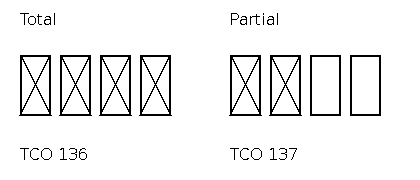
When performance becomes impossible for a reason for which the debtor cannot be held responsible, Article 136 of the Turkish Code of Obligations ends the obligation. In a reciprocal contract, the released debtor must generally return performance already received under unjust-enrichment rules and loses the right to demand the counterperformance not yet received. The statute reserves situations where law or contract places the pre-performance risk on the creditor. It also requires prompt notification and measures against increased loss. Article 137 separately governs partial impossibility. A business invoking an obstacle must therefore explain its effect on the exact obligation, the responsibility position and the financial consequences; saying “force majeure” is not a complete legal analysis.
Have a general question about this article? Ask anonymously
Identify the performance that can no longer be supplied
The starting point is the promised act or delivery. Read the contract’s specification, quantity, place, timing and permitted means of performance. An obstacle affecting one production plan does not describe the entire contractual obligation unless the agreement makes that plan decisive. The assessment requires the actual obligation, not merely the supplier’s preferred method of fulfilling it.
Record what the claimed event prevented and when it began. Preserve the official decision, technical record, correspondence or other evidence supporting the obstacle. A general announcement about disruption does not establish the effect on every contract held by the affected business. The file must connect the event to the particular performance and its remaining possibility.
The relevant provisions are Law No. 6098, Articles 136–137. Their consequences should not be applied before deciding whether the facts concern impossibility, delay, a dispute over specifications or a more expensive performance. Each classification raises a different legal question.
Later impossibility is distinct from an impossible contract at formation
Article 27 addresses contracts whose subject matter is impossible and states the rule of absolute invalidity, together with the treatment of partially invalid provisions. Article 136 addresses the obligation’s performance becoming impossible. The chronology therefore matters: an obstacle existing when the contract was formed is not automatically analysed as an event that later extinguished a valid obligation.
Compare the signing date with the evidence establishing the obstacle. Identify any representations made before signature and any disclosure of existing restrictions. The distinction affects the legal basis of the parties’ claims and should not be obscured by using the same cancellation letter for every non-performance dispute.
An agreement can also make its effects dependent on an uncertain event. The conditional-contracts guide explains that separate mechanism. A failed approval condition and later impossibility require classification from the contractual wording and the event, not a choice of whichever label seems more favourable.
Article 136 requires a reason for which the debtor is not responsible
The first paragraph does not release every debtor who is unable to perform. It requires impossibility arising from reasons for which that debtor cannot be held responsible. A party must therefore examine responsibility as well as the existence of the obstacle. The mere fact that something went wrong does not establish absence of legal responsibility.
Article 112 supplies the general non-performance rule: when a debt is not performed or not properly performed, the debtor must compensate the resulting loss unless the debtor proves that no fault can be attributed to it. This should be distinguished from Article 136’s qualifying discharge. A document explaining the event without addressing the debtor’s relevant conduct leaves an important part of the assessment unresolved.
Prepare a factual account of who controlled the relevant steps, what was required by the contract and what happened before the obstacle arose. Include unfavourable records rather than selecting only the notice announcing the event. A responsible legal assessment needs to distinguish an external obstacle from a failure attributable to the performance arrangements under review.
The advance-payment consequence is a separate part of the rule
Article 136’s second paragraph addresses reciprocal contracts. A debtor released because of impossibility must return the counterperformance already received according to unjust-enrichment provisions. It also loses the right to demand counterperformance not yet supplied. A supplier cannot rely only on the first paragraph’s release while ignoring the accompanying treatment of the customer’s payment.
Identify the recipient, date, currency and purpose of each advance. Separate payments for the impossible performance from money attributable to other completed obligations. A bank transfer total does not itself determine the amount returnable under the legal relationship. The agreement and allocation records are needed to identify what was received for the obligation that ended.
The reference to unjust enrichment also matters. The return obligation should be assessed under the governing rules rather than described as an automatic damages award of every amount the customer requests. Refund, interest, consequential loss and expenses are distinct items requiring their own legal basis and evidence.
Law or contract can allocate pre-performance risk differently
Article 136 expressly excludes from its reciprocal-performance rule cases where law or contract places the loss occurring before performance on the creditor. This reservation must be checked before promising that every advance will necessarily be refunded. The relevant risk provision and its applicability to the event must be identified.
Read the exact clause together with the contract type and mandatory law. A statement about delivery arrangements does not always answer the entire risk question. Establish the event covered, the relevant point in the performance sequence and the party to whom risk was allocated. Do not infer a complete transfer of risk merely from a commercial abbreviation detached from its agreed terms.
Where a printed standard term is relied on, incorporation, interpretation and content control require separate review. Our standard contract terms guide addresses Articles 20–25. A clause’s presence in a template does not dispense with the legal rules determining whether it forms part of the relationship and what it means.
Prompt notice remains necessary after the obstacle
Article 136’s final paragraph imposes liability for the damage arising where the debtor fails to notify the creditor without delay that performance has become impossible and fails to take the necessary measures to prevent increased loss. The debtor’s release from the original performance must therefore be distinguished from responsibility for avoidable additional damage.
The notice record should identify the affected obligation, the event and the evidence available at that stage. Retain the notice’s date, recipient and delivery evidence. A message to an unrelated intermediary is not necessarily proof that the creditor was notified. The contract’s communications arrangements should be checked when selecting the channel.
The statute uses a requirement of notification without delay; it does not provide one universal number of days for every event. Do not replace that wording with an invented fixed period. The chronology should show when the debtor learned of the obstacle, when the creditor was told and what information could reasonably be communicated at the relevant time.
Preventing increased loss is not the same as promising impossible performance
The duty to take necessary measures against increased loss addresses the consequences of the obstacle. Record the steps taken to preserve relevant goods, documents and information, prevent unnecessary expenditure or coordinate an orderly handover where appropriate. The required measures must be assessed in the context of the obligation and actual event.
Keep evidence of the creditor’s response and the losses alleged to have resulted from delayed notification or missing precautions. Distinguish losses caused by the original event from losses said to have increased because of the debtor’s later conduct. Article 136 does not justify treating those categories as the same item.
A precaution should not be represented as acceptance of a new contractual obligation unless that was actually agreed. If the parties arrange substitute performance or a revised transaction, record it separately. The novation guide explains why a new document does not automatically prove that the earlier obligation was replaced.
Partial impossibility normally releases only the impossible part
Article 137 starts with a proportionate rule: where performance becomes partly impossible for a reason for which the debtor is not responsible, the debtor is released only from the impossible part. A failure affecting one part of the undertaking does not necessarily extinguish every remaining obligation under the contract.
The first paragraph also provides an exception. If it is clear that the parties would not have concluded the contract had they foreseen the partial impossibility, the entire obligation ends. The importance of the affected part must therefore be examined from the contract and surrounding legal relationship. Merely calling the missing component essential does not supply the supporting analysis.
Prepare a performance schedule dividing the obligation into affected and unaffected elements. Record whether they can be separated and how the agreement treats their combined purpose. This assists the review of both the default partial-release rule and the exception concerning the bargain the parties would have made.
The creditor’s acceptance matters in a reciprocal partial-performance case
Article 137’s second paragraph addresses reciprocal contracts. If one party’s obligation becomes partly impossible and the creditor accepts partial performance, the counterperformance is supplied in the same proportion. The statute therefore links the proportional exchange to acceptance of the remaining performance.
If the creditor does not consent to such performance, or the counterperformance is indivisible, the full-impossibility rules apply. A debtor should not assume that unilateral delivery of whatever remains automatically forces the creditor to accept a reduced bargain. Record the creditor’s actual position and the divisibility of the counterperformance.
The financial reconciliation should identify what was accepted, what remains impossible and the basis for the proportion used. An arbitrary discount is not the same as applying Article 137 to the agreed performances. Refunds of amounts already received require consideration within the applicable full or partial-impossibility framework.
Existing debtor default can change the responsibility analysis
Article 119 makes a debtor already in default responsible for loss caused by an unexpected event. It permits release from that responsibility by proving either absence of fault in falling into default or that the unexpected event would have harmed the subject of performance even if the obligation had been performed on time.
This means the chronology cannot begin only on the day the disruptive event occurred. Establish the original due date, relevant notices and whether the debtor was already in default. An obstacle arising after an unexcused delay raises a different responsibility question from an event occurring before the obligation became due.
The exceptions in Article 119 must also be preserved. It is equally inaccurate to say that any debtor who was late is always liable for every later event without examining the statutory defences. The evidence should address timely performance, the cause of default and the effect the event would have had on the subject matter.
Do not substitute hardship for impossibility
Performance that has become excessively difficult belongs to the separate adaptation analysis under Article 138. It does not automatically produce the discharge and counterperformance consequences in Article 136. The contract hardship guide explains that distinction and the reservation-of-rights issue.
Likewise, the contract’s force-majeure clause must be read for its own defined events, notice requirements and consequences. It can address suspension, extension or other arrangements. The label cannot replace examination of the clause, the statutory framework and the facts supporting the specific legal consequence asserted.
Organise the file before demanding or refusing a refund
Supply the signed agreement, amendments, performance schedule, event evidence, notices, risk clauses, payment records and any partial-performance acceptance. Include the original due date and any default correspondence. The resulting chronology should permit a direct answer to which obligation ended, why the debtor was not responsible and what repayment consequence follows.
For an international contract, applicable law and dispute forum remain preliminary questions. For a pending court or enforcement case, preserve the served document and service record. A refund request or force-majeure notice does not itself satisfy the procedural response required in that proceeding. General collection procedures are explained in the English enforcement guide.
Frequently asked questions
Does any failure to deliver end the obligation under Article 136?
No. Performance must become impossible for reasons for which the debtor cannot be held responsible. Delay, breach, cost increases and initial invalidity require separate classification.
Must an advance generally be returned after qualifying impossibility?
In a reciprocal contract, Article 136 requires return of performance received under unjust-enrichment rules. Its exception for risk allocated to the creditor by law or contract must also be examined.
Can the released debtor still demand the unpaid price?
Under Article 136’s general reciprocal-contract rule, the debtor loses the right to counterperformance not yet received. The statutory risk-allocation exception remains relevant.
Is a notice unnecessary once performance is impossible?
No. Article 136 requires notification without delay and necessary measures to prevent increased loss. Breach of those duties can produce liability for the resulting additional damage.
Does partial impossibility always end the entire contract?
No. Article 137 ordinarily releases only the impossible part. The whole obligation ends where it is clear the parties would not have contracted had they foreseen the partial impossibility.
Can the debtor force acceptance of partial performance?
Article 137’s proportional counterperformance rule depends on the creditor accepting partial performance. Without that consent, or where counterperformance is indivisible, the full-impossibility provisions apply.
Why does an earlier default date matter?
Article 119 addresses unexpected-event loss while the debtor is in default. Its responsibility rule and express defences require the due date, default circumstances and event chronology to be reviewed.
Is an impossible contract at signing the same situation?
Article 27 addresses impossible subject matter and invalidity at formation. Article 136 concerns performance becoming impossible. The timing and legal basis must be distinguished.
Does calling an event force majeure decide the refund?
No. The actual obligation, event, responsibility, contractual clause, risk allocation and payments must be examined. The label alone does not establish every statutory consequence.
What evidence is needed for a refund assessment?
Provide the contract, payment allocation, event evidence, notices, risk provisions, due-date record and any partial-performance acceptance. Include served proceedings and their service dates.
Official legal sources
Turkish Code of Obligations No. 6098, Articles 27, 112, 119 and 136–138. The official Ministry text, pages 26–27 contains the impossibility rules. English explanations do not replace the Turkish statutory text.
Istanbul and Mersin offices
Bakırcı & Keskin Law Office coordinates Turkish matters from Mersin and Istanbul. For an English-language review, identify the unperformed obligation, advance payment and event date through the contact section. Arrange a confidential channel for contracts and account records.
Istanbul — Polaris Plaza
Maslak Ahi Evran Caddesi, Polaris Plaza No:21, Floor 9, 34475 Sarıyer/İstanbul.
Mersin — Profit İş Merkezi
İhsaniye Mahallesi, 4903. Sokak, Profit İş Merkezi No:23, Floor 3, Office 14, 33070 Akdeniz/Mersin.
Call +90 552 224 43 66. General legal information; an enquiry does not suspend a procedural deadline or establish representation.
Contact regarding a legal matter
In your first message, you may briefly state the subject, your country or city, and any relevant notification or recent procedural date. Please do not send identity numbers, medical data, or personal documents. Messaging alone does not constitute legal advice or create a lawyer–client relationship.
Discover more from Bakırcı & Keskin Hukuk Bürosu
Subscribe to get the latest posts sent to your email.