Buying a Business in Turkey: Existing Debts and the Transferor’s Two-Year Responsibility
Taking over a Turkish business with its assets and liabilities can create responsibility to its creditors even though the acquisition agreement allocates the economic cost differently between buyer and seller. Article 202 of the Turkish Code of Obligations links the acquirer’s responsibility to notification of creditors or the prescribed public announcement. The previous debtor remains jointly responsible for two years, with different starting points for already due and later-maturing debts. Failure by the acquirer to perform the notification or announcement obligation prevents that two-year period from starting. A closing date is therefore not automatically the date from which every creditor exposure is counted.
Have a general question about this article? Ask anonymously
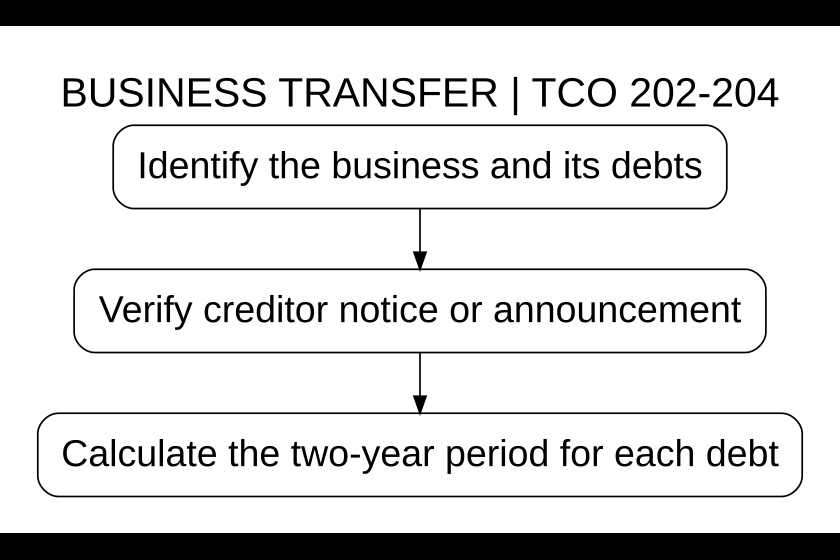
Identify the legal transaction, not just the commercial headline
Article 202 addresses taking over assets or a business together with its assets and liabilities. A sale of one machine, a purchase of company shares and transfer of an operating business are different transactions. Calling all of them a business purchase can conceal who remains the debtor and which legal mechanism changes responsibility.
Begin with the exact transferor and acquirer, the transaction documents and the package being transferred. A company can continue as the same contracting debtor after its shareholders change; that is not the same event as another person acquiring the company’s business assets and liabilities. The agreement, not the parties’ shorthand description, must establish the transaction relied on.
The principal statutory provisions are Law No. 6098, Articles 202–204. They do not replace all form, registry, corporate or sector-specific requirements of the acquisition. This guide concentrates on the creditor-facing debt consequences after the relevant transaction has been classified.
The debt inventory must identify the business connection
Article 202 concerns debts belonging to the transferred assets or business. Prepare a schedule identifying each creditor, the source of the obligation, amount, maturity, security and dispute status. A list of invoices alone can omit obligations arising under continuing contracts, advances, guarantees or a judgment.
Distinguish an established debt from a disputed claim and from an uncertain future exposure. Each can require attention in due diligence, but they should not all be described as admitted liabilities. The schedule should explain the contractual or statutory source asserted and what evidence is still missing.
Also separate business liabilities from the transferor’s unrelated personal liabilities. The existence of a common owner or common bank account does not, without further analysis, establish that every personal obligation belongs to the transferred undertaking. The relevant connection must be supported by the transaction and debt records.
Notification or publication triggers the acquirer’s responsibility
Article 202 makes the acquirer responsible to creditors from the date the acquisition is notified to them or announced through the prescribed publication. For commercial enterprises, it identifies the Trade Registry Gazette. For other acquisitions within the provision, it identifies a newspaper distributed throughout Turkey.
A press release, social-media post or new sign at the premises should not automatically be equated with the statutory announcement. Identify the method actually used and retain the complete notice or publication. A statement that the transaction was public knowledge does not establish compliance with the particular statutory route.
Where creditors were notified individually, retain the recipient list and evidence of communication. Different dates in the file may matter to different creditors. The review should identify which notice or announcement establishes the asserted legal effect instead of choosing the earliest document carrying the buyer’s name.
The acquisition agreement and the creditor notice serve different functions
The agreement allocates obligations between the acquisition parties and records what they have undertaken to one another. The notification or public announcement performs the creditor-facing function described in Article 202. Signing the first document does not prove that the second step has occurred.
Keep the signed contract, closing record and publication evidence together but label them separately. An agreement can require the acquirer to notify creditors after closing; whether that obligation was actually fulfilled remains a factual question. The date on which accountants began using a new ledger does not substitute for proof of notice.
The notice should identify the transaction and responsible parties accurately. Incorrect company names, an unexplained trade name or a reference to another acquisition can produce an avoidable dispute about what was communicated. Clear identification also helps creditors direct payments, demands and proceedings to the appropriate legal person.
The previous debtor remains jointly responsible for two years
Article 202 preserves the previous debtor’s responsibility alongside the acquirer for a two-year period. The liability is joint and several, not an automatic rule dividing each creditor’s claim equally between the two. The creditor’s external position must be distinguished from the parties’ eventual internal allocation.
For a debt already due, the period starts with notification or announcement. For a debt becoming due later, it starts when that debt becomes due. A single statement that every old debt disappears two years after the acquisition date would therefore misstate the provision.
Create separate timeline entries for obligations with different maturities. An instalment arrangement, an accelerated claim and a disputed maturity need review against their actual terms. The transfer itself should not be assumed to make every future instalment immediately payable where the legal basis for that result has not been established.
Missing notification prevents the two-year period from starting
The final paragraph of Article 202 expressly states that the two-year period does not begin until the acquirer fulfils the notification or announcement obligation. The previous debtor cannot safely calculate the end of exposure solely from a private closing date while assuming that the buyer must have handled publicity.
Obtain the proof rather than an assurance that the notices were sent. The relevant record includes the announcement itself or the actual creditor communications and their dates. A draft notice attached to the acquisition agreement establishes preparation, not necessarily performance of the statutory obligation.
This rule also affects the drafting of closing obligations between the parties. The agreement should make responsibility for preparing, issuing and documenting the notice clear. An internal promise to indemnify the transferor for delay may have commercial value, but it is not proof that the creditor-facing statutory clock has started.
The two-year rule is not a universal limitation period for the debt
Article 202 describes the continuation of the previous debtor’s responsibility alongside the acquirer. It should not be presented as extinguishing the underlying debt against everyone after two years. The acquirer’s liability and any ordinary limitation question require their own analysis.
A debt schedule should therefore keep at least two questions separate: the period relevant to the transferor’s statutory continuing exposure, and the period governing enforcement of the claim itself. A contractual extension, acknowledgment or proceeding can require review under the rules applicable to the particular question.
Where a creditor has already started proceedings, obtain the full case or enforcement record. A demand letter, an enforcement step and a lawsuit may have different procedural consequences. The business-transfer article does not establish that informal negotiations preserve every available claim indefinitely.
Internal exclusions are not automatically creditor releases
The acquirer and transferor can negotiate how they will bear the cost of debts between themselves. That internal allocation must not be reported as though a creditor necessarily accepted release of a liable party. Article 202 itself determines the stated external consequences of the qualifying transfer.
Read any excluded-liability clause alongside the transaction’s actual scope and the applicable law. Whether a particular asset transaction falls within Article 202 is a classification question; whether the parties agreed an indemnity is another. Simply labelling liabilities retained does not complete either analysis.
The individual debt-assumption guide explains the different internal-promise and creditor-approved substitution mechanisms. It is useful where the acquisition also involves separately negotiated releases. Do not substitute that individual-debt mechanism for Article 202 without first determining which transaction is actually present.
Security and defences require a separate review
Article 202 states that the consequences of debt assumption through this route are the same as those arising from an external debt-assumption agreement. The neighbouring rules must therefore be considered rather than treating the business-transfer announcement as an answer to every collateral question.
Article 198 preserves ancillary creditor rights other than those specific to the debtor’s person, and separately addresses written consent of a third-party pledgor or surety for continued responsibility. The identity of each security provider and the actual consent record should be checked before describing all existing security as automatically unchanged.
Article 199 distinguishes defences concerning the assumed debt from personal defences of the former debtor and from arguments arising solely out of the internal assumption agreement. A dispute between seller and acquirer over purchase-price adjustments is not automatically a defence against the business creditor. Each argument needs to be classified by the legal relationship from which it arises.
Business combinations under Article 203
Article 203 addresses combining businesses through reciprocal assumption of assets and liabilities or the accession of one to another. Creditors of both businesses obtain the rights arising from acquisition of assets and can recover their claims from the new undertaking under that framework.
The provision also addresses a sole-person business converted into a general partnership or limited partnership. The precise legal form matters. It would be inaccurate to use that sentence as a complete account of every modern company conversion or merger, regardless of the corporate rules governing the entities involved.
Where the transaction is a regulated corporate merger, obtain the corporate documents and examine the applicable special provisions. Article 203 supplies the stated general business-debt framework; it does not replace every approval, registration or creditor-protection requirement that another statute imposes on a particular corporate transaction.
A debt transfer is not automatically a transfer of every contractual position
A business can have ongoing leases, supply agreements, licences and service arrangements. Responsibility for an existing debt should not be confused with substitution of a party in every one of those contracts. Article 205 separately regulates transfer of a contractual position and reserves legal succession and other special rules.
Prepare a contract matrix identifying which arrangements continue by operation of a relevant rule, which require consent and which are not transferred. The contract-transfer guide explains the general consent and form questions. An acquisition agreement signed by only two businesses is not evidence that every counterparty consented to every proposed substitution.
Employee rights also need their own statutory assessment. The workplace-transfer guide concerns that separate relationship. A general Article 202 debt schedule should not be used as a replacement for checking the employment rules applying to the workforce and the actual transaction.
Creditor action should identify the claim and the correct debtor
A creditor reviewing a transfer should preserve the original obligation, maturity record, announcement or notice and any later payment. Identify both the former debtor and the acquirer accurately. The fact that the same staff answer the telephone does not establish that the legal debtor has the same identity.
Where joint responsibility applies, the claim must still account for payments already received. The joint-debtor guide explains the difference between seeking payment from a responsible debtor and collecting the same debt twice. The acquisition parties’ internal dispute does not justify an inflated external balance.
For an overseas purchaser or creditor, retain source-language documents with translations and explain the governing-law basis. Article 204 expressly preserves special debt-assumption provisions concerning partition of inheritance and transfers of mortgaged immovable property. Those transactions should not be forced into a general business-acquisition conclusion without examining the applicable special rule.
The closing record should survive the handover
The final file should contain the debt inventory, signed transfer, closing evidence, statutory publicity, maturity schedule, security consents and any creditor releases. Identify unresolved claims instead of removing them from the file because the commercial relationship has ended. A clear record protects both the purchaser’s due diligence and the former debtor’s ability to establish the relevant dates.
Keep notice compliance and accounting settlement as separate completion items. Payment of the purchase price does not demonstrate creditor notification, and notification does not prove that every agreed indemnity has been performed. Each conclusion should be supported by its own document.
Frequently asked questions
Does buying shares automatically constitute an Article 202 business transfer?
No. A share transaction and acquisition of a business’s assets and liabilities are different structures. Identify the actual transaction and debtor before applying Article 202.
When does the acquirer become responsible to creditors?
Article 202 links responsibility to notification of the acquisition to creditors or announcement through the prescribed publication route.
Is a social-media announcement necessarily enough?
No. Article 202 identifies the Trade Registry Gazette for commercial enterprises and a nationally distributed newspaper for other acquisitions within its publication route.
Is the former debtor released immediately?
No. Article 202 preserves joint responsibility with the acquirer for two years, subject to the statute’s distinct starting points.
When does the two-year period start for an already due debt?
The relevant starting point is notification or announcement, not automatically the private acquisition closing date.
What about a debt becoming due after the transfer?
Article 202 starts the two-year period at that debt’s maturity, with the notification obligation also requiring attention.
What if the acquirer never fulfils the notification obligation?
The final paragraph states that the two-year period does not begin until the notification or announcement obligation is fulfilled.
Does the two-year rule extinguish the debt against everyone?
No. It concerns the former debtor’s continuing responsibility. The acquirer’s obligation and the claim’s ordinary limitation position are separate questions.
Does an internal excluded-liability clause prove creditor release?
No. Internal allocation, the transaction’s statutory classification and a creditor’s actual release must be established separately.
Does Article 202 transfer every ongoing contract automatically?
Not as a universal conclusion. Contract transfer, legal succession, employment and special transaction rules require separate examination.
Official statutory sources
Turkish Code of Obligations No. 6098, Articles 198–205, principally Articles 202–204; official Ministry text, pages 37–39. This English explanation is not an official translation and does not replace special corporate, employment or property legislation.
Ask about debts in a business acquisition
State the transaction type, transfer date, creditor notice and the debt being examined. Do not include confidential acquisition documents or identity numbers in the first message.
Istanbul and Mersin offices
Bakırcı & Keskin Law Office is Mersin-based, working throughout Türkiye with an Istanbul and Mersin focus. Agree a confidential channel before sending the documents relevant to your enquiry.
Istanbul — Polaris Plaza
Maslak Ahi Evran Caddesi, Polaris Plaza No:21, Floor 9, 34475 Sarıyer/İstanbul. Istanbul office directions.
Mersin — Profit İş Merkezi
İhsaniye Mahallesi, 4903. Sokak, Profit İş Merkezi No:23, Floor 3, Office 14, 33070 Akdeniz/Mersin. Mersin office directions.
Call +90 552 224 43 66. An enquiry does not establish representation or suspend a legal deadline.
Contact regarding a legal matter
In your first message, you may briefly state the subject, your country or city, and any relevant notification or recent procedural date. Please do not send identity numbers, medical data, or personal documents. Messaging alone does not constitute legal advice or create a lawyer–client relationship.
Discover more from Bakırcı & Keskin Hukuk Bürosu
Subscribe to get the latest posts sent to your email.