Agent Ignored Instructions or Delegated Work in Turkey: Liability Under TCO 505–507
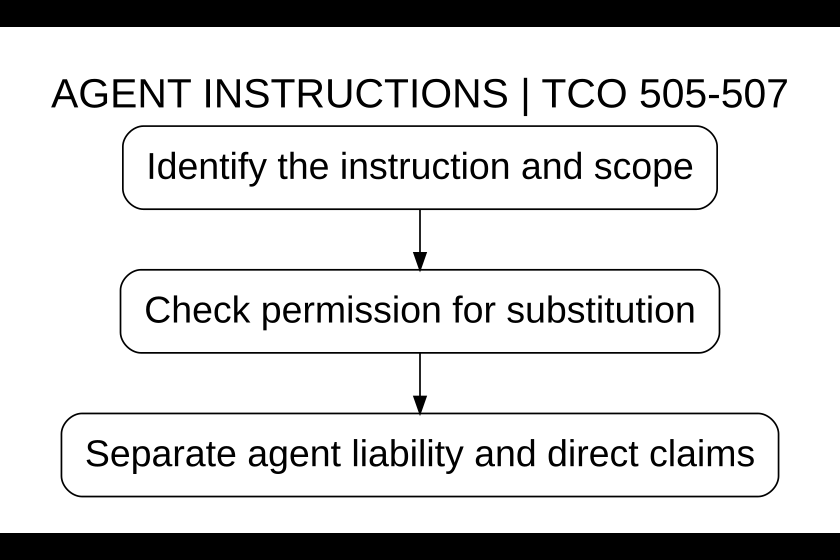
A person entrusted with work under a Turkish mandate must follow the principal’s express instructions and ordinarily perform the entrusted work personally. Articles 505–507 of the Turkish Code of Obligations define the narrow circumstances allowing departure from instructions, the grounds for using another person and the different liability consequences of authorised and unauthorised substitution. A power to deal with third parties is not the same question as compliance with instructions inside the mandate relationship. A transaction can therefore require separate analysis of its external effect and the agent’s responsibility to the person who instructed it.
Have a general question about this article? Ask anonymously
Establish the mandate and the particular task
Article 502 defines a mandate as an agreement by which the agent undertakes to conduct the principal’s business or carry out a transaction. The Code also applies mandate rules to otherwise unregulated service arrangements to the extent compatible with their nature. The contractual relationship must therefore be identified before assuming that every intermediary is governed by the same rules.
Keep the engagement, scope of work, fee terms and communications identifying the assignment. An estate intermediary, employee, company director and independent agent can perform superficially similar tasks while operating under different legal frameworks. A document labelled authorisation is not a complete description of the underlying duties.
The principal statutory source is Law No. 6098, Articles 502 and 504–507. This guide concerns instructions, care and substitution within that relationship. The site’s agent accounting guide separately addresses the duty to account and hand over money or records.
The agreed scope and an instruction are related but different
Article 504 determines the mandate’s scope from the nature of the work where the contract does not state it expressly. It also includes the legal transactions necessary to perform the undertaking, subject to the special-authority requirements stated in that article. A broad task description should be read together with later valid directions about how that task is to be carried out.
An instruction can define a permitted price, sequence, recipient, document requirement or limit on a proposed step. Identify the instruction’s exact words, sender and date. A preference expressed during early negotiations is not necessarily identical to a final operative direction, and a draft instruction not communicated to the agent does not establish what the agent was told.
Where several principals or representatives communicate, verify whose direction was binding and whether authority to issue it existed. A message from an interested relative is not automatically an instruction from the principal. A clear communication record prevents the dispute being decided solely from conflicting recollections about an informal conversation.
Article 505 requires compliance with express instructions
The first sentence of Article 505 obliges the agent to follow the principal’s express instructions. The agent’s opinion that another approach would be commercially better does not itself satisfy the exception allowing a different course. The statutory rule protects the principal’s decision about the entrusted work.
Compare the instruction with the act performed. Identify what differed and whether the principal approved a change before it occurred. A successful commercial outcome does not automatically establish compliance, just as an unfavourable outcome does not automatically prove disobedience. The relevant inquiry begins with the direction and the actual act.
Keep amendments to instructions traceable. A later instruction can supersede an earlier one, but the file should show the change and its communication. Combining all messages into a summary that omits their order can obscure whether the agent acted before or after receiving the relevant limitation.
The statutory exception requires both inability to obtain permission and clear presumed consent
Article 505 permits departure when obtaining the principal’s permission is impossible and it is clear that the principal would have permitted the departure had the circumstances been known. Both requirements belong in the assessment. Convenience, time pressure or the agent’s confidence alone does not state the complete exception.
Record why permission could not be obtained, what information was available and why the principal’s approval would have been clear in those circumstances. A missing reply to one message should not automatically be described as impossibility of obtaining instructions. The available communication methods and actual urgency need to be examined.
The principal’s interests and existing directions remain relevant to the presumed-consent inquiry. An act directly contrary to a recently repeated prohibition cannot simply be justified by asserting that the agent meant well. The explanation must address the principal’s likely decision in the actual circumstances, not replace it with the agent’s personal commercial preferences.
Completing the task does not necessarily discharge the agent after an unjustified departure
Outside the permitted exception, Article 505 states that an agent departing from instructions has not discharged the mandate obligation, even if the work was completed, unless the resulting damage is compensated. The consequence is not limited to asking whether the intended transaction eventually occurred.
The alleged damage must nevertheless be identified and connected with the departure. Separate an additional cost, lost right or other supported loss from dissatisfaction with the agent’s manner of communication. The provision does not assign a standard compensation amount to every failure to follow a direction.
Prepare an account showing what would have been required by the instruction, what was actually done and the financial or legal difference relied on. Avoid counting a loss twice where it has already been remedied or reimbursed. A coherent claim explains the statutory breach and the amount still outstanding.
Personal performance is the starting point under Article 506
Article 506 requires the agent to perform the mandate personally. It allows the work to be entrusted to another person where the agent was authorised to do so, circumstances make it necessary or custom permits it. The existence of one of those grounds must be established rather than assumed from the fact that delegation is common in some industries.
Read any substitution clause with the actual assignment. Permission to use administrative support is not automatically permission to transfer the entire decision-making task to an unidentified substitute. Conversely, a contract expressly permitting the relevant substitution should not be ignored merely because the principal later becomes dissatisfied with the person selected.
Identify what work was actually entrusted onward and who performed it. A technical service provider, administrative assistant and substitute undertaking the mandate can have different roles. The legal classification should follow the facts rather than assign the Article 507 consequences simply because another person was present.
Loyalty and care continue even where another person is used
Article 506 requires the agent to protect the principal’s legitimate interests and perform with loyalty and care. It measures the care duty against the behaviour expected of a prudent agent undertaking comparable work and services. The standard is not satisfied merely by showing that the agent used the same informal habits in personal matters.
Identify the task’s requirements, the information reasonably needed and the decisions actually taken. The assessment should be tied to the relevant field and service. An adverse result can require investigation, but it is not a substitute for identifying a departure from the applicable duty.
For an overseas principal, remote communication does not eliminate the need for clear reporting on material choices. Preserve requests for documents, warnings about limitations and instructions responding to them. Those records help distinguish a risk the principal knowingly accepted from one created by the agent’s unsupported action.
Unauthorised substitution carries responsibility as if the agent acted personally
Under Article 507, an agent who exceeds authority by having another person perform the work is responsible for that person’s act as though the agent performed it. The principal’s claim should therefore identify both the unauthorised substitution and the substitute’s relevant conduct.
The agent cannot answer that statutory issue simply by saying the substitute is an independent person. Independence does not establish authority to substitute. Obtain the appointment record, the original mandate terms and the communications relied on as consent or another permissible basis.
At the same time, unauthorised substitution does not establish every asserted monetary loss without proof. The act, damage and connection need to be documented. The legal assessment must distinguish the rule attributing conduct to the original agent from the separate calculation of the principal’s recoverable claim.
Authorised substitution changes the original agent’s duty
Where the agent is entitled to appoint another agent, Article 507 limits the original agent’s duty to the necessary care in selection and instructions. The statutory distinction should not be erased by treating authorised and unauthorised substitution identically. Nor should permission to substitute be advertised as complete immunity from all responsibility.
Selection requires examination of the person chosen for the actual task. Instructions require a record of what that person was told. A general permission clause does not prove that the agent selected appropriately or communicated the principal’s relevant restrictions.
Keep evidence of the substitute’s qualifications or suitability where relevant, the assignment sent and any restrictions transmitted. The review should not infer appropriate instruction solely from the existence of an appointment. The precise duty being challenged must be matched to the evidence and to the authorised-substitution rule.
The principal can enforce the original agent’s rights against the substitute directly
Article 507 allows the principal, in both authorised and unauthorised substitution situations, to assert directly against the substitute the rights the original agent has against that person. This is an important route where the substitute controls the relevant performance or is responsible for the act under review.
The direct route is defined by those rights. It should not be described as an unlimited entitlement to demand any amount from any person who helped with the work. Identify the relationship between the original agent and substitute, the duty owed under it and the right the principal is asserting.
The original agent’s liability and the direct claim must also be reconciled. A payment satisfying the same loss should not be pursued again as though it remained unpaid. The procedural structure should identify the parties and grounds clearly, particularly where different acts or different components of loss are attributed to each.
Several agents are not necessarily free to act separately
Article 511 provides that persons jointly undertaking a mandate are jointly and severally responsible for its performance. Unless they have the right to transfer authority to others, they can bind the principal only through acts and transactions performed together. The wording of the joint appointment therefore matters before relying on one agent’s signature.
Distinguish a joint appointment from several separate mandates. A list of names in correspondence does not necessarily establish that all of them accepted the same undertaking jointly. The engagement and authority documents must show the structure actually relied on.
Where one person purported to appoint a substitute for a jointly entrusted task, review both the joint-action restriction and the substitution authority. Treating delegation as an administrative matter can overlook the question whether the principal was validly bound externally. That question remains separate from the internal duty to perform the mandate properly.
Internal disobedience does not automatically invalidate the external transaction
A breach of instructions and absence of representative authority are different legal questions. The external effect of an act depends on the applicable representation rules and the authority actually conferred. The principal should not assume that proving a private instruction was ignored automatically cancels a contract made with an outside counterparty.
The unauthorised-representation guide explains ratification and related consequences where authority is absent. The commercial signing-authority guide concerns separate statutory business roles. Select the correct framework before asserting that a signature did not bind the principal.
An international file can also require the cross-border authority analysis. The agent’s nationality and the language of an instruction do not alone determine the applicable law. Keep the mandate, external authority and third-party transaction in separate, connected sections of the file.
Preserve the instructions without unlawfully obtaining private records
Retain complete emails, messages, signed directions, attachments and evidence of delivery. The electronic-evidence guide explains why original records and context matter. A cropped screenshot can omit a qualification, later amendment or reply central to the dispute.
Request the relevant mandate records through lawful channels. A right to information or a damages claim does not authorise access to another person’s private account using credentials obtained without permission. Preserve the material already lawfully held and identify missing evidence for the appropriate procedure.
The final chronology should identify the task, operative instruction, proposed departure or substitution, communication history, act performed and resulting loss. Add every served court or enforcement document with its service date. Investigating an agent’s conduct does not itself suspend the principal’s deadline in an existing dispute with somebody else.
Frequently asked questions
May an agent ignore an instruction because another approach seems better?
Not on that basis alone. Article 505 requires compliance with express instructions and permits departure only under its stated conditions.
What conditions permit departure from instructions?
Permission must be impossible to obtain, and it must be clear that the principal would have permitted the departure with knowledge of the circumstances.
Does completing the job always discharge the mandate?
No. Under Article 505, an unjustified departure does not discharge the mandate obligation unless the resulting damage is compensated, even if the task was completed.
Can an agent always delegate the work?
Article 506 starts with personal performance. Delegation requires authority, necessity arising from circumstances or a permissible custom.
What care standard governs the agent?
Article 506 looks to a prudent agent undertaking comparable work and services, with loyalty to the principal’s legitimate interests.
Who answers for an unauthorised substitute’s act?
Article 507 makes the original agent responsible as if it had performed the act itself, subject to establishing the relevant conduct and claim.
Does authorised substitution remove every duty?
No. Article 507 requires the original agent to exercise necessary care in selecting and instructing the substitute.
Can the principal claim directly against the substitute?
Yes. In both substitution situations, Article 507 permits the principal to assert directly the rights the original agent holds against that substitute.
Can one of several jointly appointed agents always act alone?
No. Article 511 contains joint-action rules where the agents do not have a right to transfer their authority. The appointment and the actual act must be reviewed.
Does breaching an internal instruction automatically invalidate the external contract?
No. Internal compliance and external representative authority are separate questions governed by their respective legal frameworks.
Official statutory sources
Turkish Code of Obligations No. 6098, Articles 502 and 504–508, with Article 511 for joint mandates; official Ministry text, pages 101–103. This explanatory English guide is not an official translation and does not replace transaction-specific professional or procedural rules.
Ask about an agent’s instructions or delegation
State the original task, instruction and act being disputed. Do not include confidential mandate records or identity numbers in the first message.
Istanbul and Mersin offices
Bakırcı & Keskin Law Office is Mersin-based, working throughout Türkiye with an Istanbul and Mersin focus. Agree a confidential channel before sending the documents relevant to your enquiry.
Istanbul — Polaris Plaza
Maslak Ahi Evran Caddesi, Polaris Plaza No:21, Floor 9, 34475 Sarıyer/İstanbul. Istanbul office directions.
Mersin — Profit İş Merkezi
İhsaniye Mahallesi, 4903. Sokak, Profit İş Merkezi No:23, Floor 3, Office 14, 33070 Akdeniz/Mersin. Mersin office directions.
Call +90 552 224 43 66. An enquiry does not establish representation or suspend a legal deadline.
Contact regarding a legal matter
In your first message, you may briefly state the subject, your country or city, and any relevant notification or recent procedural date. Please do not send identity numbers, medical data, or personal documents. Messaging alone does not constitute legal advice or create a lawyer–client relationship.
Discover more from Bakırcı & Keskin Hukuk Bürosu
Subscribe to get the latest posts sent to your email.