Calculating Contract Due Dates in Turkey: Days, Months, Holidays and Early Payment
A contractual period of fifteen days is not the same as two weeks, and one month is not automatically thirty days. Articles 90–96 of the Turkish Code of Obligations determine when performance is due and how contractual periods are calculated. The rules distinguish an exact calendar date, a period measured from an event and a deadline stated only by reference to a month. They also address legal holidays, ordinary business hours, extensions and early performance. Before asserting that a Turkish counterparty is late, identify the contractual trigger and calculate the correct endpoint; the separate question whether default requires a notice comes afterwards.
Have a general question about this article? Ask anonymously
Maturity and default are different legal questions
Maturity identifies when the creditor can demand the performance in question. Default determines the legal position after the conditions in Article 117 are satisfied. An accurate calculation of maturity is therefore necessary, but it does not by itself resolve whether a demand, an additional performance period or a particular remedy election is required.
The default notice and remedies guide deals with those later stages. This article concentrates on the date itself. Keeping the two analyses separate prevents a business from sending a premature default notice or assuming that a correct invoice date automatically authorises withdrawal from the entire contract.
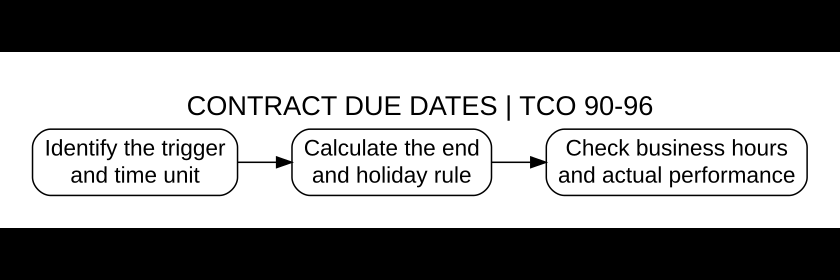
Start with the executed agreement and all effective amendments. Identify each obligation separately: payment, delivery, document production, acceptance testing or another promised act. A project can contain several dates, and the date for one task should not silently replace the deadline for another. The notice or calculation should specify the obligation being assessed.
Article 90 supplies the default where no time was fixed
Under Article 90 of Law No. 6098, an obligation becomes due when it arises unless the parties determined the time of performance or that time follows from the nature of the legal relationship. The rule does not require every agreement to contain a printed maturity date before any claim can arise.
The qualification concerning the relationship’s nature is important. First classify the obligation and check its specific statutory regime. A private loan, periodic income arrangement or regulated contract can have a special rule. For example, the private-loan repayment guide addresses Article 392’s separate fallback where the stipulated conditions apply.
A party should not create a new bilateral maturity agreement merely by putting a date on an invoice after formation. The invoice can record a contractual date, communicate a demand or have another evidential function, but its legal effect depends on the agreement and applicable rules. Preserve the earlier documents that explain why the stated date is binding.
Identify the event from which the period runs
Article 92 gives calculation rules for performance required after a period measured from contract formation. It expressly applies those rules when the starting event is something other than formation. The first task is therefore to establish that event, not to assume the signature date always controls.
The contract can connect a period with receipt of an advance, approval of a specification, delivery of documents or another identified act. Read the actual clause and preserve evidence that the triggering act occurred. A request for approval is not necessarily the approval itself; dispatching a document is not necessarily its receipt where receipt is the agreed trigger.
Separate disagreement about the trigger from disagreement about counting. Where the trigger is disputed, present the competing dates and the records supporting each. A precise calculation based on an unproved starting event remains an unproved deadline. Do not conceal that issue by supplying a single final date without its assumptions and legal basis.
Article 91 explains the beginning, middle and end of a month
Where performance is fixed for the beginning of a month, Article 91 means the first day. The end means the month’s last day, and the middle means its fifteenth day. If only the month is stated without a day, the article identifies the last day of that month.
These are statutory meanings of the specified wording, not a permission to substitute an approximate commercial preference. A clause naming a particular day remains different from one saying only a month. Preserve the exact wording in the original language, especially where an English summary translates a more specific Turkish expression loosely.
The month-based date must still be checked against the holiday and performance-hour rules. Identifying the fifteenth or last calendar day is one step in the calculation; it does not automatically resolve whether the final performance date moves under Article 93 or what must be completed during the ordinary business hours contemplated by Article 94.
Days exclude the starting day; weeks use the corresponding weekday
For a period stated in days, Article 92 excludes the day on which the contract was formed and ends the period when the final day has run. Its express extension to other triggers means the same calculation approach applies to the relevant starting event where the period begins differently.
The article specifically states that eight and fifteen days mean exactly eight and fifteen days, not one and two weeks. A translation replacing fifteen days with a fortnight changes the unit and can change the result. Record the unit used by the contract rather than substituting a familiar English expression.
A period stated in weeks expires on the corresponding named day of the final week. The review should retain the difference between a weekday-based calculation and a count of a stated number of days. Calendar software can assist arithmetic, but its settings must implement the applicable legal unit instead of silently applying a business-day convention.
Months, years and half-months use different operations
For months, or periods comprising several months such as a year, half-year or quarter, Article 92 selects the numerically corresponding day in the final month. If that day does not exist in the final month, the period ends on the month’s last day. The rule is not a universal conversion of every month into thirty days.
A half-month means fifteen days. Where a period consists of one or more months plus a half-month, the calculation adds fifteen days after completing the month component. The order of those operations matters. A calculation that first converts the whole expression into a fixed number of days does not reproduce the statutory method.
The final month must be read from the real calendar, including its actual number of days. Preserve the resulting calculation in a way another reviewer can reproduce: the trigger date, the month component, the corresponding-day check, any added fifteen days and the final holiday check. That record is more useful than a bare spreadsheet cell containing an unexplained date.
Performance within a period must occur before the period expires
Article 92 also states that an obligation required to be performed within a specified period must be performed before that period expires. This directs attention to the required act. Beginning preparations, requesting a bank transaction or arranging transport is not necessarily the completed performance the contract demands.
Identify whether the obligation requires dispatch, receipt, credited funds, delivery, acceptance or another event. The answer follows from the contract and relevant law, not from a general assumption that every message or payment is effective when initiated. Keep the evidence of initiation and completion distinct.
Cross-border timing requires particular documentary care. Preserve the time zone displayed by each system and the actual contractual time reference. Do not treat two timestamps as contradictory before checking their zones, or invent a common zone where the contract and records leave the issue unresolved. The legal act and its proven timing remain the decisive questions.
Article 93 moves an endpoint falling on a legal holiday
If the performance date or final day falls on a day recognised by law as a holiday, Article 93 automatically moves it to the first following day that is not a holiday. The provision expressly allows a contrary agreement. Both the legal status of the day and the contract’s wording must therefore be checked.
The rule concerns the endpoint. It does not direct the reader to remove every holiday that occurred during an ordinary period expressed in days. A clause expressly using business days presents a separate interpretation question: establish how that expression is defined and which calendar the parties incorporated.
A business closure, a foreign country’s holiday and a legally recognised holiday applicable to the obligation are not automatically the same event. Obtain the relevant official calendar and the contract’s place and calendar provisions for the actual year. This article does not publish an assumed list of holidays for every jurisdiction or treat every non-working day in a private office as an Article 93 holiday.
Article 94 concerns ordinary business hours
The Code states that an obligation is performed and accepted during customary business hours. A calendar date alone therefore does not always justify an assumption that every kind of physical or administrative performance remains available until midnight. Identify the nature of the task and the ordinary operating context.
Banking cut-off times, warehouse collection arrangements and electronic-system availability are factual matters to document, not universal statutory hours supplied by Article 94. A bank’s service notice can explain when a particular transfer is processed, but it must be related to the payment obligation actually undertaken.
The safest drafting record identifies the required completion event and any agreed hour clearly. During a dispute, retain the service and system records rather than reconstructing availability from memory. Do not confuse an operational cut-off with a rule extending a court deadline; judicial and administrative procedures require their own statutory analysis.
An extension normally begins after the previous period ends
Under Article 95, an extended period starts on the first day after the earlier period ends unless the parties agree otherwise. The date the extension is discussed or signed is not automatically the new starting point. Read whether the amendment extends an existing period or sets a new independent calendar date.
Preserve the original period and the exact extension declaration. A request for more time, a proposal accepting only part of that request and a concluded amendment are different documents. Identify the person authorised to agree the change and any form required for the agreement.
The written-amendment guide explains the separate form issue. A mathematically correct extended date cannot cure an amendment that was never agreed or did not meet an applicable validity requirement. Record consent and calculation as separate parts of the file.
Early performance does not automatically justify a discount
Article 96 permits performance before expiry unless the contract’s terms, its nature or the circumstances show a contrary intention. That qualification prevents a debtor from treating advance performance as an unrestricted entitlement regardless of what the creditor agreed to receive and when.
The same provision states that early performance does not permit a discount unless law, the contract or custom provides one. A debtor should therefore identify the legal source of any reduction rather than deduct an amount simply because payment is made early. The amount paid and the amount discharged are different questions.
Special regimes can contain specific early-payment rights or calculations. This general article does not replace consumer-credit rules or another transaction-specific provision. Classify the agreement before using Article 96 to accept or reject a particular discount claim, and retain any written agreement settling the sum due.
Prepare a reproducible calculation rather than an unexplained date
| Input | Document or rule | Review question |
|---|---|---|
| Obligation | Executed clause | What act must be completed? |
| Starting event | Formation, receipt, payment or other agreed trigger | When is the event proved to have occurred? |
| Time unit | Article 91 or 92 and contractual wording | Is the period in days, weeks, months or a mixed unit? |
| Holiday adjustment | Article 93, official calendar and any contrary agreement | Does the final day move? |
| Completion time | Article 94 and the required performance event | What must happen during the relevant hours? |
| Extension | Valid amendment and Article 95 | When does the added period begin? |
Keep earlier versions of the calculation when new evidence changes an input. The audit trail should explain the revision instead of concealing it. In a payment dispute, attach the relevant bank record; in a delivery dispute, attach the handover or receipt record that corresponds to the required act.
Do not use these rules as a universal court or limitation calendar
Contractual maturity, limitation, forfeiture periods, objection periods and appeal periods have different legal functions. Some provisions refer to general calculation rules, while others prescribe their own starting events and consequences. An Article 93 conclusion about a payment date must not be copied automatically into a court filing calculation.
The missed civil-court deadlines guide addresses the distinct procedural setting. A request for restoration of a procedural period does not simply extend a private contractual maturity date, and a negotiated extension of payment does not itself extend a deadline imposed by a court.
For an international agreement, first establish the governing law and any special statutory or treaty rules. The international-contract governing-law guide explains that preliminary issue. Provide the complete source documents and any served proceedings for an English-language review; a date calculation cannot substitute for the procedural response a pending case requires.
Frequently asked questions
Is an obligation never due unless the contract prints a date?
No. Article 90 makes it due when it arises unless the parties fixed a time or the relationship’s nature supplies one. Special rules must be checked for the contract concerned.
Does the middle of a month mean the sixteenth?
Article 91 identifies the fifteenth day. The first and last days correspond to the beginning and end of the month.
What does a clause naming only a month mean?
Under Article 91, where the performance month is given without a day, the month’s last day is meant. The applicable holiday rule must then be considered.
Are fifteen days equivalent to two weeks?
No. Article 92 expressly distinguishes exact eight- and fifteen-day periods from one and two weeks. Preserve the unit the parties actually used.
Is one contractual month always thirty days?
No. Article 92 uses the corresponding numerical day in the final month, or its last day if no corresponding day exists. A half-month means fifteen days.
Are all holidays inside the period excluded?
Article 93 moves a performance date or final day falling on a legal holiday. It does not itself exclude every intervening holiday from an ordinary day-based period.
Can the parties agree not to move a holiday endpoint?
Article 93 expressly permits a contrary agreement. The clause and any special applicable legal rules still need review.
Does an extension always run from the day it is signed?
No. Article 95 starts the new period on the day after the previous period ends unless otherwise agreed. Establish the actual extension terms.
Can early payment automatically be reduced by a discount?
No. Article 96 requires a basis in law, agreement or custom for a discount. Permission to perform early and entitlement to reduce the amount are separate questions.
Does this calculation also decide whether a debtor is in default?
It identifies the due date. Default and remedy requirements under Articles 117–126 must be assessed separately, including whether notice is required.
Official legal sources
Turkish Code of Obligations No. 6098, Articles 90–96; official Ministry text, pages 17–18. The English text explains the general performance-time rules and is not an official translation.
Ask about a contractual due date
State the exact time clause, the triggering event and the date on which it occurred. Mention any approaching court deadline separately. Do not send private account or identity records in the initial enquiry.
Istanbul and Mersin offices
Bakırcı & Keskin Law Office is Mersin-based and works throughout Türkiye with an Istanbul and Mersin focus. Arrange a confidential channel for contracts, amendments and delivery records.
Istanbul — Polaris Plaza
Maslak Ahi Evran Caddesi, Polaris Plaza No:21, Floor 9, 34475 Sarıyer/İstanbul. Istanbul office directions.
Mersin — Profit İş Merkezi
İhsaniye Mahallesi, 4903. Sokak, Profit İş Merkezi No:23, Floor 3, Office 14, 33070 Akdeniz/Mersin. Mersin office directions.
Call +90 552 224 43 66. An enquiry does not establish representation or suspend a legal deadline.
Contact regarding a legal matter
In your first message, you may briefly state the subject, your country or city, and any relevant notification or recent procedural date. Please do not send identity numbers, medical data, or personal documents. Messaging alone does not constitute legal advice or create a lawyer–client relationship.
Discover more from Bakırcı & Keskin Hukuk Bürosu
Subscribe to get the latest posts sent to your email.