Cancelling an Unfinished Project in Turkey: The Client’s Payment Duties Under TCO 484
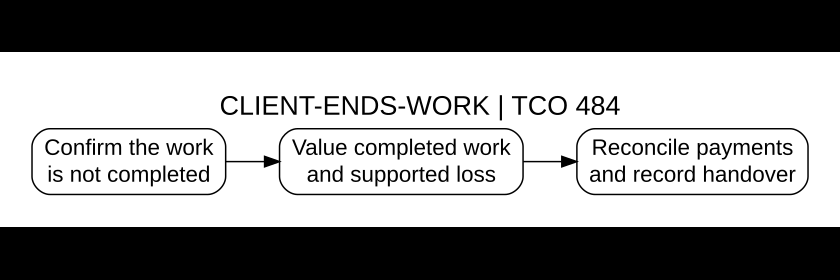
A client who decides to abandon an unfinished project cannot assume that paying only for work already visible on site settles the contractor’s entitlement. Article 484 of the Turkish Code of Obligations permits the client to end the contract before the work is completed on the condition of paying for the part already performed and compensating the contractor’s entire loss. This is a different legal route from ending a contract because of the contractor’s delay or defective performance. The reason for ending the relationship, the state of completion and a supported financial account must be established before sending an unconditional cancellation or demanding the whole advance back.
Have a general question about this article? Ask anonymously
Article 484 concerns a contract for work and a client-led decision
Article 470 describes the contractor’s undertaking to produce a work and the client’s undertaking to pay a price. That legal structure must be distinguished from a sale, employment relationship, mandate or another service arrangement. The English word contractor is used for many relationships and does not, by itself, establish that Article 484 governs.
Read the promised result and actual obligations rather than only the heading of the agreement. A commissioned result, recurring advice and supply of existing goods can require different analyses. Article 19 directs attention to the parties’ real common intention. Classification determines which ending provisions should be considered.
The principal source is Law No. 6098, Article 484. This article addresses a client choosing to end an unfinished works contract and the resulting account. It is not a blanket statement that every consumer has a free change-of-mind right or that every commercial project can be closed without compensation.
The statutory route applies before the work is completed
Article 484 expressly refers to the period before completion. Establish the status of the promised work when the ending decision was communicated. Completion, delivery, inspection and payment can be different milestones; an unpaid invoice alone does not prove that the work remains incomplete.
Use the accepted specification, drawings, agreed deliverables and progress evidence. Identify work performed away from the client’s premises as well as work physically visible there. A custom item being manufactured elsewhere should not disappear from the factual account merely because it has not yet arrived on site.
Where completion is disputed, preserve both parties’ position and the supporting records. A list of outstanding defects can raise different questions from a list of unfinished tasks. The legal assessment should not select a favourable label without examining what the contractor actually undertook and supplied.
Voluntary ending must not be confused with a breach-based remedy
Article 473 addresses specified failures to begin, serious delay and defective or non-contractual work becoming apparent during performance. Its conditions differ from Article 484’s payment-and-compensation route. A client alleging breach should identify the relevant facts and remedy rather than send a general statement that the project is no longer wanted.
The unfinished-renovation guide deals with contractor advances, delay, defects and replacement work. A brief reference there to Article 484 does not mean that all terminations have identical financial consequences. The notice must be consistent with the actual basis being asserted.
A genuine breach allegation should not be invented after the client has independently decided to abandon the project. Equally, using the word cancellation in an informal message should not replace examination of the surrounding facts. Preserve the complete communications and explain the position without altering earlier records.
A fixed price and an approximate estimate are not interchangeable
Article 480 governs a fixed overall price and its defined adjustment framework; Article 481 addresses a price not fixed in advance or set approximately. Those provisions help identify the underlying bargain. The amount transferred as an advance is not automatically the agreed total price or the final value of the completed portion.
Article 482 provides a separate route where an initial approximate price will be excessively exceeded without the client’s fault. It also contains a particular arrangement for work on the client’s land. A cost-overrun case must therefore be classified before it is treated as a simple Article 484 decision to stop.
The financial review should retain the original pricing mechanism and authorised variations. A later invoice changing the contractor’s description of the bargain does not alone prove an agreed amendment. The contract-amendment guide explains the separate consent and form questions.
Payment for the performed part requires a scope comparison
Article 484 first requires payment for the part already performed. Prepare a comparison between the agreed result and the work established at the relevant date. The comparison should identify each element, its condition and the supporting measurement, inspection or delivery record.
A percentage described as progress is not necessarily a complete valuation. Explain whether it represents quantities, milestones, labour, materials or another measure under the agreement. An amount paid in advance to assist procurement is also not proof that the same percentage of the work had been completed.
Keep disputed quality issues visible in the account. The fact that a client invokes Article 484 should not be treated as an unexplained admission that every supplied element met the agreement. Conversely, a general statement of dissatisfaction is not evidence that all completed work has no value. The financial and technical questions require a reasoned assessment.
The second component is compensation for the contractor’s loss
The statute does not stop at the price of completed work: it also requires the contractor’s entire loss to be compensated. A client should not describe Article 484 as a right to walk away for the cost of visible work alone. The contractor should, in turn, identify the loss asserted and its connection with the ending of this agreement.
The loss account should distinguish liabilities already incurred, non-recoverable commitments, alleged loss of contractual earnings and any other item supported by the applicable law and evidence. A heading such as lost profit does not prove its amount. The claim must explain the contractual expectation and the financial records on which it relies.
Equally, the unpaid gross contract balance should not be presented as a self-proving damages calculation. Identify work that will no longer be performed, expenditure not incurred and amounts already included in the completed-work component. The assessment must avoid treating the same economic item as both earned price and a second independent loss.
Saved expenditure and replacement transactions must remain visible
A credible financial account records what happened to ordered materials, allocated personnel and supplier commitments after the project ended. A cancelled order, a supplier refund and an item retained for another job affect the factual loss account differently. They should not be omitted merely because the original budget showed them as future expenditure.
This is not an invitation to invent a standard deduction percentage. Article 484 contains no universal rate that settles all contractors’ claims. Obtain the actual documents and distinguish supported figures from estimates requiring expert examination. The calculation method must be explained for the particular contract.
The same discipline applies to a proposed replacement job. Evidence of a signed replacement agreement differs from an unaccepted enquiry. The financial review should state what is known and how the item is treated, rather than assuming either that the contractor inevitably found equivalent work or that no alternative use of resources was possible.
The advance must be credited, not automatically forfeited or refunded
Record every payment, its recipient and its stated purpose. An advance is part of the account, not a separate pot that can automatically be kept in addition to all other entitlements. Compare payments already received with the supported price and compensation components to identify the net balance.
A client likewise cannot assume that every advance is refundable in full after a voluntary ending. The Article 484 obligations must first be assessed. If the account shows an excess payment, the repayment demand should explain that calculation rather than rely only on the fact that the project will not be completed.
Keep direct payments to suppliers separate from payments to the contractor. Establish whether the parties agreed that those payments would discharge part of the contract price or serve another purpose. An unexplained bank transfer cannot safely be counted twice or silently ignored because it went to a different payee.
Materials and equipment require a documented inventory
Identify materials incorporated into the work, items stored on site, off-site purchases and the contractor’s tools. The person who paid an invoice, the person holding an item and its owner can be different. Payment of an advance does not by itself establish ownership of every item found at the project.
Article 472 separately addresses contractor-supplied and client-supplied materials, including care and accounting duties for materials supplied by the client. Preserve the original supply arrangement and any warning about suitability. An inventory should state which items are agreed for return and which remain disputed.
A physical handover should not be disguised as a final settlement. Receiving keys or allowing collection of tools does not necessarily communicate agreement about the financial balance. Use a record that identifies the items and reserves unresolved questions expressly instead of relying on a broad receipt drafted for another purpose.
The ending declaration should identify the contract and its scope
A clear record states which contract and work are affected, the decision being communicated and the relevant date. It should distinguish permanent ending from a temporary suspension or request to revise the project. Ambiguous instructions can leave both sides disputing whether further work remained authorised.
The sender’s authority also matters. A project manager arranging access may not have authority to settle all compensation or terminate every contract for the property owner. Identify the person making the declaration and any representative’s actual authority before treating a site message as a complete legal act.
Use the notice route applicable to the parties, contract and legal act. A discussion about the amount owed does not eliminate the need to prove what was communicated and when. This guide does not prescribe one universal notice method for every consumer, commercial or cross-border works agreement.
Preserve the condition before a replacement changes the evidence
A new contractor can need to continue the work, but alterations can remove evidence of the first contractor’s progress and condition. Record the relevant state before non-emergency changes through a suitable lawful process. The inspection should distinguish completion, repair and upgrades ordered for the new project.
The evidence-preservation guide explains the separate procedure for facts at risk of disappearing. A preservation inspection does not itself decide the Article 484 balance. Its value lies in establishing the factual inputs for the later legal and financial assessment.
Immediate hazards should not be left in place simply to improve a claim. Document the condition and urgency as far as safely possible and use appropriate professionals. Safety action, evidence preservation and the financial settlement are distinct tasks that need coordination.
Other reasons a works contract ends have different consequences
Article 483 addresses accidental destruction before delivery and contains qualifications concerning acceptance default, materials, land and instructions. Article 485 concerns impossibility arising from an unexpected event related to the client, with an additional compensation consequence where the client was at fault.
Article 486 addresses death or loss of ability where the contractor’s personal qualities were material to the agreement. It provides for acceptance and payment of a useful completed part in its stated circumstances. None of these provisions should be silently replaced with Article 484 merely because the project has stopped.
The impossibility guide explains the wider distinction between an inability to perform and a choice not to proceed. The actual event and contract type determine the applicable analysis, not whichever legal label appears most convenient in a refund request.
Use a close-out schedule that exposes overlap and missing evidence
| Account section | Evidence and question |
|---|---|
| Original bargain | Accepted scope, pricing method and valid changes |
| Completion status | The performed part at the relevant date and any disputed defects |
| Contractor loss | Each claimed item, causal basis and supporting calculation |
| Credits and recoveries | Advances, direct payments, refunds and amounts already satisfied |
| Materials and access | Ownership records, inventory, collection and handover |
| Settlement terms | Net amount, payment date and the precise release scope |
The account should permit both sides to test the figures without accepting every legal allegation. An agreed undisputed payment can be recorded separately from a disputed balance. Do not describe a proposed settlement as performed before the promised payment or handover actually occurs.
International clients need the original agreement and an accurate chronology
Provide the complete executed contract, all language versions, approved changes, payment records, progress evidence and the ending communication. Identify whether the client relies on voluntary ending, contractor breach, a cost-overrun rule or another event. The first review should not have to infer that position from scattered messages.
Governing law and mandatory special regimes require their own assessment. A foreign nationality does not decide whether a contract is a works contract under Turkish law. The international-contract governing-law guide addresses that preliminary inquiry.
If proceedings or a payment order have already been served, retain the full document and service record. A close-out negotiation does not itself file a procedural response. The practical conclusion should identify the valid ending route and the supported net account, not promise a free cancellation or automatic forfeiture.
Frequently asked questions
Can the client end unfinished work without alleging contractor breach?
Article 484 provides a route before completion, conditioned on paying for the performed part and compensating the contractor’s entire loss. It is not a free cancellation rule.
Is paying only for visible work always enough?
No. The statutory account includes the contractor’s loss as well as performed work. Off-site performance and supported commitments also require examination.
Does Article 484 apply after the work is complete?
Its wording concerns ending before completion. Establish completion separately from delivery, inspection and payment, and assess another legal basis where needed.
Is this the same as ending for serious delay?
No. Article 473 addresses specified delay and defective-performance circumstances. The facts, notices and financial consequences must be classified separately.
Can the contractor keep the advance and claim it again?
Payments already received must be reconciled with the supported account. An advance does not justify duplicate recovery of the same amount.
Is the unpaid gross price automatically proven damages?
Not by itself. Identify performed work, the loss asserted, expenditure and credits, and explain the calculation without overlapping recovery.
Does an advance establish ownership of all site materials?
Not automatically. Review the supply and ownership arrangements and distinguish incorporated materials, stored items and the contractor’s tools.
Does collecting tools settle the financial dispute?
The actual agreement determines settlement. Keep an inventory and physical handover separate from any release or final account.
Does an excessive approximate-price overrun use the same rule?
Article 482 supplies a distinct framework with its own conditions. Determine whether the original price was fixed or approximate and why the project is ending.
What should an overseas client send for review?
Provide the contract, changes, payment schedule, progress evidence, material inventory and ending communication, plus any served proceedings and service dates.
Official legal sources
Turkish Code of Obligations No. 6098, Articles 19, 470–473 and 479–486; official Ministry text, pages 97–98. This English explanation is not an official translation or a guarantee of a particular settlement amount.
Ask about ending an unfinished project
State the work commissioned, its current stage and why the relationship is ending. Do not include confidential contracts or account details in the initial message.
Istanbul and Mersin offices
Bakırcı & Keskin Law Office is Mersin-based and works throughout Türkiye with an Istanbul and Mersin focus. Arrange a confidential channel for the project and payment records.
Istanbul — Polaris Plaza
Maslak Ahi Evran Caddesi, Polaris Plaza No:21, Floor 9, 34475 Sarıyer/İstanbul. Istanbul office directions.
Mersin — Profit İş Merkezi
İhsaniye Mahallesi, 4903. Sokak, Profit İş Merkezi No:23, Floor 3, Office 14, 33070 Akdeniz/Mersin. Mersin office directions.
Call +90 552 224 43 66. An enquiry does not establish representation or suspend a legal deadline.
Contact regarding a legal matter
In your first message, you may briefly state the subject, your country or city, and any relevant notification or recent procedural date. Please do not send identity numbers, medical data, or personal documents. Messaging alone does not constitute legal advice or create a lawyer–client relationship.
Discover more from Bakırcı & Keskin Hukuk Bürosu
Subscribe to get the latest posts sent to your email.