Excessive Exploitation in Turkish Contracts: Unfair Advantage and TCO Article 28
A seriously unequal bargain is not automatically set aside under Turkish law merely because one party later finds a better price. Article 28 of the Turkish Code of Obligations requires a clear disproportion between reciprocal performances and a link between that disproportion and exploitation of the injured party’s distress, thoughtlessness or inexperience. When those requirements are met, the injured party has two statutory routes according to the circumstances: reject the contract and request return of the performance given, or remain bound and ask for the imbalance to be removed. The provision also imposes a one-year period with specific starting events and, in every case, a five-year outer limit from conclusion.
Have a general question about this article? Ask anonymously
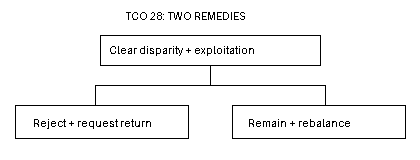
What Article 28 protects against
The Turkish expression aşırı yararlanma, also commonly discussed as gabin, describes a particular form of exploitation in contracting. The legal basis is Law No. 6098, Article 28. It is not a general invitation to ask a court to improve every disappointing bargain. The provision connects the unequal exchange with one of three identified vulnerabilities and the other party’s use of that vulnerability.
Article 26 permits parties to determine contractual content within legal limits. Article 28 operates within that framework by addressing the specified abuse. The review must therefore explain why this agreement falls within the statutory protection instead of treating negotiation, profit or a price difference as inherently unlawful.
The claimant should be able to identify both what was exchanged and how the transaction was obtained. A valuation report addresses only part of that task. The circumstances of agreement, the communications between the parties and the relationship between the vulnerability and the price or other performance complete the factual picture.
A clear disproportion concerns the reciprocal performances
Identify the complete exchange before comparing values. A cash price can be only one part of a transaction that also includes assumed obligations, services, deferred payment, transfer restrictions or other agreed commitments. A comparison that ignores a material part of either side’s performance can misdescribe the bargain.
Use evidence related to the transaction and its relevant time. For an asset, the comparison needs its actual condition, rights, restrictions and other characteristics affecting value. For a service, the agreed scope and duration matter. A later advertisement for a different asset or a narrower service is not a like-for-like valuation merely because the headline description looks similar.
Article 28 states no numerical percentage at which a disparity automatically becomes clear. The article should not be replaced with an invented rule that a contract is invalid whenever a price differs from a market figure by a chosen percentage. The evidence must support the alleged disproportion in the actual reciprocal obligations.
Distress, thoughtlessness and inexperience are alternative statutory grounds
The vulnerability component is not confined to one category. Article 28 identifies a difficult situation, thoughtlessness and inexperience as alternatives. The file should explain which category is relied on and the facts supporting it. Listing all three labels without a corresponding factual account does not establish them.
For distress, record the circumstances affecting the person’s ability to choose at the time of contracting. Identify the pressure actually experienced, its connection with the agreement and the available records. A general statement that money was needed does not explain how the other party used that situation to obtain the disputed exchange.
For thoughtlessness or inexperience, explain the relevant decision-making circumstances or lack of experience in relation to the transaction. Foreign nationality, age or inability to speak Turkish should not be treated as automatic proof. They can be part of the factual setting, but the statutory analysis still requires the particular vulnerability and its exploitation.
This distinction also matters for the time calculation. Article 28 links the one-year starting event to discovery of thoughtlessness or inexperience, but to cessation of the difficult situation in a distress case. The selected factual ground must therefore remain consistent with the chronology used to calculate the period.
The disproportion must result from taking advantage of that vulnerability
The statutory wording requires the disproportion to have been brought about through exploitation. It is not enough to place an unequal price and a personal difficulty side by side without explaining the link. The account should identify what the other party knew, what it did and how that conduct affected the terms accepted.
Contemporaneous communications are particularly useful for this purpose. Preserve the sequence of offers, requests for urgent completion, explanations of need, refusals to allow review and statements about the terms available. None of those items should be treated in isolation as conclusive. Together they can help establish whether the statutory connection exists.
Keep the description factual. A demand for a high price and a deliberate exploitation allegation are not interchangeable statements. The legal reviewer should be able to assess the supporting record without relying on speculation about the counterparty’s motives. Where the evidence is incomplete, identify the missing item rather than replace it with an invented account of the negotiation.
The first route: reject the contract and request return
Article 28 allows the injured party, according to the circumstances, to notify the other party that it is not bound and request return of the performance given. This is a defined legal choice. The communication should identify the agreement and the facts supporting the Article 28 position rather than merely say that the price was disappointing.
Determine what has actually been performed. A bank payment, delivery of an asset, transfer of a right and provision of a service require different records and practical steps. A notice does not itself reverse a bank transfer or change a registered ownership entry. The requested legal remedy and the means of implementing it must correspond to the subject of the transaction.
Preserve payment receipts, transfer records and evidence of possession or use. Identify what each party received and the current position of the property or right. The statutory ability to request return should not be presented as a promise that recovery will occur immediately or without a dispute about the relevant transactions.
The second route: remain bound and seek removal of the imbalance
The alternative in Article 28 is to remain bound by the contract while asking that the disproportion between performances be removed. This is not the same as rejecting the entire agreement. It allows the legal review to focus on correcting the unequal exchange while preserving the contractual relationship.
The request needs a concrete basis. Explain the performance to be adjusted and the valuation or other evidence supporting the proposed correction. An unsupported demand to halve a price does not become a statutory calculation simply because Article 28 is mentioned. The proposed adjustment must relate to the established disproportion.
The two routes should be discussed before a notice is sent. A communication stating unconditional rejection and a simultaneous demand for continued performance can create uncertainty about the intended position. The pleadings and notice strategy must distinguish the chosen remedy and any properly framed alternative claim rather than combine inconsistent commercial demands without explanation.
The one-year period does not always begin on the signing date
For thoughtlessness or inexperience, Article 28 starts the one-year period when the injured party learns of that situation. For distress, the period starts when the difficult situation ends. Neither rule should be restated as a universal year beginning with signature.
Build a chronology supported by dated documents. Explain when the relevant understanding was gained or when the difficult situation ceased. A later consultation date is not automatically the discovery date, and a later valuation report does not necessarily establish the first moment of awareness. Earlier correspondence can be relevant to the same question.
The statutory period concerns exercise of the Article 28 right. A request for informal negotiation should not be assumed to do everything necessary. Review the declaration, requested remedy and delivery evidence within the remaining time, together with any court step required to obtain the practical result.
The five-year outer limit must be checked separately
Article 28 also requires exercise of the right in every case within five years from the contract’s conclusion. This outer limit is separate from the one-year period. A late discovery cannot simply be used to ignore the five-year boundary stated in the provision.
Determine the actual conclusion date from the agreement and formation records. A later payment, delivery or internal account update should not automatically be treated as a new starting date. Where a later document is relied on as a new contract, its legal effect must first be analysed; an amendment and a replacement transaction are not necessarily identical.
A reliable deadline note records both the one-year starting event and the five-year date. It should identify the evidence for each. Recording only the date most favourable to the claimant creates a preventable risk and obscures the legal basis of the time calculation.
Distinguish exploitation from other contract remedies
Essential mistake concerns an error at formation under Articles 30–35. Deception and duress have their own elements under Articles 36–38. Article 28 instead requires clear disparity linked to exploitation of one of its specified vulnerabilities. The guides to essential mistake and translation errors and deception and duress address those distinct grounds.
Later hardship is different again. Article 138 concerns a qualifying extraordinary change after conclusion and a judicial adaptation framework. Our hardship guide explains that route. An allegation that the original exchange was exploitative should not be supported only by evidence that market conditions subsequently changed.
Standard terms and mandatory-law invalidity also require separate examination. The standard contract terms guide addresses Articles 20–25. The existence of another possible argument does not remove the need to establish the elements of Article 28 when that provision is relied on.
Preparing a review from outside Turkey
Start with the complete contract, amendments, payment records and a description of each side’s performance. Add transaction-specific valuation material and the original negotiations. Organise the vulnerability evidence separately so that the reviewer can see which documents concern disparity and which concern exploitation.
Include all language versions and the translation actually used during negotiations. An English summary helps explain the sequence, but it should not replace the source records. The governing-law question also remains preliminary in an international transaction. A Turkish connection does not alone determine every issue under a foreign-law contract.
Provide any served payment order, summons or other procedural document with its delivery record. A substantive exploitation argument and a procedural response are different tasks. The enforcement guide for overseas clients explains why negotiations or a refund request do not by themselves replace the response required in an existing proceeding.
A practical review checklist
The file should answer six concrete questions: what the reciprocal performances were; why their values were clearly disproportionate; which vulnerability existed; how the other party exploited it; which of the two remedies is sought; and when both statutory periods expire. An answer supported by a document is more useful than a broad allegation of unfairness.
Do not dispose of the original agreement after preparing a notice or obtain evidence through unauthorised access to another person’s account. Keep source records intact, including information that does not favour the proposed claim. The purpose of the review is to select a supportable legal route, not to turn commercial dissatisfaction into an accusation without evidence.
Frequently asked questions
Is a high price alone enough under Article 28?
No. The provision requires clear disproportion linked to exploitation of distress, thoughtlessness or inexperience. A price comparison alone does not establish every element.
Does the Code specify a fixed percentage for disproportion?
Article 28 does not state a universal percentage. The complete reciprocal performances and transaction-specific valuation evidence must be examined.
Must all three vulnerability categories be present?
No. Distress, thoughtlessness and inexperience are alternative statutory categories. The category relied on and its exploitation must still be supported by the facts.
Can the injured party keep the contract?
Yes. Article 28 permits remaining bound while requesting removal of the disproportion. That differs from rejecting the contract and requesting return of performance.
What is the alternative to keeping the agreement?
According to the circumstances, the injured party can notify the other side that it is not bound and ask for return of the performance given. The practical recovery steps depend on the transaction.
When does the one-year period start in a distress case?
Article 28 starts it when the difficult situation ends. The date must be established from the facts, and the separate five-year outer limit must also be checked.
What starts the period for thoughtlessness or inexperience?
The statute refers to learning of the thoughtlessness or inexperience. The discovery chronology must be documented rather than automatically equated with a later legal consultation.
Can the right always be used more than five years after signing?
Article 28 imposes a five-year outer limit from conclusion in every case. A later discovery does not by itself remove that statutory boundary.
Does foreign nationality establish inexperience?
No automatic rule of that kind appears in Article 28. The particular vulnerability, its exploitation and the disproportion must be established for the actual transaction.
Is exploitation the same as later hardship?
No. Article 28 addresses the exploitative bargain, while Article 138 addresses qualifying changed circumstances and adaptation. Their factual requirements and remedies differ.
Official legal sources
Turkish Code of Obligations No. 6098, particularly Articles 26–28; official Ministry text, page 5. This English explanation is not an official translation; the Turkish statutory text governs.
Istanbul and Mersin offices
For an English-language assessment, identify the exchange, the circumstances of agreement and the relevant discovery or cessation date through the contact section. Bakırcı & Keskin Law Office is Mersin-based and coordinates Turkish matters from Mersin and Istanbul. Agree a confidential channel before sharing contracts or private financial records.
Istanbul — Polaris Plaza
Maslak Ahi Evran Caddesi, Polaris Plaza No:21, Floor 9, 34475 Sarıyer/İstanbul.
Mersin — Profit İş Merkezi
İhsaniye Mahallesi, 4903. Sokak, Profit İş Merkezi No:23, Floor 3, Office 14, 33070 Akdeniz/Mersin.
Call +90 552 224 43 66. General information; an enquiry does not establish representation or suspend a legal deadline.
Contact regarding a legal matter
In your first message, you may briefly state the subject, your country or city, and any relevant notification or recent procedural date. Please do not send identity numbers, medical data, or personal documents. Messaging alone does not constitute legal advice or create a lawyer–client relationship.
Discover more from Bakırcı & Keskin Hukuk Bürosu
Subscribe to get the latest posts sent to your email.