Life Income Contracts in Turkey: Payment Periods, Heirs and TCO Articles 607–610
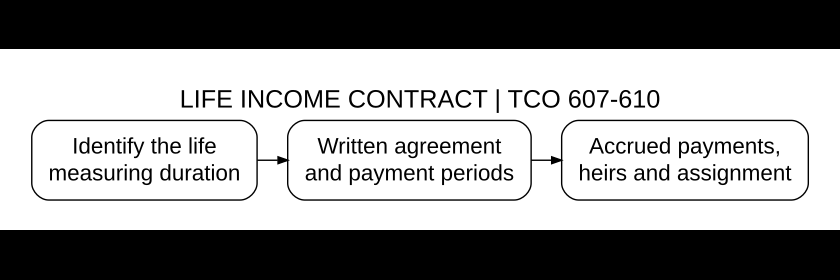
A private promise to pay income for life must identify whose life determines the obligation’s duration. Article 607 of the Turkish Code of Obligations permits the period to be tied to the income creditor, the income debtor or a third person. Without an express contrary provision, the creditor’s life is the measuring life. Articles 608–610 require written form, provide a default six-month advance-payment cycle, address death during an advance-payment period and regulate assignment. The agreement is not automatically a state pension, an insurance policy or a promise to provide personal care. Those distinctions are essential before transferring assets or relying on future payments.
Have a general question about this article? Ask anonymously
What the statutory life-income contract actually promises
Article 607 defines an agreement under which the income debtor undertakes specified periodic performance for the income creditor throughout the life of one of them or a third person. The relevant feature is a recurring obligation measured by a person’s lifetime. A series of fixed instalments ending on a calendar date is not automatically the same arrangement merely because it helps support an older relative.
The written terms should identify the debtor, creditor, periodic performance and measuring life. The person providing money or property at the beginning is not necessarily the person entitled to receive the recurring income. Where three people are involved, their roles must be stated separately rather than described collectively as the family.
The governing provisions are Law No. 6098, Articles 607–610. This guide explains a private contractual relationship. It does not recommend an investment product, calculate a pension entitlement or state that a regulated insurer is liable merely because a document uses the word annuity.
The measuring life controls duration
Article 607 allows the agreement to use the creditor’s life, the debtor’s life or a third person’s life. Where there is no express contrary provision, the statutory presumption is the creditor’s lifetime. The parties should therefore not assume that the obligation continues after the creditor’s death simply because the contract describes payments as lifelong.
Identify the measuring person without relying solely on a relationship description that can become ambiguous. The agreement should make the distinction between the person receiving income and the person whose survival determines duration intelligible to whoever later administers the account. This is particularly important where a third person’s life is selected.
A payment schedule and a duration clause answer different questions. The schedule states when performance falls due while the contract continues; the duration clause identifies the event ending future periodic obligations. Paying monthly does not change the measuring life, and changing the bank account does not necessarily change either the recipient’s substantive entitlement or the contractual duration.
Inheritance depends on that choice, not simply on the label annuity
Article 607 states that income limited by the debtor’s or a third person’s life passes to the creditor’s heirs unless otherwise agreed. The provision thus contemplates a creditor dying while the measuring person remains alive. A review must read the chosen measuring life together with any contrary succession clause.
This is different from income whose duration is the creditor’s own life. The end of future periods must also be distinguished from the collection of sums already due. A statement that a life-based obligation has ended does not establish that every earlier unpaid instalment has been discharged.
For an estate file, retain the contract, death records relevant to both the creditor and measuring person, the payment history and the documents establishing the successors. The succession inquiry should identify the right that survived rather than assume that the heirs receive a new income period based on their own lives. Nothing in Article 607 makes the measuring life restart when an heir takes over an existing right.
Written form is a validity requirement
Article 608 states that the life-income agreement is invalid unless made in writing. The form issue is therefore not merely about whether a witness remembers the promise. Obtain the complete executed document and incorporated schedules, including the provisions defining amount, duration and payment arrangements.
The general written-form rules in Articles 14–17 remain relevant. Signatures of those assuming obligations, the legal character of the execution method and any agreed additional form should be reviewed. A scanned page, an ordinary email and a legally qualifying electronic signature should not be described as universally interchangeable.
Other transactions forming part of the arrangement can have their own form requirements. A written life-income promise does not itself perform a separately required registration or official-form transfer of immovable property. The legal review should identify each act the parties intend, not assume that compliance with Article 608 completes every asset transfer mentioned in the document.
The default is six-monthly payment in advance
Unless the contract provides otherwise, Article 609 makes the income payable every six months in advance. Monthly payment is therefore not the statutory default merely because it is familiar from wages or pensions. The parties can agree a different cycle, but that agreement should be identifiable from the terms.
Record the first period, due dates and the performance required for each period. An agreement can state an annual amount while prescribing smaller payment intervals; its wording must explain how the figures relate. A yearly figure should not be treated as a six-month instalment without checking the calculation.
The currency, payment destination and any agreed adjustment mechanism should also be clear. Articles 607–610 do not supply an automatic annual inflation increase or a universal exchange rate. Where the contract includes an adjustment, preserve its base date, formula and source so that the amount demanded can be checked rather than changed unilaterally.
Death during an advance-payment period does not reduce that period automatically
Article 609 provides that even if the person whose life measures the income dies before the end of an advance-payment period, the entire income for that period is considered owed. The rule is not a daily pro-rating instruction. The relevant period and the death date must therefore be established before asking for a repayment or reducing an outstanding sum.
The provision concerns the advance-payment period in progress, not every later period that would have arisen had the measuring person survived. The distinction prevents two opposite errors: demanding all future payments despite the duration event, and treating the current period as payable only up to the day of death.
Keep a schedule showing each period, its due date, the amount paid and any unpaid balance. A bank transfer made shortly before death should be matched to its contractual period. Its proximity to the death date alone does not establish that it was an overpayment.
Assignment is permitted unless the parties agreed otherwise
Under Article 610, the income creditor can transfer the rights to another person unless the agreement provides otherwise. Read any restriction before presenting an assignment as available. The provision’s default permission does not erase the general legal requirements for the particular transfer.
The rights transferred must be identified. An assignment of an already due instalment and an assignment of the continuing income right can have different scopes. Specify whether the transfer concerns a defined receivable, all remaining payments or another expressly identified entitlement.
The receivables-assignment guide explains form, notice and debtor-defence issues under the general assignment rules. Article 610 does not state that a new creditor obtains a new lifetime or that a different measuring life replaces the one originally selected. Entitlement to receive and duration of performance must remain separate.
A payment direction is not necessarily an assignment
A creditor can ask that a payment be sent to another account without necessarily transferring the legal income right. The document should explain whether the named person is collecting on the creditor’s behalf, receiving performance under a separate arrangement or becoming the holder of the claim.
Our third-party payment-direction guide describes a distinct statutory mechanism. A debtor should not infer a complete assignment solely from new bank details; the creditor should not assume that a collection instruction automatically resolves inheritance or transfer restrictions.
Preserve authentic instructions and verify the authority of a representative communicating them. The purpose is to ensure that payment reaches the person entitled to receive it and is credited to the correct period. A fraudulently changed account or a disputed collection authority requires its own factual and legal assessment.
The debtor’s bankruptcy produces a capital-value claim
Article 609 gives the income creditor a right, if the income debtor becomes bankrupt, to register a sum equal to the capital that would have to be paid to the relevant social security institution to obtain the periodic income the debtor owed. The provision supplies a particular capital-value measure for the bankruptcy claim.
That statutory reference does not say that a social security institution becomes the private debtor’s guarantor or must start making payments to the creditor. The claim described is registered in the debtor’s bankruptcy estate. Nor does registration guarantee that the estate will distribute the claim’s full face amount.
The calculation needs the contractual periodic performance, measuring life and relevant valuation basis. It should not be replaced with an arbitrary number of remaining years or an unsupported multiplication of the most recent instalment. Obtain the evidence and calculation appropriate to the statutory capital-value test before presenting a figure as established.
Non-payment and bankruptcy are different events
A missed payment does not itself prove a bankruptcy event. The creditor should first identify the instalment due, its contractual date and the payment history. A late remittance, a disputed adjustment and a formal bankruptcy create different legal questions even when all result in the creditor receiving less than expected.
Prepare a demand that identifies the unpaid periods and the basis of any interest claimed. The life-income provisions do not prescribe one universal default-interest percentage for every agreement and currency. The appropriate interest and procedural rules require their own review.
Where proceedings are already underway, keep the complete court or enforcement papers and service records. The enforcement guide for overseas clients explains why an ongoing discussion about instalments does not replace a formal response or filing.
Life income is not the same as lifetime care
Article 611 defines lifetime care as an undertaking to care for and look after the care creditor until death in exchange for transfer of an estate or particular assets. Articles 612–619 provide its separate form, care and termination rules. A periodic payment obligation under Article 607 should not be treated as automatically including every housing, nursing or treatment obligation of a care contract.
The distinction matters before assets are transferred. A person expecting personal care needs the actual care undertaking to be examined, not reassurance based only on the word lifetime. Conversely, a monetary-income debtor should not be described as having promised full personal care without a contractual and statutory basis.
A document can require analysis of more than one undertaking, but each should be identified. Article 19’s real-common-intention rule assists classification; the English title of the form does not override its operative content. This guide does not replace a separate review of a mixed arrangement involving care, property transfer and income.
An overseas creditor needs a coherent document and payment file
Retain the executed agreement, amendments, identity and authority records, the chosen measuring-life clause and the schedule of instalments. Keep proof of payments and any assignments or changed collection instructions. An unsigned summary prepared for a bank is not a substitute for the governing contract.
Where death affects duration or succession, obtain the relevant records through the appropriate lawful route. Foreign documents can require separate review of their use in Turkish proceedings. The existence of a foreign-language death certificate should not be treated as proof that every authentication, translation or succession issue has already been resolved.
The international-contract governing-law guide explains the preliminary law-selection inquiry. Living abroad, receiving income into a foreign account or owning an asset in Turkey does not alone settle every governing-law question. Apply Articles 607–610 after identifying the relevant Turkish-law basis.
Review the arrangement before signing a release or amendment
A proposed settlement should identify whether it pays arrears, changes future periods, assigns a right or extinguishes and replaces an obligation. Those outcomes are not interchangeable. A receipt for an instalment should not be treated as a release of all future income unless the operative agreement establishes that result.
Compare the original and proposed measuring life, amount, payment cycle, transfer restrictions and security. A change to one field should not silently alter another. The novation guide explains why a new payment document does not automatically erase the old obligation.
The final account should distinguish accrued unpaid periods from continuing rights and any disputed capital-value claim. That structure allows the parties or their successors to understand what has been performed, what remains due and which future event controls duration, without relying on informal assurances about lifelong support.
Frequently asked questions
Whose life determines a Turkish life-income contract’s duration?
Article 607 permits the creditor’s, debtor’s or a third person’s life. Without an express contrary provision, the creditor’s life is the statutory default.
Can the income pass to the creditor’s heirs?
Where duration is tied to the debtor’s or a third person’s life, Article 607 provides transfer to the creditor’s heirs unless otherwise agreed. Accrued unpaid instalments require separate accounting.
Is an oral life-income promise sufficient?
Article 608 requires written form for validity. The executed agreement and the applicable signature and related transaction requirements must be checked.
Are payments automatically due every month?
No. Article 609’s default is every six months in advance. A different payment cycle must be established from the agreement.
Is the current advance period reduced if the measuring person dies?
Article 609 treats the entire income for that advance-payment period as owed even if death occurs before the period ends. Later periods are a separate duration question.
Can the creditor assign the income right?
Article 610 permits transfer unless the agreement provides otherwise. The scope and general legal requirements of the assignment still need examination.
Does assignment create a new measuring life?
Article 610 does not provide that result. Changing the holder of the right must be distinguished from changing the contractual event that determines duration.
Does the state guarantee payment if the private debtor becomes bankrupt?
Article 609 creates a capital-value claim in the debtor’s bankruptcy estate. Its social-security reference is a valuation measure, not a state guarantee of the private obligation.
Is life income the same as a lifetime-care agreement?
No. Articles 611–619 regulate care and related asset transfers separately. A periodic-income promise does not automatically include those personal-care obligations.
What should heirs or an overseas creditor provide for review?
Provide the written agreement, measuring-life clause, payment schedule and history, relevant death or succession records, assignments and any served proceedings.
Official sources
Turkish Code of Obligations No. 6098, Articles 14–19 and 607–610, with Articles 611–619 for the separate care framework; official Ministry text, pages 124–125. This English explanation does not replace the Turkish statute.
Ask about a life-income agreement
Identify the measuring person, payment cycle and whether the issue concerns arrears, succession or a proposed amendment. Do not include sensitive identity or financial documents in the initial message.
Istanbul and Mersin offices
Bakırcı & Keskin Law Office is Mersin-based and coordinates Turkish matters from Istanbul and Mersin. Arrange a confidential channel for contracts, payment histories and succession documents.
Istanbul — Polaris Plaza
Maslak Ahi Evran Caddesi, Polaris Plaza No:21, Floor 9, 34475 Sarıyer/İstanbul. Istanbul office directions.
Mersin — Profit İş Merkezi
İhsaniye Mahallesi, 4903. Sokak, Profit İş Merkezi No:23, Floor 3, Office 14, 33070 Akdeniz/Mersin. Mersin office directions.
Call +90 552 224 43 66. General information; an enquiry does not establish representation or suspend a deadline.
Contact regarding a legal matter
In your first message, you may briefly state the subject, your country or city, and any relevant notification or recent procedural date. Please do not send identity numbers, medical data, or personal documents. Messaging alone does not constitute legal advice or create a lawyer–client relationship.
Discover more from Bakırcı & Keskin Hukuk Bürosu
Subscribe to get the latest posts sent to your email.