Directing Payment to a Third Party in Turkey: Havale and TCO Articles 555–560
Telling another person to pay your creditor does not, by itself, discharge what you owe. Article 556 of the Turkish Code of Obligations states that where a payment direction is used to perform the remitter’s debt to the recipient, that debt ends only when the directed payer performs. Articles 555–560 regulate this three-person legal arrangement, called havale. They address acceptance, the payer’s available defences, notification of refusal and limits on revocation. The arrangement must be distinguished from a bank’s technical transfer process, an assignment of a claim and an agreement replacing the debtor.
Have a general question about this article? Ask anonymously
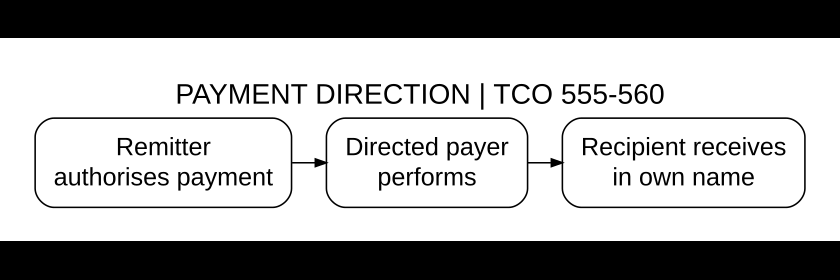
Identify all three participants before allocating liability
Article 555 describes a legal act in which the remitter authorises the directed payer to deliver money, negotiable instruments or another fungible thing to the recipient for the remitter’s account. The remitter also authorises the recipient to accept in the recipient’s own name. The two authorisations and the participants’ separate relationships are central to the definition.
For clarity, this guide uses remitter for havale eden, directed payer for havale ödeyicisi and recipient for havale alıcısı. Those labels identify legal roles, not necessarily banks. A party should not be assigned a role solely because its name appears in a payment reference or because it holds a particular account.
The official source is Law No. 6098, Articles 555–560. Begin with the instruction and the underlying obligations. Identify who owes whom, what is to be supplied and the account on which performance is directed. A three-column transaction map is often more useful than a single consolidated balance.
A payment direction is not proof that payment occurred
Article 556 expressly separates the direction from discharge of the remitter’s debt to the recipient. That debt ends only when the directed payer performs. A signed instruction, acknowledgement of an email or promise to make a transfer is not the same event as actual performance.
Retain the record showing what the recipient actually obtained. For money, identify the credited amount, currency and relevant account, together with any reversal or return. A transfer instruction showing that somebody initiated a transaction should not be presented as conclusive evidence that the recipient received the required performance.
The underlying debt and the payment record must also correspond. A sum received for another invoice does not automatically discharge this obligation. The payment-allocation guide explains why the purpose and attribution of each payment must be established separately.
The recipient’s acceptance affects the route back to the remitter
Under Article 556, a recipient who accepted the direction can assert the claim against the remitter again if, after approaching the directed payer, the recipient could not obtain performance within the period specified in the direction. The provision describes a sequence rather than an automatic release of the original debtor.
Identify the recipient’s acceptance, the demand to the payer and the applicable period. A document saying that the recipient received the instruction does not necessarily answer whether the proposed arrangement was accepted. The communications should be read for their actual legal meaning and not only for the presence of an email delivery receipt.
When the claim is renewed against the remitter, the account must show what remains unpaid. Partial performance should be recorded rather than ignored. The right to pursue the outstanding claim is not authority to recover the same amount again after it has already been satisfied through the directed payer.
A recipient declining the direction must notify the remitter
Article 556 also requires a creditor-recipient who does not wish to accept the direction to tell the debtor-remitter without delay. Failure to notify creates responsibility for the damage resulting from that omission. The statute therefore regulates refusal as well as acceptance.
A refusal should identify the direction concerned and be communicated to the remitter. A private decision not to contact the proposed payer is not necessarily a notification. Preserve the communication and evidence of delivery so that the chronology can be established later.
The provision does not assign one universal number of days to every refusal. Its requirement is notification without delay. The consequences must also be tied to damage caused by the missing notice, rather than an unsupported demand that the refusing recipient pay every loss connected with the commercial relationship.
Unreserved acceptance notified by the payer creates a direct obligation
Article 557 provides that a directed payer who informs the recipient of acceptance without reservation becomes obliged to perform. This is a specific legal consequence of the payer’s declaration to the recipient. An internal approval communicated only to the remitter should not automatically be equated with the statutory notification described in that paragraph.
Keep the acceptance in its complete form, including conditions, attachments and the authority of the person sending it. A message agreeing to review an instruction is different from an unreserved acceptance of the obligation. Likewise, a reservation should not be omitted from a quotation of the message when assessing whether Article 557’s first paragraph applies.
Authority matters where a company is the directed payer. The person who handles invoices is not necessarily authorised to make every binding undertaking. The representation and ratification guide addresses the separate question of whether a purported declaration binds the represented party.
The accepting payer’s defences are restricted
After the qualifying unreserved acceptance, Article 557 permits defences arising from the payer’s relationship with the recipient or from the content of the direction. It excludes defences arising from the relationship between the payer and remitter. The parties’ internal dispute should therefore not be assumed to defeat the recipient’s claim automatically.
Classify each proposed defence by its source. A dispute about the scope of the accepted direction is different from a complaint that the remitter owes the payer money under another transaction. The legal response should identify which relationship produces the argument and why it is available against this recipient.
The restriction is not a statement that the recipient can demand performance beyond the accepted direction. The amount, subject, maturity and other relevant content still matter. Read the acceptance and direction together rather than turning the payer’s declaration into an unlimited promise unrelated to their wording.
A payer already indebted to the remitter has a separate duty
Article 557’s second paragraph addresses a directed payer who already owes the remitter. That payer must perform to the recipient if doing so does not impose a greater burden than performance to the remitter. The existence and scope of the payer’s own debt must therefore be established.
In that situation, unless the payer and remitter agreed otherwise, the payer need not announce acceptance to the recipient before performing. This should not be confused with the first paragraph’s direct obligation arising from notified unreserved acceptance. The statute recognises different situations with different relevant acts.
Compare the actual performance required by the original obligation and the direction. Identify amount, currency, place, timing and any additional condition. A claim that the redirected performance is no more burdensome should be based on those terms, not merely on the fact that both obligations involve money.
Article 558 requires notice when the payer refuses
If the directed payer refuses performance despite the recipient’s request, or declares in advance that it will not perform the subject of the direction, Article 558 requires the recipient to inform the remitter without delay. The recipient is responsible for damage the remitter suffers because that notification was omitted.
Preserve both communications: the payer’s refusal and the recipient’s onward notice. They establish different events. A remitter copied into an unrelated discussion should not automatically be treated as having received a clear report that the particular direction will not be performed.
The notice can be important before the original performance period expires where the payer has already declared non-performance. The statutory wording should not be replaced with a practice of waiting silently until all collection efforts are exhausted. The record must show when refusal became known and how the remitter was told.
Revocation of the recipient’s authority has an important exception
Article 559 begins by permitting the remitter to withdraw the authority given to the recipient. It then prohibits withdrawal where that authority was given for the recipient’s benefit, particularly to enable collection of the recipient’s claim. The exception prevents the opening sentence from becoming a universal right to cancel every arrangement at will.
Identify why the recipient’s authority was given. A direction designed to satisfy a debt owed to that recipient raises the very beneficiary-interest issue stated in the provision. The parties’ agreement and underlying claim must be examined before a revocation notice is described as effective.
A disputed revocation should be recorded with the original instruction, acceptance and performance history. Changing an internal accounting note does not itself establish the legal effect of withdrawal against another participant. The appropriate recipient and the content of the communication must be clear.
Revocation of the payer’s authority turns on acceptance notification
The second paragraph of Article 559 permits the remitter to withdraw authority given to the payer so long as the payer has not announced acceptance to the recipient. The notification chronology therefore matters. It is not enough to compare the date the remitter changed its mind with a date written on an internal draft.
Preserve dispatch and receipt evidence for the relevant declarations and identify the person who made each one. A statement that acceptance was discussed in a meeting does not necessarily establish when the recipient was informed. The conclusion should follow from the actual record.
The two revocation rules address different authorisations. A legal notice should specify whether it concerns the payer’s authority, the recipient’s authority or both, and assess each under its own paragraph. Treating the entire three-party arrangement as one freely cancellable bank instruction obscures the statutory distinctions.
Bankruptcy and instruments require additional classification
Article 559 states that a direction not yet accepted ends automatically upon the remitter’s bankruptcy. Identify the bankruptcy event and acceptance status rather than assuming that financial difficulty or an unpaid invoice is the same legal event. The provision does not say that every accepted arrangement disappears merely because a party becomes insolvent.
Article 560 applies the chapter to written directions for payment to the holder of a claim embodied in a negotiable instrument. Each holder is treated as recipient in relation to the payer, while rights specific to the remitter-recipient relationship arise only between the relevant transferor and transferee.
The article expressly reserves special provisions concerning cheques and bill-like payment directions. A general explanation of Articles 555–560 should not be used to bypass those instrument-specific requirements. Obtain the complete instrument and transfer history before identifying the holder’s rights or the defences available.
Do not substitute assignment, debt assumption or beneficiary rights
An assignment transfers a claim under its own rules. A debt-assumption agreement changes the debtor-side arrangement. A third-party-beneficiary clause concerns a performance stipulated for another person. These mechanisms can appear in the same commercial project but are not synonyms for a payment direction under Article 555.
The guides to assignment of receivables, debt assumption and third-party beneficiary rights explain their respective statutory conditions. The intended legal result determines which analysis is required.
Nor should this chapter be treated as a complete guide to recalling a bank transfer, card chargebacks or payment-service regulation. The commercial direction and the technical execution of a regulated payment can raise separate questions. A reference to Article 559 does not establish that a bank can reverse every completed transfer on demand.
Prepare a transaction record that prevents competing payment demands
The review file should contain the underlying debts, the direction, each participant’s acceptance or refusal, the performance period and all actual payments. Record any revocation and its communication, together with the legal basis asserted for it. Keep the separate relationships visible rather than netting them into a single unexplained balance.
Before following changed payment details, verify the instruction through an established contact channel and confirm the signatory’s authority. That is an evidential and operational precaution, not a substitute for the statutory analysis. The account holder’s identity and the recipient’s legal entitlement should be clear in the record.
For international transactions, retain the original currency, translations and relevant governing-law clauses. Include any served court or enforcement document and its service date. A notice under Articles 556 or 558 and a response in legal proceedings are different acts; commercial correspondence does not automatically preserve every procedural right.
Frequently asked questions
Does directing another person to pay cancel my original debt?
No. Where the direction serves the remitter’s debt to the recipient, Article 556 links discharge to actual performance by the directed payer.
When can an accepting recipient pursue the remitter again?
Article 556 addresses the recipient who approached the payer but did not obtain performance within the direction’s specified period. The unpaid balance and relevant steps must be established.
Must a recipient notify refusal of the arrangement?
Yes. Article 556 requires notification to the remitter without delay where the creditor-recipient does not wish to accept, with responsibility for loss caused by omission.
What is the effect of the payer’s unreserved acceptance?
Under Article 557, notifying that acceptance to the recipient creates an obligation to perform and limits the defences available against the recipient.
Can the accepting payer rely on a dispute with the remitter?
Article 557 excludes defences arising from that relationship after the specified acceptance. Defences from the payer-recipient relationship or the direction’s content remain distinct.
What happens when the payer announces it will not pay?
Article 558 requires the recipient to notify the remitter without delay, including an advance declaration of non-performance. Omission can create responsibility for resulting damage.
Can the remitter always revoke the recipient’s authority?
No. Article 559 protects authority given for the recipient’s benefit, particularly collection of the recipient’s claim. The purpose of the authority must be examined.
When can the payer’s authority be withdrawn?
Article 559 permits withdrawal before the payer has announced acceptance to the recipient. The notification chronology is therefore central.
What does the remitter’s bankruptcy do to an unaccepted direction?
Article 559 provides that a direction not yet accepted ends automatically on the remitter’s bankruptcy. Acceptance status and the actual bankruptcy event must be established.
Is this the same as a bank-transfer recall rule?
No. Articles 555–560 regulate a legal payment-direction relationship. Payment-service execution, completed transfer reversals and instrument-specific rules require their own assessment.
Official legal sources
Turkish Code of Obligations No. 6098, Articles 555–560; official Ministry text, pages 111–112. English labels are explanatory; the Turkish statute governs.
Ask about a third-party payment direction
State your role, the direction date, acceptance status and what remains unpaid. Do not include account credentials, identity numbers or confidential documents in the initial message.
Istanbul and Mersin offices
Bakırcı & Keskin Law Office is Mersin-based and coordinates Turkish matters from Istanbul and Mersin. Arrange a confidential channel for instructions, acceptance records and payment evidence.
Istanbul — Polaris Plaza
Maslak Ahi Evran Caddesi, Polaris Plaza No:21, Floor 9, 34475 Sarıyer/İstanbul. Istanbul office directions.
Mersin — Profit İş Merkezi
İhsaniye Mahallesi, 4903. Sokak, Profit İş Merkezi No:23, Floor 3, Office 14, 33070 Akdeniz/Mersin. Mersin office directions.
Call +90 552 224 43 66. General information; an enquiry does not establish representation or suspend a deadline.
Contact regarding a legal matter
In your first message, you may briefly state the subject, your country or city, and any relevant notification or recent procedural date. Please do not send identity numbers, medical data, or personal documents. Messaging alone does not constitute legal advice or create a lawyer–client relationship.
Discover more from Bakırcı & Keskin Hukuk Bürosu
Subscribe to get the latest posts sent to your email.