Buying Goods by Sample or on Approval in Turkey: Testing, Evidence and Acceptance
A sale by sample and a sale on approval are different arrangements under Turkish law. In a sale by sample, the parties agree that the supplied goods will match an identified benchmark. In a sale on approval, the buyer’s approval after testing or inspection is a condition of the sale. Articles 247–248 of the Turkish Code of Obligations regulate the first arrangement; Articles 249–252 regulate the second. The distinction determines whether the dispute concerns non-conforming delivery or whether approval occurred at all. It also explains why preserving a sample and monitoring the trial deadline are separate tasks.
Have a general question about this article? Ask anonymously
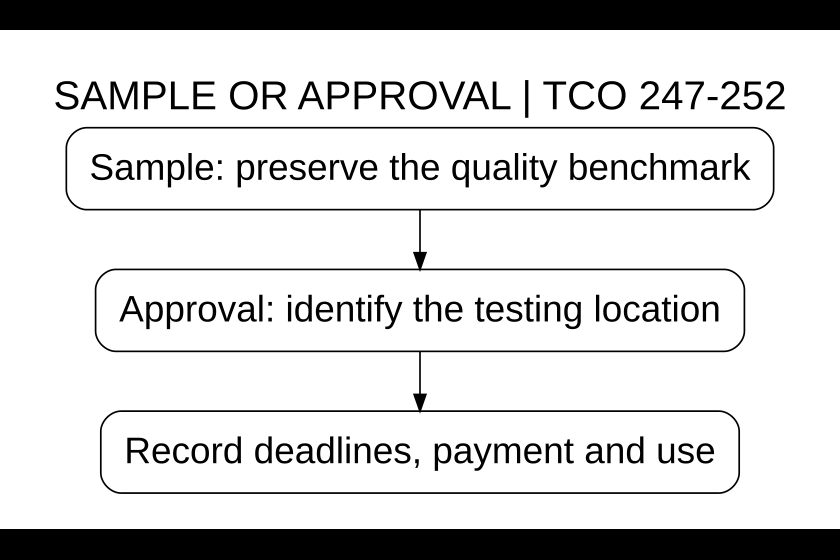
Identify the legal function of the demonstration or specimen
A supplier can provide a specimen to demonstrate quality, lend equipment for a demonstration, or deliver goods under a contract conditional on approval. Those events can look similar in a warehouse but do not necessarily create the same legal relationship. The agreement and communications must establish what the parties intended the specimen or trial to do.
Article 247 defines a sale by sample through agreement that the goods will conform to a sample left with the buyer or a third person, or to another item the parties have identified. A brochure photograph or a casual showroom visit is not automatically proof of the particular benchmark agreed under that provision.
Article 249 instead concerns a sale conditional on the buyer approving the goods after testing or inspection. The relevant right is not merely the ordinary ability to check delivery for defects. Before invoking rejection without reasons, establish that this approval condition was actually part of the transaction.
The sample must be connected with the specific order
Record the sample’s identifier, date, version and the order to which it applies. A business can exchange several specimens while developing a product. The approved final benchmark must be distinguishable from rejected development versions and materials supplied only for discussion.
The Article 247 agreement should also identify the qualities for which the benchmark matters. Colour, composition, dimensions, finish and performance are different characteristics. The review should not assume that one sample silently overrides every written specification or that a written specification necessarily removes an agreed sample obligation.
Keep the order, approval message and relevant schedules together. Where a representative accepted the benchmark, identify that person’s authority. The business signing-authority guide explains why responsibility for inspecting goods and power to change contractual specifications must be distinguished.
Article 248 gives the sample holder an evidential protection
In a sample sale, the person to whom the sample was given does not bear the burden of proving that the specimen held is the one originally supplied. Article 248 also protects the buyer’s assertion where a change in the sample’s form was a necessary consequence of examining it. The other party retains the right to prove the contrary.
This rule concerns the identity and relevant condition of the benchmark. It should not be enlarged into an irrebuttable presumption that every delivered item is defective or that the buyer’s entire monetary claim is proven. Conformity of the delivered goods and the remedy sought require their own analysis.
Keep custody records and photographs even where the statute supplies an evidential advantage. They help explain which sample was used, how it was stored and why any alteration occurred. The protection is not a reason to mix labelled specimens or discard the documents linking them with the order.
Losing the sample changes the burden even without fault
If the sample deteriorates or is destroyed while in the buyer’s possession, Article 248 places the burden of proving non-conformity on the buyer even where the buyer was not at fault. The provision expressly makes absence of fault insufficient to preserve the earlier evidential position.
The buyer should therefore retain other reliable comparison evidence: technical specifications, agreed measurements, test reports, authenticated photographs and correspondence recording the characteristics. Such records must be described accurately. A photograph of appearance does not establish an unmeasured chemical composition merely because the physical specimen is gone.
Do not confuse necessary alteration during examination with unexplained deterioration or destruction. Record the testing procedure and what remained afterwards. Where a test consumes material, preserving the protocol and suitable reference material helps explain the event; it does not justify claiming that the sample remained intact when it did not.
A conformity dispute is not an unrestricted change-of-mind return
A sale by sample establishes a contractual quality benchmark. It does not, by that feature alone, give the buyer the free choice to return compliant goods without a reason under Article 250. That freedom belongs to the distinct sale-on-approval arrangement where its requirements are established.
For an alleged mismatch, organise the comparison feature by feature. Identify the sample characteristic, the delivered characteristic, the method of assessment and the relevant delivery batch. A statement that the goods feel different is less useful than an explanation of the actual discrepancy relied on.
The supplier specification-dispute guide addresses broader delivery disputes, including the need to identify the applicable legal framework. This article focuses on the sample’s statutory role and does not substitute its evidential rules for every notice, inspection or remedy requirement in a sale.
Article 250 permits rejection without a stated reason in an approval sale
Where Article 249’s approval condition applies, Article 250 leaves the buyer free to accept the goods or return them without giving a reason. The legal significance lies in the agreed approval structure. The buyer need not convert every decision against approval into an allegation that the goods contain a technical defect.
That freedom must be read with the rules governing when approval is treated as having occurred. A buyer cannot assume that the condition remains unresolved indefinitely while ignoring the contractual trial period, a relevant warning, unreserved payment or use beyond testing.
The agreement should identify the goods subject to trial, the inspection arrangements and the person authorised to communicate the result. A trial concerning one demonstration unit is not automatically a trial of every later shipment. Preserve the scope of the arrangement before extending a rejection to unrelated orders.
Possession does not transfer ownership before approval
Article 250 states that ownership remains with the seller until the approval condition occurs, even where possession has already passed to the buyer. Delivery into the buyer’s facility and fulfilment of the approval condition are therefore different events under this statutory arrangement.
The parties should record the item, its condition and the purpose of delivery. Internal asset records should reflect the actual legal position rather than treating every item physically present as owned outright. The same distinction matters when the buyer contemplates transferring, pledging or integrating the goods into another asset.
This is not a complete statement of responsibility for every accident during a trial. Ownership, permitted use, custody obligations and liability for damage require separate review of the contract and applicable rules. The ownership sentence should not be converted into an unsupported claim that the seller always bears every consequence of the buyer’s conduct.
Testing at the seller’s premises: silence can release the seller
Article 251 applies where testing or inspection is to take place with the seller. If the buyer does not state acceptance or rejection within the period required by the contract or custom, the seller is released from being bound by the contract. This is not the same consequence as deemed approval while the goods are with the buyer.
Where no period has been set, the seller can, after a suitable period, require the buyer to state whether the goods are accepted. If that warning receives no immediate reply, the seller is released. The statutory sequence includes both the suitable interval and the warning; it should not be reduced to an invented fixed number of days.
Keep the agreed inspection arrangement, invitations to test and the warning and response records. The seller’s file should show that the buyer was asked to make the decision described in the provision, not merely invited to discuss an unrelated aspect of the transaction.
Testing with the buyer: inaction can complete approval
Article 252 addresses goods supplied to the buyer without prior testing or inspection. Within the period required by the contract or custom, or where no such period exists following the seller’s warning, the buyer must promptly communicate disapproval or return the goods as required by the statutory framework. Inaction in the stated circumstances results in fulfilment of the approval condition.
Record when the goods were delivered and which contractual or customary period applies. A delivery record proves arrival, but it does not necessarily contain the full trial agreement. A period agreed for transport or installation should not automatically be substituted for the approval period.
The practical response should leave no ambiguity about whether the buyer rejects approval and how return will occur. Preserve the communication, dispatch or handover record and the actual condition of the returned item. Quietly leaving the goods in a corner while continuing discussions is not a reliable way to keep the statutory condition open.
Unreserved payment can be approval even before the trial period ends
Article 252 also treats the condition as fulfilled if the buyer pays all or part of the price without reservation. The rule is not limited to full payment. The legal purpose and accompanying terms of a partial transfer must therefore be understood before it is recorded as a harmless administrative advance.
Keep the payment instruction, bank reference and any communicated reservation together. The statute’s reference to a reservation does not make an undisclosed internal accounting note equivalent to an expressed position towards the seller. The evidence should show what the parties actually communicated about the payment.
A sum described as a deposit, security or advance requires interpretation in the context of the agreement. The label should not be used to avoid examining whether it was in substance an unreserved part-payment of the sale price. Identify the source and intended legal effect before relying on Article 252.
Using the goods beyond testing can also complete approval
The other express conduct rule in Article 252 concerns use exceeding the purpose of testing or inspection. Approval can therefore occur through conduct even without a separate signed acceptance certificate. The agreement’s test purpose and the actual use are both relevant.
For equipment, document the agreed testing protocol, operating period and assessment activities. Distinguish running a necessary test from putting the item into ordinary commercial service beyond that purpose. The conclusion should be based on the work actually done, not solely on whether the buyer called it a trial.
A free loan for use is a different arrangement. The borrowed-equipment guide addresses return and permitted use under that framework. The existence of a temporary handover does not establish that every free-use loan becomes a purchase through Article 252.
Draft the acceptance record around the event that matters
Record whether the final decision concerns conformity with a sample or exercise of an approval condition. A certificate that confirms the identity of delivered boxes is not necessarily a decision approving their performance. Conversely, a clear approval declaration should not later be described as a mere delivery acknowledgement without evidence supporting that distinction.
| Arrangement | Central issue | Key record |
|---|---|---|
| Sale by sample | Conformity with the agreed benchmark | Identified sample, specification and comparison evidence |
| Approval at the seller’s premises | Timely decision; possible release of the seller | Inspection period, warning and response |
| Approval after delivery to the buyer | Whether approval occurred through declaration, inaction, payment or use | Delivery, trial terms, payment reservations and use record |
A later change to the benchmark or trial period must also be established. The contract-amendment guide explains why agreement, authority and any required form are separate checks. Do not overwrite the original terms in the file; retain the amendment and its effective date.
International procurement and special sales rules require a scope check
This guide explains the general Turkish Code of Obligations provisions. An international goods sale can engage a different governing-law or treaty framework, while consumer transactions can have mandatory protections beyond these articles. Articles 247–252 do not establish a universal fourteen-day trial or return right for every buyer.
For an overseas review, provide the complete order, benchmark records, trial terms, delivery documents and all acceptance or rejection communications. Preserve the source-language versions with translations. A served claim has its own response requirements; discussions about the sample or the trial do not themselves suspend them.
Frequently asked questions
Is sale by sample the same as sale on approval?
No. Articles 247–248 concern conformity with an agreed sample. Articles 249–252 concern a sale conditional on approval after testing or inspection.
Must the sample be left with the buyer?
Article 247 also permits a sample left with a third person or another item identified by the parties. The agreed benchmark must be established.
Who proves that the retained specimen is the original sample?
Article 248 protects the person to whom the sample was given from that burden, while preserving the other party’s right to prove the contrary.
What if the buyer loses the sample without fault?
If it deteriorates or is destroyed while held by the buyer, Article 248 places proof of non-conformity on the buyer even without fault.
Can the buyer reject a genuine approval sale without giving a reason?
Article 250 permits acceptance or return without stating a reason, but the rules determining whether approval has already occurred must also be checked.
Who owns the goods before approval?
Under Article 250, ownership remains with the seller until the approval condition is fulfilled even if the buyer has possession.
Does silence have the same effect in every trial?
No. Article 251 addresses testing with the seller and release of the seller. Article 252 addresses goods delivered to the buyer and deemed approval in the stated circumstances.
Can a partial payment amount to approval?
Yes. Article 252 includes payment of all or part of the price without reservation. Preserve the payment and any communicated reservation.
Can ordinary commercial use end the trial condition?
Article 252 treats use beyond testing or inspection as fulfilment of the approval condition. The agreed purpose and actual conduct require examination.
Do these articles create a universal fourteen-day return period?
No. They refer to contractual or customary periods and the specified warning rules. Consumer and international-sale requirements need separate classification.
Official statutory sources
Turkish Code of Obligations No. 6098, Articles 247–252; official Ministry text, pages 48–49. This English explanation is not an official translation and does not replace applicable special sale or treaty provisions.
Ask about a sample or approval dispute
State what the sample or trial was intended to establish, the delivery date and any payment or rejection. Do not include confidential designs or identity numbers in the first message.
Istanbul and Mersin offices
Bakırcı & Keskin Law Office is Mersin-based, working throughout Türkiye with an Istanbul and Mersin focus. Agree a confidential channel before sending the documents relevant to your enquiry.
Istanbul — Polaris Plaza
Maslak Ahi Evran Caddesi, Polaris Plaza No:21, Floor 9, 34475 Sarıyer/İstanbul. Istanbul office directions.
Mersin — Profit İş Merkezi
İhsaniye Mahallesi, 4903. Sokak, Profit İş Merkezi No:23, Floor 3, Office 14, 33070 Akdeniz/Mersin. Mersin office directions.
Call +90 552 224 43 66. An enquiry does not establish representation or suspend a legal deadline.
Contact regarding a legal matter
In your first message, you may briefly state the subject, your country or city, and any relevant notification or recent procedural date. Please do not send identity numbers, medical data, or personal documents. Messaging alone does not constitute legal advice or create a lawyer–client relationship.
Discover more from Bakırcı & Keskin Hukuk Bürosu
Subscribe to get the latest posts sent to your email.