Tenant Renovations in Turkey: Reimbursement, Added Value and Restoring the Premises
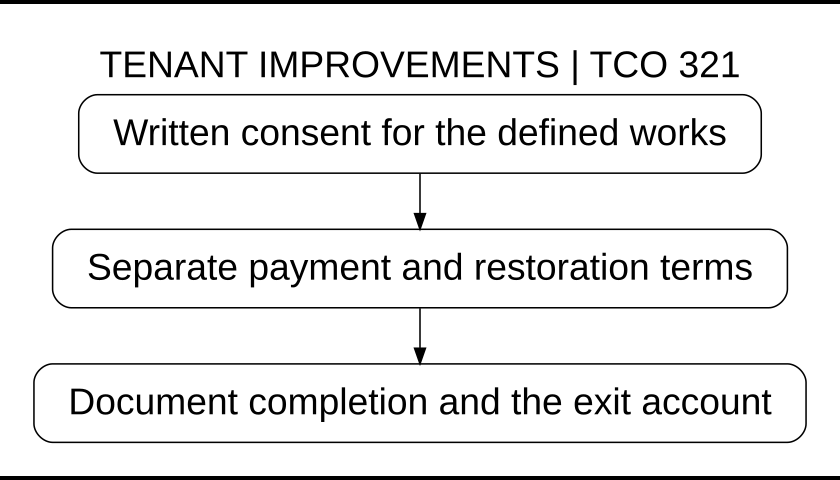
A landlord’s written permission to renovate rented premises in Turkey is not, by itself, a promise to reimburse the tenant. Article 321 of the Turkish Code of Obligations separates three questions: permission for alterations, restoration of the former condition and payment for increased value. Written consent permits the approved works. A consenting landlord cannot demand restoration unless it was agreed in writing. The tenant cannot demand compensation for the resulting increase in value unless a contrary written agreement exists. A well-prepared apartment renovation or commercial fit-out file therefore needs more than a contractor’s invoice: it must show exactly what the landlord approved, what payment was agreed and what condition is required at departure.
Have a general question about this article? Ask anonymously
Identify what each document actually promises
A renovation dossier often contains a lease, a message approving work, a contractor’s quotation and invoices addressed to the tenant. Each answers a different question. The contractor’s agreement describes the work and price between contractor and customer; it does not automatically bind the landlord to pay that price.
Similarly, a landlord’s approval of a drawing identifies authorised changes but may say nothing about reimbursement. A clause requiring restoration addresses the condition at exit, not necessarily who funds the initial installation. Read the operative wording rather than treat all documents as one general understanding that the property will be improved.
The primary rule is Law No. 6098, Article 321. Its separate paragraphs should remain separate in the contract and the final account. The practical benefit is a file in which each demand can be traced to a particular obligation.
Written consent must cover the work actually performed
The first paragraph permits the tenant to make improvements and alterations with the landlord’s written consent. Identify the premises, the proposed changes and the version approved. A general permission to decorate should not silently be expanded into approval of a different layout, new external opening or relocation of building services.
Attach drawings, descriptions or a schedule where they are needed to make the scope intelligible. Preserve later approved changes rather than overwrite the first specification. If a contractor proposes an alternative during construction, record whether the landlord’s consent covers that alternative before treating it as authorised.
Articles 14–17 address writing, signatures and agreed form. The written-form guide explains why evidence of a message is not automatically proof that every applicable form requirement was satisfied. Keep complete signed or legally effective electronic records, not only an isolated image of an approval line.
The person approving must have authority for the relevant commitment
Identify the landlord and the person giving consent. A manager authorised to arrange repairs may have a different mandate from a representative authorised to approve alterations, reimburse expenditure or waive a restoration obligation. The scope matters separately for each commitment.
Where the landlord is a company or several persons hold the landlord position, obtain the representation information relevant to the transaction. An instruction from one employee or co-owner should not be reported as binding every interested person without establishing the necessary authority.
An overseas landlord can give a defined approval through an appropriately authorised representative. The file should identify the act, approved drawing and any financial limit. Handing a local agent a broad project budget is not an adequate substitute for documenting what the agent may agree with the tenant.
Private consent does not replace building or administrative approvals
Article 321 concerns the landlord–tenant relationship. An alteration affecting common parts, the approved building project or another person’s rights raises separate questions. Permission from the landlord does not itself prove that those additional requirements have been met.
The apartment-alterations guide covers common-area and project approval issues. This article instead addresses the financial and exit consequences between landlord and tenant. Keeping the scopes separate prevents a valid reimbursement agreement from being mistaken for permission to perform work that another authority or owner must approve.
Record who will obtain each required approval, which documents must be available before work starts and what happens if approval is refused. Do not present an expected permit as an issued one or pay a contractor on the assumption that the landlord’s signature resolves every external requirement.
Consent does not create an automatic added-value payment
Article 321’s third paragraph prevents the tenant from claiming the increase in the premises’ value caused by consented improvements unless there is a contrary written agreement. The landlord agreeing that the work can take place is therefore not enough, on its own, to establish a payment entitlement for the value created.
Identify the written payment undertaking. It may specify reimbursement of approved costs, a fixed contribution, a valuation mechanism or another agreed arrangement. Those are different bargains. An agreement to pay for one item should not be turned into an obligation to fund the whole fit-out.
Keep the condition for payment clear. Approval of a budget, completion of the works, delivery of invoices and an inspection can be separate milestones. A tenant should be able to identify when the agreed sum becomes due rather than rely only on the fact that the renovation has been useful.
Expenditure, increased value and the agreed contribution are different figures
A contractor’s invoice records a charge for work. Proof of payment establishes expenditure. An assessment of increased property value concerns a different subject. None of these figures automatically equals the amount the landlord agreed to reimburse.
For a cost-based agreement, identify approved categories, any cap and how variations are authorised. For an agreement tied to value, identify the valuation basis and the legally relevant date. Avoid using the highest figure from several documents without explaining which contractual measure governs.
Record refunds, discounts, credits and amounts already paid by the landlord. A tenant should not demand the same item through an expense invoice and again through a value claim without accounting for overlap. The landlord should likewise distinguish a genuine dispute over valuation from refusal to honour an established fixed contribution.
A rent allowance or fit-out period needs precise wording
The parties may agree a rent-free fit-out period, a credit against particular instalments or payment after completion. These arrangements should identify their amount, duration and conditions. Allowing early access for works is not necessarily the same as waiving rent for an unlimited period.
Keep the rent account separate from the works account and then record the agreed adjustment between them. A reference to three months free should be connected with particular dates and the agreed treatment of other charges. Otherwise, the landlord and tenant can disagree about both the renovation and the amount of rent outstanding.
The payment-allocation guide explains why receipts and payment purposes matter. The accounting should implement the agreed arrangement rather than create a new reimbursement right through a unilateral spreadsheet entry.
A consenting landlord needs a written restoration agreement
Under Article 321’s second paragraph, a landlord who consented to the alterations cannot demand return in the former condition unless this was agreed in writing. Approval and the restoration reservation should therefore be reviewed together. The tenant should retain the approval even after the work has been completed.
A restoration clause needs a defined target. Identify which installations must be removed, which surfaces restored and what standard is required. Photographs and the original condition schedule can make that obligation measurable. A demand to make the property new is not the same as a supported obligation to reinstate specified changes.
Compare any general clause in the original lease with the later written approval and amendments. Do not assume that the last document cancels everything earlier, or that a broad template settles the treatment of a specifically approved alteration. The documents must be interpreted as the actual bargain, subject to applicable mandatory rules.
Permission to alter is not a release from damage caused by the work
The restoration rule concerns return of the approved former condition. It does not automatically excuse negligent installation, damage to unrelated property or work beyond the permission. Distinguish the agreed alteration from a defect in how it was executed and from additional changes never approved.
The contractor’s technical findings should identify the cause and affected element. A claim for damage must not merely rename the landlord’s preference to reverse an approved change. Conversely, a tenant cannot answer an independently supported damage claim solely by showing that the general project was permitted.
Article 334 requires return in the received condition while excluding deterioration caused by contractual use. Apply that distinction with the Article 321 agreement. Ordinary wear, an approved retained improvement and damage from misuse require different entries in the exit inspection.
Do not assume that every installed item can be removed on departure
Identify movable equipment separately from additions incorporated into the premises or shared systems. Payment of an invoice does not alone settle the legal ownership and removal consequences of every installation. The agreement, physical attachment and effects of removal require examination.
Prepare an item schedule stating what remains, what can be collected and who repairs the effects of authorised removal. A tenant’s trade equipment and a structural alteration should not be grouped together under a general instruction to take everything purchased.
If rent is also disputed, the landlord’s asserted security over goods is a separate matter. The retention-right guide explains its limited subject and procedure. Neither a renovation dispute nor a rent claim gives either side an unrestricted power to seize, damage or conceal property.
Necessary defect repairs follow a different route from elective improvements
A tenant paying to remedy a defect for which the landlord is responsible should not automatically be treated as requesting added-value compensation for an elective renovation. Article 301 requires premises suitable for the agreed use. Articles 305–306 address defects and the opportunity for the landlord to remedy them.
Article 306 permits the tenant, where the defect is not remedied within the appropriate period requested, to have it remedied at the landlord’s expense and deduct the resulting claim from rent. Establish the defect, request, period and actual corrective work. A luxury upgrade to a usable item is not transformed into that statutory repair merely by calling it necessary.
Keep any work combining repair and improvement itemised. The repair-access guide addresses the parties’ cooperation and preserved rights during necessary work. Access, responsibility for the defect and the recoverable cost are separate parts of the analysis.
A claimed renovation reimbursement does not justify an unexplained rent stoppage
Identify whether the tenant relies on an agreed rent credit, the specific Article 306 mechanism or a legally effective set-off. The existence of a disputed claim does not itself explain which rent instalments have been discharged. Record the amount and the legal act relied on.
Article 326 prevents an advance waiver by landlord and tenant of set-off rights arising from the lease. It does not, however, establish that every asserted renovation cost is a valid and due counterclaim. The set-off guide addresses the separate conditions.
Before a payment decision is made, reconcile the two accounts and retain the supporting declarations. This reduces the risk of a renovation disagreement being compounded by a separate non-payment dispute. It is more precise than asserting either that all deductions are forbidden or that any invoice can replace rent.
Inspect at return and identify the actual claim immediately
Article 335 requires the landlord to inspect on return and immediately notify in writing of deficiencies or defects for which the tenant is responsible. It treats matters not discoverable by an ordinary inspection separately and requires immediate written notice when those are discovered. The handover date and inspection evidence are therefore important.
Distinguish a claimed breach of a restoration agreement from a defect in workmanship, ordinary wear and unrelated unpaid rent. The inspection should not state only that the premises are unacceptable. Identify the item, condition and contractual or statutory basis for the demand.
Preserve evidence before a new occupier or contractor changes the condition. The evidence-preservation guide explains that separate procedural step. Necessary safety work should not be delayed solely for litigation, but the urgency and earlier condition should be recorded as safely as possible.
A contractor dispute does not automatically become the landlord’s debt
Identify who engaged the contractor, the agreed result, price and approved variations. The contractor may be owed money by the tenant even while the tenant disputes reimbursement with the landlord. Those contracts should not be collapsed into one account without a legally effective arrangement linking them.
The contractor estimate-overrun guide addresses price classification and excessive estimates. A landlord’s approval of work does not necessarily approve every increased contractor charge incurred afterwards.
Similarly, the tenant leaving early can raise a separate Article 325 account. Fit-out expenditure does not automatically cancel the remaining lease obligations, and an early-return claim does not itself decide the reimbursement agreed for completed works. Keep the legal basis of each balance visible.
Use a three-part agreement and a separate settlement account
| Part | What to record |
|---|---|
| Permission | Premises, approved drawings, exact work, variations and signatory authority. |
| Payment | Costs or value covered, agreed amount or method, due date, required records and rent credits. |
| Restoration | Items to remain or be removed, written reinstatement obligation, target condition and responsibility for removal damage. |
| Evidence | Original condition, completed work, invoices, actual payments and approvals. |
| Exit settlement | Keys, inspection, rent, supported deductions, deposit and the precise scope of any release. |
The mediation requirement for rental lawsuits in Law No. 6325, Article 18/B(1)(a) must be assessed with the particular proceeding and its express exception. A negotiated settlement should state who will pay or perform each item and when any release takes effect. An agreement that work will be done is not proof that restoration is already complete.
For an overseas tenant or landlord, retain the original documents and readable translations, and distinguish authority to inspect from authority to settle. A pending court or enforcement document needs its own procedural response. Reimbursement discussions, contractor visits and an intended departure do not suspend those dates.
Frequently asked questions
Does landlord consent automatically require reimbursement?
No. Article 321 distinguishes consent from payment for increased value, which requires the relevant contrary written agreement.
Can the landlord always require approved alterations to be removed?
A consenting landlord needs a written restoration agreement under Article 321. Examine its scope alongside the approval.
Is the contractor’s invoice the amount of added value?
Not automatically. Expenditure, increased property value and the agreed landlord contribution are different measures requiring the applicable evidence.
Does permission to decorate cover any later change?
The approved scope controls. Preserve drawings and written variations instead of treating a limited consent as unrestricted authorisation.
Does private consent replace common-area or public approvals?
No. The landlord–tenant agreement and other owners’ or authorities’ requirements must be examined separately.
Can the tenant remove everything purchased for the project?
No automatic right follows from the invoice. Classify the item, agreement, attachment and damage consequences before removal.
Are necessary defect repairs the same as optional improvements?
No. Articles 305–306 supply a distinct defect-remedy framework. The work, notice and conditions of that remedy must be established.
Can any renovation invoice simply be deducted from rent?
The deduction needs an established contractual or statutory basis. Identify the claim and applicable credit or set-off mechanism.
Does approval excuse damage from defective installation?
Not by itself. An approved alteration, poor workmanship, unrelated damage and ordinary wear are distinct issues.
What records should be supplied for an English-language review?
Provide the lease, written approvals, payment and restoration terms, original condition, completed-work evidence, invoices and the exit account.
Official legal sources
Turkish Code of Obligations No. 6098, Articles 14–17, 301, 305–306, 321, 326 and 334–335; Mediation Law No. 6325, Article 18/B. This is an English explanation, not an official translation, technical approval or valuation of a particular installation.
Ask about tenant-funded works
State the work, written permission, amount claimed and whether the tenancy is ending. Arrange a confidential channel before sending the lease, payment documents or private photographs.
Istanbul and Mersin offices
Bakırcı & Keskin Law Office is Mersin-based and works throughout Türkiye with an Istanbul and Mersin focus.
Istanbul — Polaris Plaza
Maslak Ahi Evran Caddesi, Polaris Plaza No:21, Floor 9, 34475 Sarıyer/İstanbul.
Mersin — Profit İş Merkezi
İhsaniye Mahallesi, 4903. Sokak, Profit İş Merkezi No:23, Floor 3, Office 14, 33070 Akdeniz/Mersin.
Call +90 552 224 43 66. An enquiry does not establish representation or suspend a legal deadline.
Contact regarding a legal matter
In your first message, you may briefly state the subject, your country or city, and any relevant notification or recent procedural date. Please do not send identity numbers, medical data, or personal documents. Messaging alone does not constitute legal advice or create a lawyer–client relationship.
Discover more from Bakırcı & Keskin Hukuk Bürosu
Subscribe to get the latest posts sent to your email.