Agent Paid Expenses in Turkey: Reimbursement, Third-Party Debts and Joint Principals
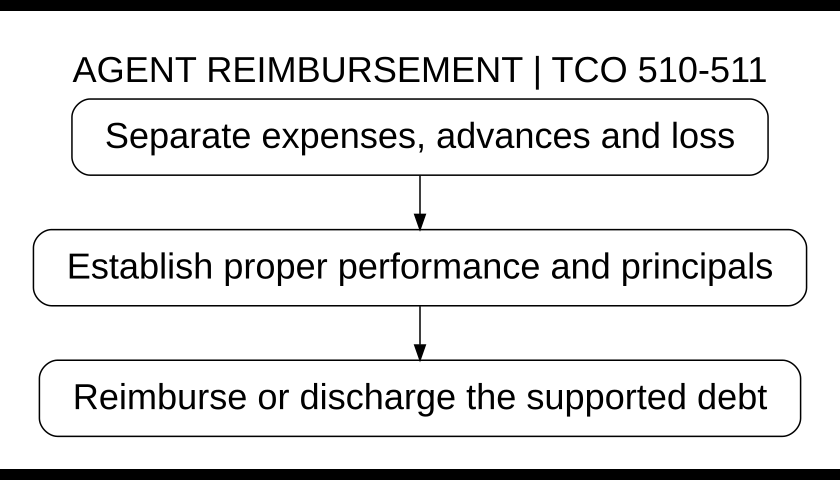
A principal must reimburse an agent’s expenses and advances incurred for proper performance of a Turkish mandate, with interest, and discharge the agent from obligations undertaken for that purpose. Article 510 of the Turkish Code of Obligations creates those duties separately from the agent’s remuneration. It also addresses loss suffered in carrying out the mandate, but permits the principal to escape that separate compensation responsibility by proving absence of fault. Article 511 adds joint and several responsibility where several principals jointly appoint one agent. A demand should therefore identify the correct principal, the category of each claim and the evidence connecting it with proper performance.
Have a general question about this article? Ask anonymously
The legal relationship comes before the expense claim
Article 502 defines a mandate as an undertaking to conduct a business or transaction for the principal. It also applies mandate provisions, where appropriate, to service relationships not governed by another regulated contract. The word agent in this guide refers to that relationship, not automatically to every distributor, employee, corporate director or person who helped with a transaction.
Obtain the engagement, instructions and communications establishing the work undertaken. Identify whether the principal was an individual, a company or several people acting together. A director who sent instructions for a disclosed company is not necessarily personally liable for the company’s reimbursement obligations.
The governing sources are Law No. 6098, Articles 502 and 505–511. This guide examines the agent’s claims against the principal. The existing agent-accounting guide addresses the opposite direction: the principal’s right to accounts and delivery of money or property received by the agent.
Separate paid expenses, advances and unpaid commitments
An expense already paid by the agent calls for reimbursement. An advance supplied from the agent’s own resources must be traced to its purpose and recipient. An obligation undertaken but not yet paid presents the separate Article 510 duty to discharge the agent from that obligation. Grouping all three under an unexplained total obscures what the principal is being asked to do.
For each entry, record the payee, amount, currency, date and supporting document. State whether money actually left the agent’s resources or came from funds previously supplied by the principal. An invoice marked outstanding should not be presented as an expense the agent has already paid.
The classification also prevents double recovery. A supplier obligation cannot be demanded once as cash reimbursement and again as a direct payment without crediting the first discharge. The account should remain intelligible when a debt changes from unpaid commitment to an expense personally paid by the agent.
An advance from the principal is not an advance by the agent
Where the principal provides money in advance for charges, the agent must account for its use. The resulting expenditure does not automatically become an additional debt to the agent merely because the agent made the transfer to the supplier. Identify the source of the funds as well as the person who clicked the payment instruction.
Where the agent first uses personal or business funds and the principal later replenishes them, record both events. The replenishment may satisfy a reimbursement claim, fund later work or do both under an agreed allocation. Its treatment should follow the actual instruction and account, not a label assigned after the dispute arose.
Keep opening funds, agent-funded payments, reimbursements and closing funds in separate columns. That record allows a reviewer to identify the unpaid net amount without assuming that every payment in the agent’s bank statement belongs to this mandate.
Article 510 requires proper performance, not merely an expense receipt
The first paragraph concerns expenditure and advances for proper performance of the mandate. A genuine receipt establishes that a charge existed, but does not by itself show that it was connected with the instructed work or properly incurred. Match the item with the scope, instructions and relevant circumstances.
Article 505 requires compliance with express instructions. Its limited exception concerns inability to obtain permission where it is clear that an informed principal would have agreed. Outside that exception, a departure is not proper performance merely because the transaction was completed unless the resulting loss is compensated.
The instructions and delegation guide explains that framework. The reimbursement review should preserve the instruction history, including approvals and restrictions, instead of treating the expense ledger as the entire legal case.
Delegating the work does not make every substitute’s invoice recoverable
Articles 506–507 distinguish authorised delegation from unauthorised substitution. An agent acting beyond authority is responsible for the substitute’s conduct as for the agent’s own conduct. Where delegation is authorised, the statute separately requires care in selection and instruction.
Identify the substitute’s work, the authority to engage that person and the relationship between its charge and the mandate. A subcontractor’s invoice can evidence a liability, but it does not resolve the principal’s objection that the engagement exceeded the mandate or duplicated work already covered by the fee.
Keep the agent’s contract with the substitute separate from the principal’s engagement. The fact that the principal communicated with the substitute does not automatically make the principal the direct debtor under every supplier contract. The legal role in which each person acted requires evidence.
The duty to discharge the agent is more than a promise to consider an invoice
Article 510 requires the principal to free the agent from obligations undertaken for proper performance. The file should identify the third-party creditor, the obligation, its maturity and the legal person bound. The appropriate relief is not necessarily a cash transfer to the agent where the underlying obligation remains unpaid.
Document the actual method by which the obligation is discharged. Payment to the creditor, an effective release and a legally effective substitution of debtor have different mechanics. An internal statement that the principal will bear the cost is not proof that the third-party creditor released the agent.
The debt-assumption guide explains the distinction between an internal undertaking and a creditor-approved replacement. An agent should retain the creditor’s payment or release records rather than assume that a private reimbursement agreement prevents further pursuit.
Interest is expressly included, but its calculation needs a stated basis
Article 510 requires reimbursement of qualifying expenses and advances with interest. A demand should therefore distinguish principal reimbursement from interest, identify the sums concerned and provide a reproducible calculation. The provision does not print one numerical rate for every currency and relationship.
Preserve payment dates, reimbursement dates and any applicable interest agreement. Different advances can have different relevant dates. A single start date applied to the full final balance can misstate the chronology when the agent funded several separate transactions over time.
The applicable interest regime and the starting point for each component require legal assessment. Do not treat a spreadsheet formula as evidence that the underlying expense is established. The principal amount, entitlement to interest and amount of interest remain distinct parts of the claim.
Loss suffered by the agent is a separate Article 510 claim
The second paragraph allows the agent to seek compensation for loss suffered because of performance of the mandate. It also permits the principal to avoid that responsibility by proving absence of fault. This is not the same structure as the first paragraph’s reimbursement and discharge duties.
Identify the event causing the loss, its connection with carrying out the mandate and the amount actually sustained. An authorised expense is not automatically an additional compensable loss simply because the principal has not yet reimbursed it. Keep the claimed categories separate so that the same amount is not demanded twice.
The principal’s no-fault defence should address the loss claim actually made. It should not be presented as automatically defeating every properly incurred expense under the first paragraph. Conversely, evidence that an expense was authorised does not by itself establish all requirements of a separate damages demand.
Remuneration and reimbursement have different legal sources
Article 502 recognises remuneration where the agreement or custom provides for it. Article 510 concerns the qualifying expenses, advances and obligations of performance. A fee dispute should therefore identify the fee arrangement instead of silently relabelling all outgoings as professional remuneration.
A fixed fee can contain terms about included expenses, but its actual scope must be read. Identify whether the parties treated an amount as a fee, an expense allowance or money held for a particular payment. The commercial heading on a bank transfer is relevant evidence, not a substitute for the complete engagement.
Special professional and regulated relationships can have their own fee rules. This general mandate article does not replace those provisions. The legal review must classify the relationship before assuming that an ordinary mandate reimbursement analysis answers every question about a professional’s charges.
Jointly appointing principals are jointly and severally responsible
Article 511 states that people who jointly give a mandate to one agent are jointly and severally responsible towards that agent. Establish the joint appointment: who entrusted the work, in what capacity and for which transaction. Several people benefiting from an act is not necessarily proof that they all jointly appointed the agent.
Preserve the engagement, signatures and communications showing assent. A company’s shareholder, a family member copied into messages and a person providing local access can have different roles. Do not name them as joint debtors solely because they were involved in the broader project.
Once the statutory relationship is established, external liability should be distinguished from the principals’ internal cost allocation. The joint-debtor guide explains why an agreement between principals to share expenses does not automatically limit the agent’s external claim to one person’s internal percentage.
Joint agents present a different responsibility and authority issue
The second paragraph of Article 511 makes those who jointly undertake the mandate jointly and severally responsible for its performance. It also provides that, unless they have the right to delegate their powers, they bind the principal only through acts and transactions performed together.
This rule should not be confused with the first paragraph concerning several principals. A file with two agents and one principal raises different questions from one agent serving two jointly appointing principals. The parties’ roles and the particular act must be mapped accurately.
When an expense commitment was undertaken by only one jointly appointed agent, examine the authority arrangement before treating the principal as directly bound to the supplier. Internal reimbursement and external representation are related but separate inquiries. The existence of a joint mandate does not dispense with that distinction.
Set-off and retention are not established by a ledger entry
An agent can owe a remittance to the principal while asserting a reimbursement claim in the other direction. Identify each obligation separately and examine whether a legally effective set-off is available. An entry labelled deduction does not by itself establish the statutory conditions or declaration.
The set-off guide explains the general framework. Where money or property was entrusted for a specific purpose, the precise legal restrictions must also be reviewed rather than assume every asset held by the agent is freely available for collection.
A retention right requires its own legal basis. A disputed fee or expense does not authorise unauthorised access to accounts, seizure of unrelated property or withholding information that must lawfully be delivered. Preserve the claim through the appropriate procedure instead of using self-help to force agreement.
Ending the mandate does not replace the closing account
Article 512 permits unilateral ending by either party and requires compensation for loss caused by ending at an inappropriate time. That distinct loss claim should be separated from expenses already properly incurred. An ending notice is not itself proof that all existing financial obligations have been paid or released.
Record the effective communications, work completed, outstanding commitments and transfer of records. If further protective work is required under the applicable rules, identify its scope and the reason it was undertaken. Do not continue unrelated expenditure after the relationship ends while assuming all later costs remain chargeable.
Where there was no mandate for the work in question, the work-without-mandate guide addresses a different statutory framework. An unsuccessful reimbursement demand cannot be rescued merely by changing labels without proving the conditions of the alternative basis.
Prepare a claim that identifies the payment or release actually required
| Claim category | Core supporting record | Requested result |
|---|---|---|
| Expense paid by the agent | Payment, payee, purpose and proper-performance basis | Reimbursement with supported interest |
| Agent-funded advance | Source of funds, recipient and mandate connection | Return of the outstanding funded amount and interest |
| Third-party obligation | The creditor, obligation and person legally bound | Discharge from that obligation |
| Loss during performance | The event, causation, amount and response to the fault issue | Compensation under Article 510’s second paragraph |
| Remuneration | The agreement or custom and work relevant to earning the fee | The supported fee balance |
For an overseas principal or agent, retain original records alongside translations and identify every currency and payment recipient. Include any served lawsuit or enforcement document and its service date. A request for receipts or ongoing reconciliation does not itself suspend a procedural deadline or establish that a third-party debt has been discharged.
Frequently asked questions
Must a principal reimburse properly incurred mandate expenses?
Yes. Article 510 covers expenses and advances for proper performance, with interest. The mandate connection, payment and outstanding balance must be established.
Is money supplied by the principal an advance made by the agent?
Not simply because the agent later pays a supplier. Trace the source and purpose of the funds so money already provided is not charged again as personal funding.
Does an unpaid supplier invoice require the same remedy as a paid expense?
No. Article 510 separately requires discharge from qualifying obligations undertaken. Identify whether reimbursement or release from an outstanding third-party debt is sought.
Is a principal’s promise to bear the debt proof that the supplier released the agent?
No. The creditor-side payment, release or legally effective debt substitution must be established separately from the internal undertaking.
Can the principal prove absence of fault against every Article 510 item?
The express no-fault defence concerns the separate loss claim in the second paragraph. Do not automatically extend it to the first paragraph’s proper expense and discharge duties.
Are fees the same as reimbursement?
No. Article 502 addresses remuneration based on agreement or custom; Article 510 addresses qualifying expenses, advances and obligations. Keep the contractual categories distinct.
Are jointly appointing principals responsible only for equal fractions?
Article 511 makes joint principals jointly and severally responsible towards the agent. Establish joint appointment and distinguish their internal cost allocation.
Can one jointly appointed agent always bind the principal alone?
Article 511 provides for joint acts unless the agents have the right to delegate their powers. Review the actual authority and transaction rather than assume individual authority.
Can disputed expenses simply be deducted from any property held for the principal?
No unrestricted right follows from Article 510. Set-off or retention requires its own legal basis and the relevant conditions.
What documents are needed for an English-language review?
Provide the engagement, instructions, paid and unpaid expense records, funding sources, reimbursements, creditor releases and any served proceedings.
Official legal sources
Turkish Code of Obligations No. 6098, Articles 502 and 505–512; official Ministry text, page 103, containing Articles 510–511. This English explanation is not an official translation and does not replace special professional or transaction-specific rules.
Ask about an agent’s expense claim
State who appointed the agent, what was paid and whether the agent still owes a third party. Arrange a confidential channel before sending engagement or banking records.
Istanbul and Mersin offices
Bakırcı & Keskin Law Office is Mersin-based and works throughout Türkiye with an Istanbul and Mersin focus.
Istanbul — Polaris Plaza
Maslak Ahi Evran Caddesi, Polaris Plaza No:21, Floor 9, 34475 Sarıyer/İstanbul.
Mersin — Profit İş Merkezi
İhsaniye Mahallesi, 4903. Sokak, Profit İş Merkezi No:23, Floor 3, Office 14, 33070 Akdeniz/Mersin.
Call +90 552 224 43 66. An enquiry does not establish representation or suspend a legal deadline.
Contact regarding a legal matter
In your first message, you may briefly state the subject, your country or city, and any relevant notification or recent procedural date. Please do not send identity numbers, medical data, or personal documents. Messaging alone does not constitute legal advice or create a lawyer–client relationship.
Discover more from Bakırcı & Keskin Hukuk Bürosu
Subscribe to get the latest posts sent to your email.