Asked to Lend to Someone Else in Turkey: Credit Instructions and Liability Under TCO 516–519
A person who gives a written instruction to grant or renew credit for someone else can become responsible for the resulting credit debt under Turkish law. Article 516 of the Turkish Code of Obligations applies where the recipient accepts the instruction and grants credit in the recipient’s own name and for the recipient’s own account, under the instructing person’s responsibility. The instructing person is liable like a surety so long as the recipient stays within the mandate. Article 518 separately releases the instructing person where the lender independently grants more time or neglects pursuit despite instructions. These are precise conditions, not a rule that every business introduction guarantees repayment.
Have a general question about this article? Ask anonymously
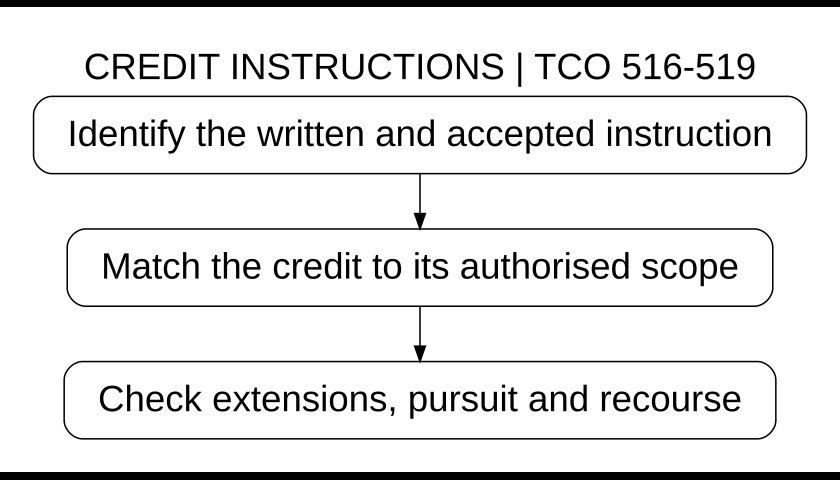
Article 516 concerns a lender acting in its own name and account
The arrangement involves the person issuing the credit instruction, the recipient who becomes the lender, and the third person who receives the credit. The lender acts in its own name and for its own account. This is different from an agent merely transferring money already supplied by a principal.
Trace the source of funds and identify the creditor under the actual lending transaction. A bank statement showing who sent money is useful, but it must be read with the agreement identifying whose funds and credit claim were involved. Administrative involvement in a transfer is not automatically an accepted credit instruction.
The governing source is Law No. 6098, Articles 516–519. The legal analysis should name each role consistently. Using principal, borrower and guarantor interchangeably can hide the very relationship that must be established before the statute applies.
An introduction or recommendation is not automatically a repayment undertaking
Article 516 requires an instruction accepted under the instructing person’s responsibility. A message introducing a potential borrower, expressing confidence in a business or asking a lender to consider an application does not automatically prove all those elements. Read the precise commitment and the surrounding communications.
Establish whether the sender acted personally or represented a company. A director recommending a group business is not necessarily undertaking personal responsibility. The signature, legal entity, authority and text must be examined together rather than treating the most prominent individual in the correspondence as the debtor.
The commercial signing-authority guide addresses that separate issue. A valid instruction also needs to concern the relevant beneficiary and credit, not another transaction that happens to involve the same business group.
The instruction must be written for Article 516 responsibility
Article 516 expressly states that the person giving the credit instruction is not responsible unless the instruction is in writing. A lender relying only on a disputed oral reassurance should not describe that reassurance as satisfying the provision’s written requirement without identifying a legally adequate written act.
Preserve the complete document and its attachments. The text should identify the intended beneficiary and the credit to be granted or renewed. A detached signature page or a partial screenshot can leave uncertainty about the commitment actually adopted.
Articles 14–15 regulate written form and signatures, including the recognised electronic route. The written-form guide explains why a typed message, a scan and a secure electronic signature are not automatically interchangeable. Proof that a conversation occurred is distinct from satisfaction of a validity requirement.
A real person’s security undertaking requires the Article 603 check
Article 603 extends rules on suretyship form, capacity and spousal consent to other contracts through which individuals provide personal security under another name. The description credit instruction should therefore not be used as a way to ignore that statutory review where the undertaking falls within its scope.
Identify whether the instructing party is an individual or a legal entity and what legal obligation the document actually creates. A company’s undertaking and an officer’s personal undertaking are not the same. Neither the company stamp nor the fact that the beneficiary is a business resolves the individual’s separate formal position.
The personal-security safeguards guide addresses the handwriting, consent and statutory exceptions. Article 516’s writing requirement should not be presented as a certificate that every other applicable security requirement has also been satisfied.
Acceptance by the recipient is another element to prove
The recipient must have received and accepted the instruction described in Article 516. Identify the acceptance and the credit transaction undertaken pursuant to it. The mere arrival of an unsolicited document at a lender’s office does not itself explain whether the lender accepted the proposed arrangement.
Compare the accepted terms with the instruction. A response proposing a different beneficiary, larger facility or different renewal arrangement needs examination. Do not treat negotiations over those terms as an unconditional acceptance of the first document without reviewing the complete exchange.
The offer-and-acceptance guide explains the general formation framework. The credit-instruction file additionally needs the particular written commitment and the connection between that commitment and the credit actually granted.
The recipient must remain within the mandate
Article 516 ties the instructing person’s surety-like responsibility to the recipient not exceeding the mandate. Identify the approved amount, beneficiary, duration, purpose and any limits on renewal. A lender’s later internal decision to increase exposure is not automatically part of the original instruction.
Match each drawdown or renewal with the authority relied on. Where the record contains several versions, preserve their dates and the acceptance of each change. A final account combining authorised and disputed advances should not be presented as one indivisible figure without explaining its components.
Scope can also concern the transaction’s character, not only its numerical amount. Lending to another legal entity or changing the agreed credit arrangement requires assessment even when the total does not exceed a stated ceiling. The mandate should be read as a whole rather than reduced to a single number.
Prove that the credit was granted or renewed
The file should show the actual credit supplied, its contractual terms and the amount remaining outstanding. A proposed facility, an approved internal limit and funds actually made available are different records. The instructing person’s exposure should not be calculated from an unused headline limit without identifying the resulting debt.
Retain the beneficiary’s agreement, payment records, maturity schedule and account adjustments. A claim should credit repayments, collateral proceeds and other satisfaction of the same obligation. The fact that responsibility is surety-like does not make the creditor’s unexplained balance conclusive.
A renewal must also be documented as the act authorised or separately agreed. The statute expressly includes instructions to renew credit, but that does not mean every later indulgence by the lender is an authorised renewal. Article 518 creates a separate consequence for the lender’s own grant of further time.
An independent extension can release the instructing person
Article 518 releases the person who issued the credit instruction if the recipient independently grants the beneficiary additional time. The distinction from an authorised renewal under Article 516 is essential. Preserve the original instruction and the later extension to determine whether the lender acted on its own.
An extension should not be hidden in an updated account without retaining the agreement that created it. Identify the original due date, the new date, who approved the change and in what capacity. A borrower’s request for time and the lender’s acceptance are separate documents.
The creditor should assess this statutory consequence before agreeing revised terms while assuming that the instructing person’s responsibility remains unchanged. The instructing person asserting release must likewise identify the actual grant of additional time rather than treat every collection discussion as a completed extension.
Neglecting pursuit despite instructions has a separate release consequence
The other Article 518 ground concerns the recipient neglecting to pursue the beneficiary despite being instructed to do so. Record the instruction, its communication and the conduct that followed. A request merely asking for an account balance is not necessarily the same instruction as a direction to pursue the debtor.
Preserve the relevant demand, litigation or enforcement records and the reasons offered for any inaction. The analysis needs the actual obligation and timeline rather than a general allegation that collection was slow. The statutory ground should be stated precisely and connected with its evidence.
The two release grounds should remain separate. Independently granting more time and failing to act despite an instruction can arise on different dates and require different records. A legal response should identify which one is relied on instead of quoting Article 518 as an unexplained cancellation clause.
The beneficiary’s incapacity is not an escape under Article 517
Article 517 states that the person giving the credit instruction cannot avoid responsibility towards its recipient by invoking the beneficiary’s incapacity. This is a specific allocation within the three-party arrangement. It should not be omitted from an explanation of the instructing person’s possible exposure.
The provision does not remove the need to establish the instruction’s own validity, the sender’s capacity and authority or the actual scope of the credit. Those are different questions. A lender should not use Article 517 to bypass every formal or representation objection concerning the sender’s undertaking.
The capacity of the beneficiary and the amount legally recoverable in the separate beneficiary relationship also require their own assessment. Do not assume that the rule governing the sender’s responsibility conclusively resolves every possible claim against the beneficiary.
Article 519 directs the internal relationship to surety–debtor rules
The relationship between the instructing person and the beneficiary follows the rules governing a surety and principal debtor under Article 519. That internal relationship is distinct from the lender’s claim under the accepted credit instruction.
Where payment is made to the lender, preserve its amount, allocation and the debt discharged. Documents needed for recourse should not be left behind when settling the external demand. The surety-recourse guide explains the separate issues of payment, subrogation, security and notification.
Reconcile any amount recovered from the beneficiary with the original payment. A right against more than one participant does not justify several recoveries of the same discharged amount. A settlement should specify whether it resolves the external demand, the internal claim or both.
Do not confuse a credit instruction with a payment direction or documentary credit
Article 555’s payment-direction framework concerns a distinct authorisation arrangement involving the remitter, directed payer and recipient. The payment-direction guide explains that relationship. A transfer to a third party is not automatically a new loan made in the payer’s own account under Article 516.
Article 515 separately defines a credit letter governed by mandate and payment-direction rules. It contains its own requirements about acceptance for a specified amount and a response to an excessive demand where no upper limit was stated. Its existence alongside Article 516 is another reason to classify the document instead of relying on a loose English label.
A bank’s documentary credit, a comfort letter, a guarantee and a credit instruction can raise different undertakings. This article does not determine a bank instrument’s independence or documentary conditions merely because it uses the word credit. Obtain the actual instrument and the rules expressly governing it.
Prepare a three-party timeline before making or answering a demand
| Stage | Key record | Question |
|---|---|---|
| Instruction | The complete written undertaking | Who accepted responsibility for which credit? |
| Acceptance | The recipient’s response and agreed changes | Was the proposed arrangement accepted? |
| Credit performance | Loan or renewal and account records | Was credit granted within the mandate? |
| Later management | Extensions, instructions and pursuit records | Does Article 518 release arise? |
| Payment and recourse | Receipts, security and beneficiary notifications | What external and internal balances remain? |
For an international transaction, establish the applicable law and the authority of each company signatory. Retain all language versions and original records alongside translations. The governing-law guide addresses that preliminary inquiry. A Turkish address or English-language message does not by itself select the whole legal regime.
If a claim or enforcement notice has already been served, preserve the document and service date. An investigation into the original instruction or a negotiation with the beneficiary does not itself constitute the required procedural response. The final assessment should distinguish validity, scope, release and recourse instead of promising recovery from every person in the correspondence.
Frequently asked questions
Does recommending a borrower automatically make the sender liable?
No. Article 516 requires the specified written and accepted instruction under the sender’s responsibility. The actual commitment and lending arrangement must be established.
In whose name and account is the credit granted?
The recipient of the instruction grants or renews credit in its own name and for its own account. That differs from merely transferring the sender’s existing funds.
Is writing expressly required?
Yes. Article 516 states that the instruction-giver is not responsible unless the credit instruction is written. Other applicable form and security safeguards must also be assessed.
Does any written message automatically satisfy all personal-security rules?
No. Article 603 extends specified surety safeguards to other personal-security contracts made by individuals. The undertaking’s classification and requirements need review.
Can the lender exceed the instruction and charge the sender regardless?
Article 516 ties responsibility to remaining within the mandate. Compare the credit actually granted with the authorised beneficiary, amount and other terms.
What if the lender independently grants the borrower more time?
Article 518 releases the instruction-giver in that circumstance. Distinguish an independent extension from a renewal authorised by the actual instruction.
What if the lender neglects pursuit despite instructions?
Article 518 provides a separate release ground. Preserve the instruction, its communication and the recipient’s subsequent actions or omission.
Can the sender escape by relying on the beneficiary’s incapacity?
Article 517 expressly prevents that defence against the instruction recipient. The sender’s own validity and authority questions remain distinct.
Which rules govern the sender’s relationship with the beneficiary?
Article 519 applies the surety–principal debtor rules to that internal relationship. Separate it from the lender’s external demand and account for payments accurately.
Is a bank documentary credit automatically an Article 516 instruction?
No. Obtain and classify the actual instrument and governing terms. Shared terminology does not make different credit and payment mechanisms legally identical.
Official legal sources
Turkish Code of Obligations No. 6098, Articles 14–15, 515–519 and 603; official Ministry text, page 104, containing the credit-letter and credit-instruction provisions. This is an English explanation, not an official translation or banking opinion on an unidentified instrument.
Ask about a credit instruction
Identify the sender, lender, beneficiary and whether the credit was extended or renewed. Arrange a confidential channel before sending the undertaking and financial records.
Istanbul and Mersin offices
Bakırcı & Keskin Law Office is Mersin-based and works throughout Türkiye with an Istanbul and Mersin focus.
Istanbul — Polaris Plaza
Maslak Ahi Evran Caddesi, Polaris Plaza No:21, Floor 9, 34475 Sarıyer/İstanbul.
Mersin — Profit İş Merkezi
İhsaniye Mahallesi, 4903. Sokak, Profit İş Merkezi No:23, Floor 3, Office 14, 33070 Akdeniz/Mersin.
Call +90 552 224 43 66. An enquiry does not establish representation or suspend a legal deadline.
Contact regarding a legal matter
In your first message, you may briefly state the subject, your country or city, and any relevant notification or recent procedural date. Please do not send identity numbers, medical data, or personal documents. Messaging alone does not constitute legal advice or create a lawyer–client relationship.
Discover more from Bakırcı & Keskin Hukuk Bürosu
Subscribe to get the latest posts sent to your email.